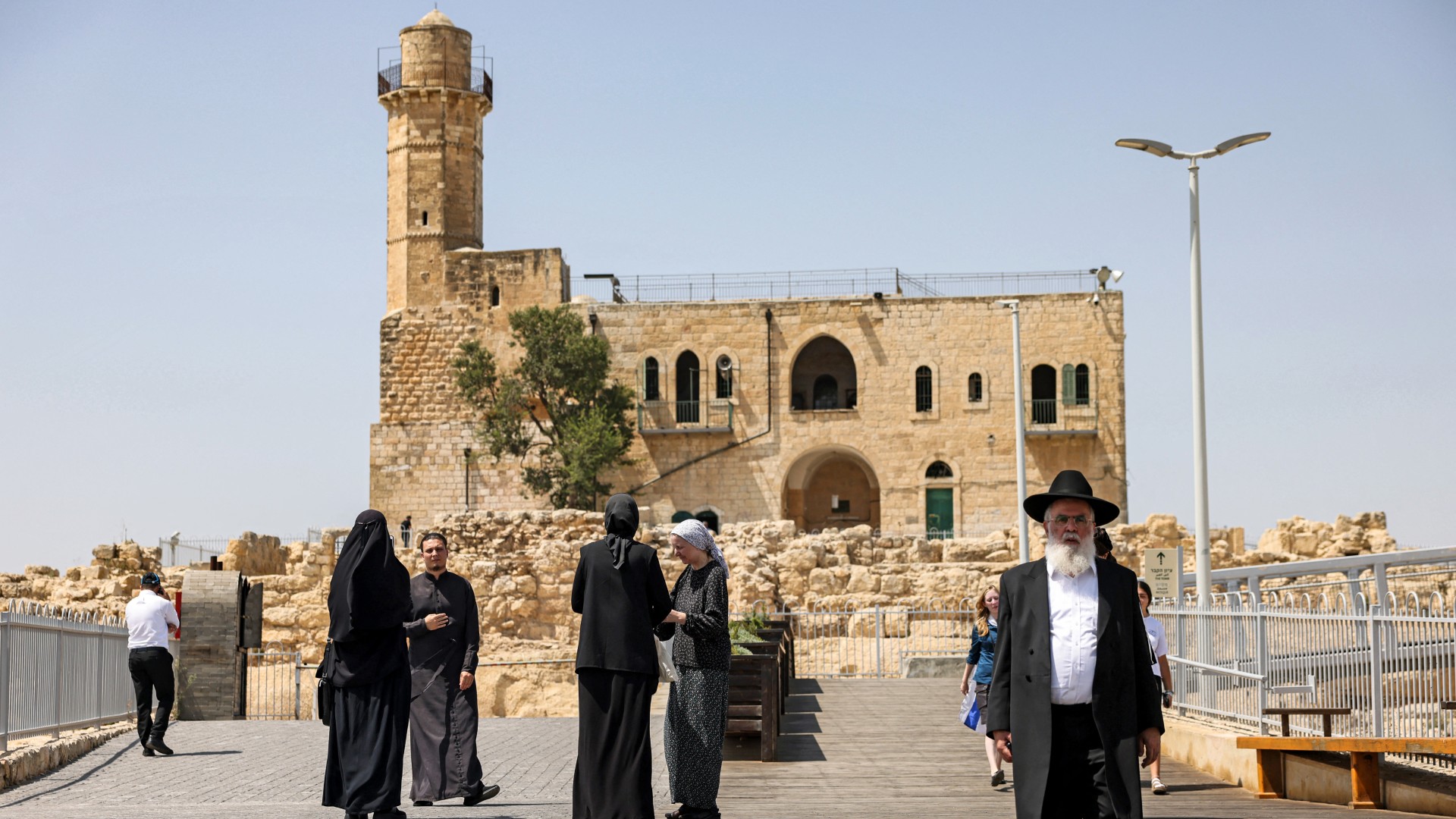
In a move that has reignited international scrutiny of Israeli policy in the occupied West Bank, Israel’s civil administration – a body operating under the country’s defense ministry that enforces Israeli rule in the occupied territory – announced Tuesday it will expropriate 28 acres of land spanning the Palestinian communities of Beit Iksa and Nabi Samuel. The parcel includes the site of the Tomb of the Prophet Samuel (known locally as Nabi Samuel), a centuries-old religious landmark revered across three major Abrahamic faiths that has long been managed by the Islamic Waqf, a Palestinian religious endowment.
The site, perched 885 meters above sea level on a hilltop just six kilometers northwest of Jerusalem, holds layered religious and historical significance for multiple communities. Byzantine Emperor Justinian first ordered the construction of a church on the site, believed to be the burial place of the prophet Samuel, and the Crusaders later revered it as the “Mountain of Joy”, the first vantage point from which they viewed Jerusalem. After the Crusader period, Muslim rulers built commemorative structures on the site, and the standing mosque today retains architectural features dating to the Ayyubid and Mamluk eras, with an on-site shrine that Muslim worshippers consider Samuel’s resting place, making it one of the most important Islamic religious sites in the region. Prophet Samuel is similarly venerated in Jewish and Christian tradition.
Israeli authorities frame the seizure as a public benefit measure aimed at preserving the site’s archaeological heritage. But Palestinian analysts and officials universally condemn the action as the latest step in a long-running campaign of “Judaisation” – a term describing the Israeli government’s use of archaeology, religious policy and land control to erase Palestinian and Islamic cultural identity and assert exclusive Israeli claim over occupied Palestinian land.
Map and settlement expert Khalil Toufakji, a leading researcher on Jerusalem affairs, confirmed that all seized land belongs to the Alami family, and has been held as a hereditary Islamic waqf for generations. This is not the first change Israeli authorities have imposed on the site since they occupied the West Bank in the 1967 Six-Day War. Over the past decades, Israel has built a synagogue in the underground chamber that houses the traditional tomb, restricted Palestinian access to large portions of the site, reduced allocated Muslim prayer space, and gradually shifted control of site facilities to Israeli management. In 1995, Israeli authorities designated the entire Nabi Samuel area a nature reserve, paving the way for large-scale excavation work. Toufakji says the latest land seizure amounts to de facto annexation, following a deliberate, incremental strategy first formalized by the Israeli Knesset: advance claims through archaeological and religious sites, then build Israeli infrastructure to solidify permanent control. This same tactic has already been used to forcibly displace Palestinian residents in Jerusalem’s Silwan neighborhood to make way for Israeli excavations searching for an alleged ancient “lost Jewish city”.
Omar Rajob, head of the media office for the Palestinian Authority’s Jerusalem governorate, added that decades of Israeli excavations at Nabi Samuel have produced no evidence to support the exclusive Jewish historical narrative Israeli authorities promote. Instead, digs have uncovered extensive clear evidence of Islamic heritage, including the standing historic mosque itself. Despite this, Rajob says Israeli authorities use archaeology as a political tool: official information panels at the site only present a Jewish narrative of the site’s history, completely erasing its centuries-long Islamic and Palestinian heritage.
Rajob emphasized that the current seizure goes far beyond controlling surrounding land; it aims to impose full Israeli sovereignty over the entire religious and archaeological landscape of Nabi Samuel, including the historic mosque itself. Today, he added, the Islamic Waqf’s only remaining function at the site is opening and closing the mosque’s doors.
The seizure of Nabi Samuel is the third major takeover of a Palestinian-controlled religious and archaeological site in the occupied West Bank in less than six months. In November 2025, Israeli authorities seized 444 acres surrounding the Sebastia archaeological site, and in January 2026, the Israeli military stripped Palestinian authorities of municipal control over Hebron’s iconic Ibrahimi Mosque, a move widely condemned as a takeover of one of Islam’s most sacred sites.
The action also aligns with a broader push by Israel’s far-right ruling coalition to consolidate control over Palestinian heritage sites in the West Bank. The Knesset is currently debating a bill that would create a new Israeli heritage authority to take full control of all West Bank archaeological sites from the civil administration, formalizing Israeli control. On the same day the Nabi Samuel seizure was announced, Israeli Finance Minister Bezalel Smotrich – leader of the far-right Religious Zionism party – held an election campaign event at Solomon’s Pools, a historic Palestinian-run reservoir in the West Bank, where he declared he would work to take the site from Palestinian control, calling it “inconceivable” that it remains under Palestinian management. Toufakji predicts the next target will be Joseph’s Tomb, a major religious site in Nablus currently under Palestinian Authority control.
“What is happening in Nabi Samuel cannot be separated from broader Israeli policies in occupied Jerusalem, which are based on reducing the Palestinian presence, expanding colonial control, and linking the settlements surrounding the city into a single geographical belt,” Rajob explained. “Palestinian archaeological and religious sites are being transformed into political tools used to reshape the landscape demographically and symbolically.”