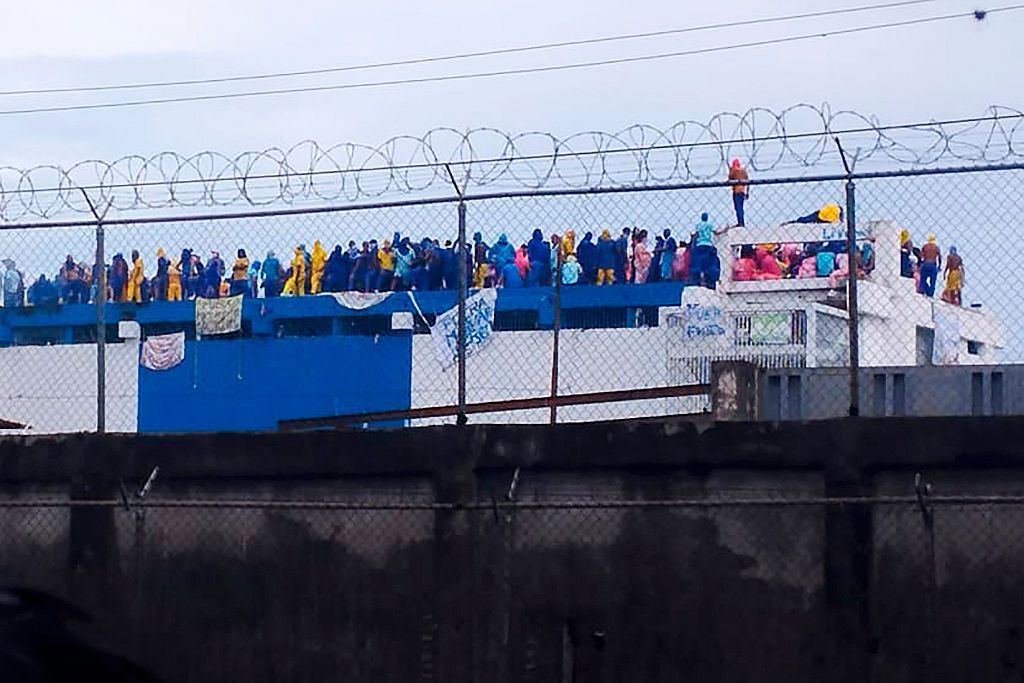
A dramatic confrontation has broken out between incarcerated people and Venezuelan security forces at the Injuba prison in the southwestern state of Barinas, sparked by long-simmering claims of systemic mistreatment under the facility’s new leadership.
Fed up with unaddressed grievances, dozens of inmates climbed onto the prison’s roof and set fire to mattresses to draw attention to their claims, prompting authorities to deploy additional reinforcements to the facility. Local witnesses reported hearing multiple explosions inside the complex, and inmates have alleged that security forces opened fire on the protesting group. Footage collected and published by the Venezuelan Prison Observatory (OVP), a prominent non-governmental prison rights watchdog, captures the unrest: inmates gather on the roof chanting “we want justice”, one man displays visible gunshot wounds on his torso and arm, and a masked female speaker directly addresses interim President Delcy Rodríguez, calling for the resignation of both the national prisons minister and Injuba’s director.
The protest is the culmination of more than a week of unheard complaints about poor treatment, inmates and OVP report. Inmates allege that since the new director took charge, they have been subjected to violent arbitrary searches, extended stays in solitary confinement, and ongoing physical abuse. They also highlighted a critical lack of access to life-saving medication for incarcerated people living with tuberculosis, a longstanding issue in Venezuela’s overcrowded, under-resourced prison system.
Prison rights advocates have spent years decrying the inhumane conditions that plague most of Venezuela’s penitentiaries, which the OVP has repeatedly confirmed fail to meet even the most basic legal minimum standards for correctional facilities. The current unrest comes against a shifting political backdrop in Venezuela: following the U.S. military operation that removed long-time leader Nicolás Maduro from power in Caracas on January 3, widespread U.S. pressure has led to the release of hundreds of political prisoners. But despite this progress, the Venezuelan human rights group Foro Penal estimates that more than 400 political prisoners remain in detention across the country.
While Injuba is not a facility that primarily holds political detainees, Venezuela’s Committee for the Freedom of Political Prisoners has issued a statement of solidarity with the protesting inmates, arguing that widespread abuse—including punishment, deliberate hunger, prolonged solitary confinement, torture, and unsanitary, dangerous conditions—are not isolated incidents, but a core part of Venezuela’s official prison policy. These allegations echo recent findings from United Nations human rights bodies: UN High Commissioner for Human Rights Volker Türk noted in March that his office had continued to receive consistent reports of torture and abuse of detainees in Venezuela even after Maduro’s ouster.
As of this report, neither Injuba’s prison director nor the interim government under Delcy Rodríguez has issued a public response to the inmates’ allegations or the ongoing unrest at the facility.