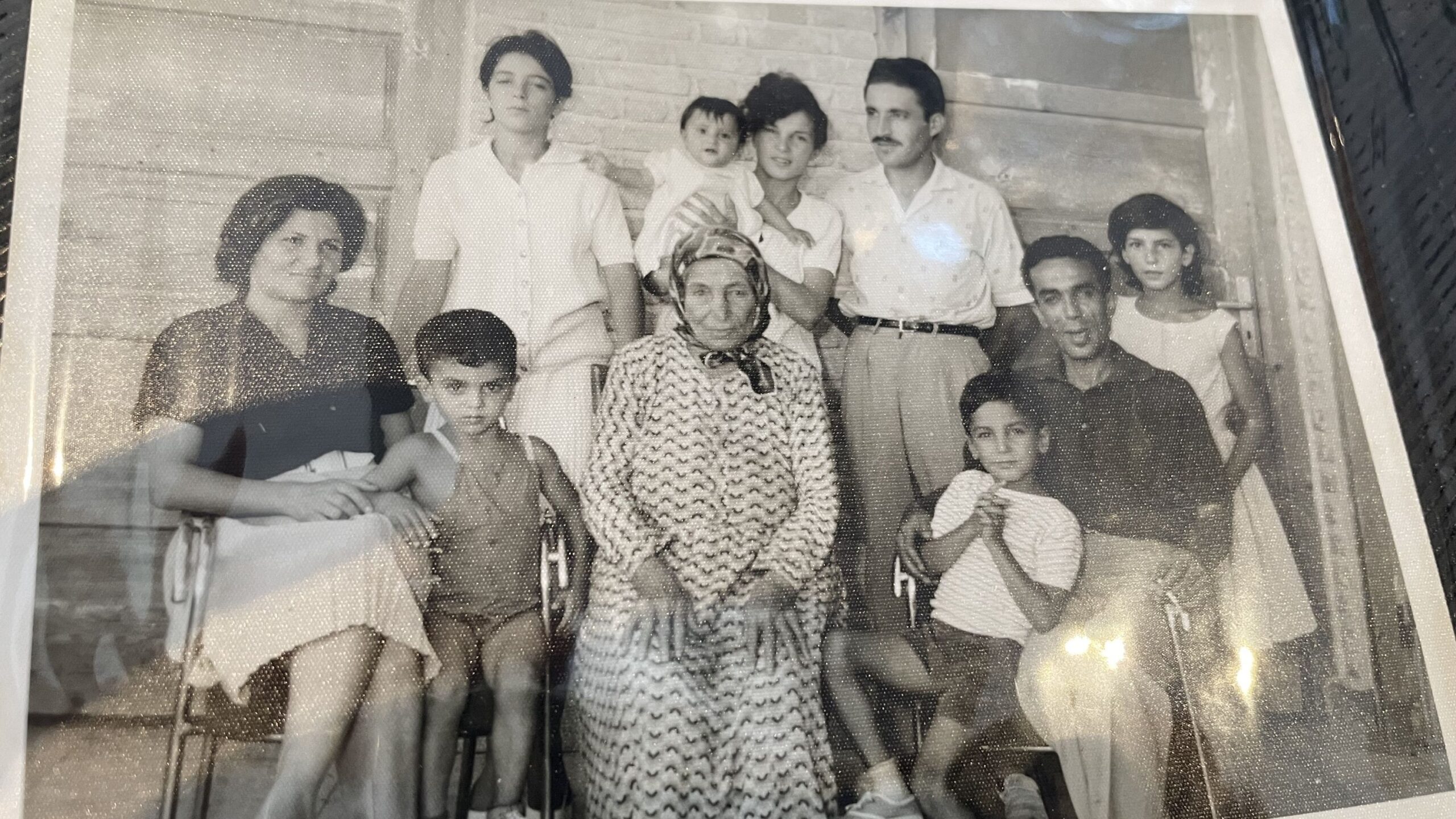
In March 2015, as then-US President Barack Obama prepared to finalize a landmark nuclear deal with Iran, Israeli Prime Minister Benjamin Netanyahu delivered a high-stakes address to a joint session of the US Congress. Seeking to sway lawmakers against the agreement by framing Iran as an existential threat to the Jewish people and the state of Israel, Netanyahu made a notable factual error when he misrepresented the Biblical story of Esther, claiming that ancient Jews living in Persian-ruled territory were targeted for death by a Persian viceroy. The actual account holds that it was Haman, an Amalekite court official, who plotted the extermination of Iranian Jews, a scheme foiled by Queen Esther and her cousin Mordecai, after which Persian King Ahasuerus ordered Haman’s execution and spared the Jewish community.
Far less widely reported in Western discourse is the deep, continuous history of Jewish life in Iran that stretches back nearly three millennia. Today, the tomb of Esther and Mordecai stands in the western Iranian city of Hamedan, a site that has drawn Jewish pilgrims for centuries and was designated a national heritage site by the Iranian government under then-President Mahmoud Ahmadinejad in 2008. This long-standing presence challenges the pervasive Western narrative that frames Iran as a uniformly antisemitic nation, scholars and community members emphasize.
“Compared to many countries in the region and certainly in the West, Iran has not had a history of anti-Jewish sentiment,” explains Farhang Jahanpour, former dean of the Faculty of Languages at the University of Isfahan. “Most Iranian Jews regard Iran as their home and have a strong feeling of affinity for Iranian culture, literature, music and cooking.”
For Etan Mabourakh, a member of a centuries-old Iranian Jewish family that left the country during the reign of Shah Mohammad Reza Pahlavi, this cultural connection remains vivid decades after his family’s departure. “There’s a deep pride for Iranian Jews in our cultural heritage, and distinct traditions that we hold on to,” he says. “My father’s side hail from Hamedan, and we have a Hamedani cookbook with traditional Jewish recipes that I still cook dishes from to this day – on Passover we still practice the Jewish Iranian tradition of beating each other with scallions when we sing Dyenu. These traditions are a real source of pride for us.”
Jews first arrived in what is now Iran following the Babylonian exile of the 6th and 7th centuries BCE, when they were displaced from the ancient kingdom of Judea by King Nebuchadnezzar II. Initial settlements centered in what is now Isfahan, before communities spread across the Iranian plateau. Biblical accounts themselves reference deep ties between ancient Jews and Persian rulers, with many holy sites associated with Jewish prophets still standing across the country today. “The Hebrew Bible speaks very highly of ancient Persians and reveals very close Jewish connections with ancient Iran and its kings,” Jahanpour notes.
After the advent of Islam in Iran in the 7th century, the Jewish population continued to grow, drawn in large part by opportunities along regional trade routes. “We have testimonies of Jews from the period when Islam came to Iran that they were actually very pleased to see the Muslim army coming,” says Lior Sternfeld, a professor of History and Jewish Studies at Pennsylvania State University. “The message of Islam and the recognition of the people of the book was quite liberating for Iranian religious minorities. They believed it might bring positive change to their status and protections.”
Between the arrival of Islam and the establishment of Shia Islam as Iran’s state religion in 1501, the community experienced periods of both stability and intermittent repression. By the 17th century, Jews were formally recognized as a protected and tolerated minority under Iranian law. A major milestone came with the 1906 Constitutional Revolution under the Qajar dynasty, which established Iran’s first parliament and granted Jews a guaranteed parliamentary seat, formally placing them on equal legal footing with Muslim citizens. This progress followed years of targeted violence, including a 1839 pogrom in the northeastern city of Mashhad that forced Jews to choose between conversion to Islam and exile.
Under the Pahlavi dynasty, which took power in 1925, Iran’s new legal protections for Jews drew Jewish migrants from across the region and Europe. In the 1930s, prominent Jewish professionals and intellectuals fleeing Nazi Germany’s race-based purges arrived in Iran, followed by hundreds more Jewish refugees who fled the 1941 Farhud pogrom in Iraq that killed more than 500 Jews. By the mid-20th century, Iran’s Jewish community was a diverse tapestry of Persian, Kurdish, Iraqi, Mountain, and Ashkenazi Jews, with Ashkenazi refugees establishing a still-operational synagogue in Tehran.
During World War II and the Holocaust, Iran hosted as many as 300,000 Polish refugees, between 5,000 and 20,000 of whom were Jewish, who settled in camps on the outskirts of Tehran, Isfahan, and Ahvaz. While the decision to accept the refugees was driven by British occupying forces and created significant food shortages for local Iranians, Sternfeld notes that contemporary accounts consistently highlight the widespread hospitality ordinary Iranians extended to the displaced Jewish arrivals. Around 780 orphaned Jewish refugees, known as the Children of Tehran, were eventually resettled in Mandatory Palestine.
By the 1940s, Iran’s Jewish community had become integral to the Pahlavi Shah’s national development project, taking prominent roles in government bureaucracy, trade, and science, and rising to become a core part of Iran’s urban middle and upper classes. By the late 1940s, the community numbered around 100,000 and continued to grow over the next three decades. When Israel was established in 1948, only a small minority of Iranian Jews – between 17,000 and 20,000 between 1949 and 1953 – chose to emigrate, and migration effectively halted by the 1960s. For decades, Iran maintained close diplomatic ties with Israel, supplied the Jewish state with oil, and in return received military training from the Israeli army for the Shah’s brutal secret police force, Savak.
Life for Jews under the Shah was not without tension, however. “The generation that came of age during Mohammed Reza’s time no longer carried the burden of Jewish persecution on their shoulders and they became much more Iranian,” Sternfeld explains. “They went to universities, became involved in political activism and they shared the grievances of their fellow Iranians about the shah’s dictatorship. They were also over-represented in opposition movements, and the shah didn’t cut slack for Jews in these groups, so many ended up being in exile or prison.”
Mabourakh’s own family was forced to flee Iran for the US and Israel during the Shah’s rule due to their political activism. “They were treated like second-class citizens,” he says, adding that modern glorification of the Pahlavi dynasty does not align with his family’s experience. “Reza Pahlavi has been reframed as this figure to bring Iran back to greatness, but the more you read about the brutal oppression of the Savak under his father, the more you realise it’s no better than what exists today.”
After the 1979 Islamic Revolution that ousted the Shah, the execution of prominent Jewish businessman Habib Elghanian, a figure linked to the former regime, sparked widespread fear among Iran’s Jewish community. Community leaders traveled to the holy city of Qom just days after the execution to meet with Supreme Leader Ruhollah Khomeini to clarify the status of Jews under the new Islamic Republic. The meeting resulted in a landmark fatwa that formally drew a distinction between Iranian Jews and Zionism, stating that Iranian Jews are full members of the Iranian nation, while Zionism is a separate political movement opposed to religious teachings. Under the edict, Iranian Jews are guaranteed full protection as a religious minority.
Despite this guarantee, mass emigration resumed after the revolution, with nearly half of Iran’s Jewish community leaving over the course of the 1980s. Unusually, only a minority of emigrants settled in Israel; roughly 70 percent relocated to the Los Angeles area in the United States. For the community that remained, experiences have varied across successive administrations: former President Hassan Rouhani, who held office from 2013 to 2021, enacted progressive reforms including legislation protecting Jewish inheritance rights and allowing Jewish students to be absent from school on Shabbat, the Jewish sabbath.
Today, Iran is home to between 10,000 and 15,000 Jews, the third largest Jewish population in the Middle East after Israel and Turkey. Most reside in Tehran, with sizeable communities in Shiraz and Isfahan. Though the community is a fraction of its mid-20th century peak, it remains an integrated part of Iranian society, with 60 operational synagogues, Jewish schools, kosher food outlets, and other communal institutions, granting Iranian Jews a comparatively high degree of religious autonomy. While community members cannot publicly express support for Israel, they maintain a nuanced relationship with the Jewish state, drawing a distinction between its religious significance to Judaism and its political status relative to Iran. “They make the separation between Israel as a holy place and Iran as their political homeland,” Sternfeld says.
Most recently, after an Israeli air strike on Tehran damaged the Rafi-Nia synagogue last month, Iran’s Jewish community publicly condemned the attack, reaffirming their loyalty to the Iranian state. “The Zionist regime with its brutal ambitions has not only attacked the Muslim community but also the Jewish community,” said Homayoun Sameh, the Jewish representative to Iran’s parliament. Rabbi Younes Hamami Lalehzar, a leading Iranian Jewish community leader, added: “Beyond being an inhumane and terrorist act, this clearly shows that all the claims made by the Israeli regime about defending Jews are nothing more than a shameful lie.”
Mabourakh, who works with the National Iranian American Council, echoed that condemnation, noting that the Iranian government’s response to the attack revealed a respect for Jewish life that is rarely acknowledged in Western media. “I felt disgusted that the synagogue had been blown up in a war that my tax dollars are funding. The fact that so much infrastructure has been targeted – these are war crimes and we should call them out,” he says. “The Jewish community asked the rescue mission not to use heavy machinery to clear the rubble, to avoid damaging Torah scrolls and other items, so the teams used their hands to retrieve them. I think there is a genuine respect from Iranian authorities towards people of the book, and this is not communicated in the West.”