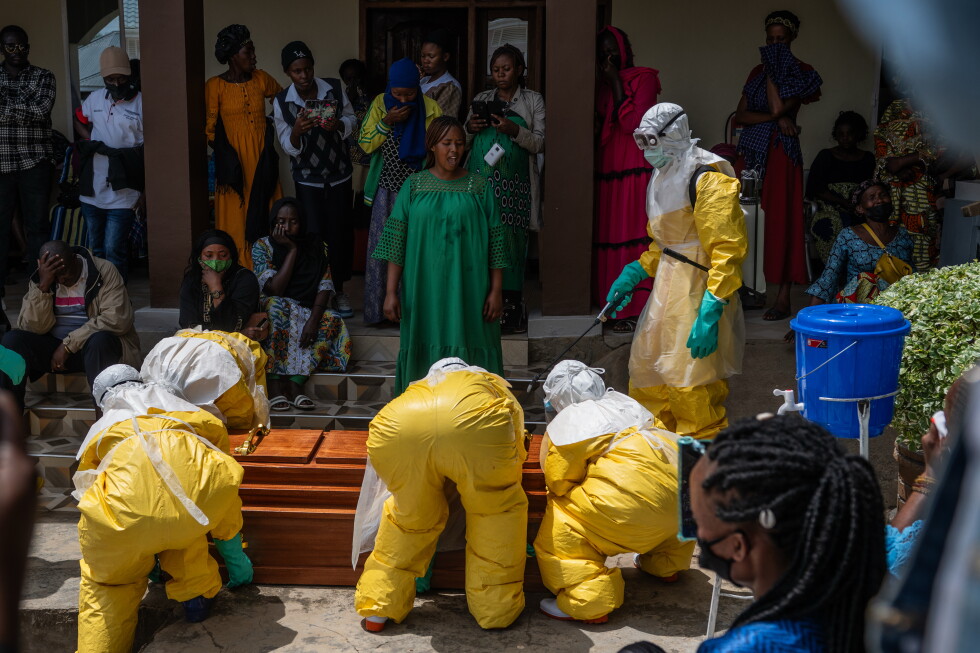
On Sunday evening, violent unrest disrupted the frontline of the Democratic Republic of Congo’s fight against a rapidly expanding Ebola outbreak, when a group of angry young men breached the compound of Mongbwalu General Hospital — a key facility treating Ebola patients in the heart of the epidemic zone in eastern Congo. As gunfire echoed through the surrounding area, medical personnel were forced to make a frantic, rushed evacuation of all patients receiving care at the site.
Dr. Richard Lokudu, the hospital’s medical director, confirmed to the Associated Press in a phone interview that the attackers’ core demand was the handover of two bodies of their relatives held at the facility. In the chaos of the incursion, no immediate information on injuries or casualties was available. Lokudu noted that the entire hospital had been placed on full alert amid the unfolding situation, and he was unable to provide additional details as events continued to develop.
This attack marks the third act of violence targeting Ebola healthcare infrastructure in just seven days, laying bare the deep, multi-layered challenges facing public health workers as they attempt to contain an outbreak the World Health Organization has already designated a Public Health Emergency of International Concern. Local resistance to Congolese public health rules has been driven by cultural traditions around burial, which conflict with mandatory safety protocols designed to stop Ebola transmission.
Bodies of Ebola victims carry extremely high levels of the virus, and traditional funeral practices — including close contact during preparation for burial and large community gatherings — are major drivers of further spread. To curb this risk, Congolese authorities have issued a mandate requiring that all burials of suspected Ebola victims be overseen by trained official personnel wherever possible. This policy has sparked repeated backlash from local communities, who often reject restrictions on accessing their loved ones’ remains. Just two days before the hospital attack, the government announced a ban on funeral wakes and any gatherings of more than 50 people in the affected northeastern region to slow transmission.
The string of attacks began on Thursday, when a separate treatment center in the nearby town of Rwampara was burned to the ground by community members after officials blocked family members from retrieving the body of a local man who had died from suspected Ebola. Two days later, on Saturday, residents of Mongbwalu attacked and set fire to an isolation tent set up by the international humanitarian organization Doctors Without Borders for suspected and confirmed Ebola cases. In that incident, 18 patients with suspected Ebola infections fled the facility and remain unaccounted for, a development that poses major new transmission risks, according to Lokudu.
As violence against health workers has escalated, official case counts have shown a sharp jump in the scope of the outbreak. Earlier on Sunday, the Congolese Ministry of Communication announced via the social platform X that the country had recorded 904 suspected Ebola cases, most concentrated in northeastern Ituri Province. That number marks a significant increase from the previous count of just over 700 cases shared just days prior. The ministry also reported a total of 119 suspected deaths from the virus, though a breakdown of regional figures it released added up to 220 fatalities. Officials could not be reached immediately to clarify the discrepancy in the death toll.
This outbreak is caused by the Bundibugyo strain of Ebola, a rare variant for which no targeted vaccine is currently available. The virus spread undetected through Ituri for weeks after the first reported death in late April in Bunia, the provincial capital, because authorities initially tested for a more common Ebola strain and returned negative results, delaying detection and response.
New developments have also called into question the timeline of the outbreak’s origins. On Saturday, the International Federation of Red Cross and Red Crescent Societies announced that three of its volunteer workers had died from Ebola in Mongbwalu. The agency reported that the three workers believe the volunteers contracted the virus on March 27, while handling dead bodies during a humanitarian mission unrelated to the Ebola response. If this infection date is confirmed, it would push the start of the outbreak back by nearly a month, explaining how the virus was able to spread widely before being detected. The WHO has assessed that the outbreak poses a “very high” risk to Congo — an upgrade from its previous “high” rating — while noting that the risk of global spread remains low.