A wave of rare public criticism from senior U.S. Republican foreign policy leaders has targeted former President Donald Trump over emerging details of a proposed 30 to 60-day initial ceasefire framework with Iran, with critics warning the reported deal includes sweeping U.S. concessions that would boost Tehran’s regional power and jeopardize Israeli security.
The backlash gained momentum Sunday after Trump confirmed that a draft memorandum of understanding to end the U.S.-Israeli conflict with Iran was largely finalized and only waiting for formal approval. In his comments, Trump highlighted that the agreement would reopen the Strait of Hormuz — the critical global energy transit chokepoint that Iran has held effective control over since the war launched in late February — but made no mention of Iran’s nuclear program, a sharp departure from his repeated prior pledges that Tehran would never be permitted to acquire a nuclear weapon.
Iranian foreign ministry spokesperson Esmaeil Baghaei confirmed Saturday that Tehran was putting the final touches on the preliminary framework, which would set a 30 to 60-day temporary agreement. The 14-clause draft covers core sticking points: the Strait of Hormuz status, the ongoing U.S. naval blockade of Iran, and a full ceasefire across all conflict fronts including Lebanon. Unconfirmed reports have also suggested the deal could unlock billions of dollars in previously frozen Iranian assets, but Iranian leaders have repeatedly ruled out including nuclear issues in the current round of negotiations, and senior officials have explicitly denied agreeing to give up Tehran’s existing stockpile of highly enriched uranium.
Negotiations have stretched for weeks since an initial ceasefire took effect April 8, including landmark face-to-face negotiating sessions in Islamabad, but no permanent peace deal has been reached, and the Strait remains closed. The ongoing closure has triggered the most severe global oil supply disruption in modern history, amplifying pressure on all parties to reach a resolution.
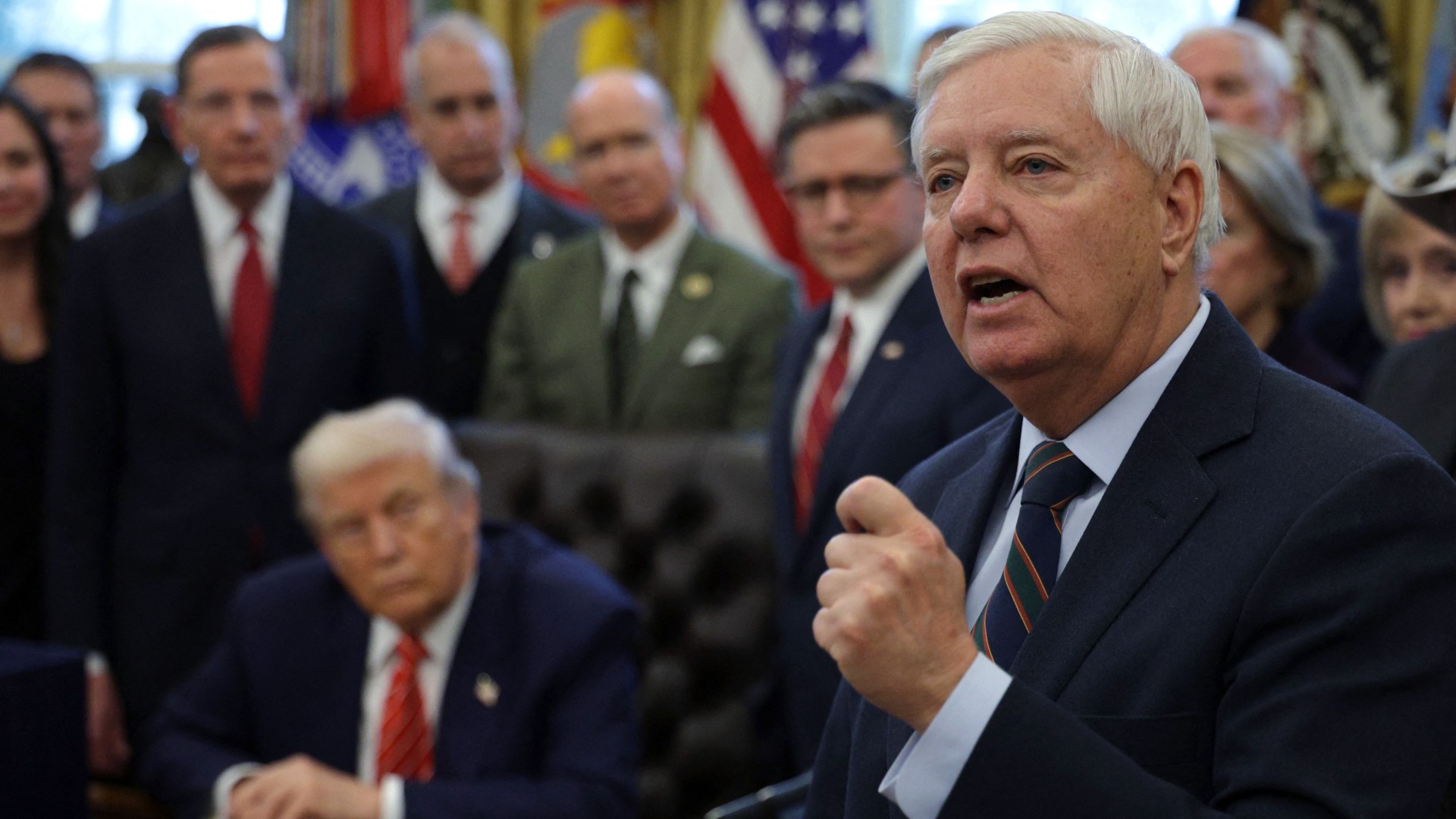
But the apparent concessions from the Trump administration have sparked deep alarm among hardline Republican foreign policy hawks, many of whom were early and vocal backers of the war. Senator Lindsey Graham, one of the most prominent Republican voices on national security, issued a stark warning Saturday that any deal that leaves Iran’s military capacity and ruling government intact would become a “nightmare for Israel.”
Writing on social platform X, Graham argued that if a deal is reached that accepts Iran’s ongoing ability to close the Strait of Hormuz and attack critical Gulf oil infrastructure, Tehran will be viewed as the dominant power in the Middle East, fundamentally reshaping the regional balance of power in Iran’s favor.
Graham’s criticism was quickly echoed by other top Senate Republicans, including Senate Intelligence Committee Chair Tom Cotton, who shared Graham’s comments to his own audience to amplify the rebuke. Senate Armed Services Committee Chair Roger Wicker called the reported 60-day ceasefire framework “a disaster,” warning that all gains from Operation Epic Fury — the Trump administration’s official name for the war on Iran — would be lost. Earlier in the week, Wicker accused anonymous White House officials of pushing Trump toward a hollow deal that holds no real value, rather than allowing him to follow through on his original goal of ending the conflict with a complete Iranian surrender.
Senator Ted Cruz also joined the growing chorus of criticism, saying he was “deeply concerned” by leaked details of the emerging agreement. Cruz, who explicitly named Trump in his criticism while also blaming unnamed administration advisers for pushing the deal, argued that if the final outcome leaves the Islamist Iranian government in power, unlocks billions of dollars in assets for Tehran, allows Iran to continue enriching uranium and pursue a nuclear weapon, and leaves Tehran with effective control over the Strait of Hormuz, the result will be a catastrophic mistake for U.S. national security.
Some of the sharpest criticism came from former Trump administration officials: former Secretary of State Mike Pompeo compared the emerging framework to the 2015 Joint Comprehensive Plan of Action, the Obama-era nuclear deal that Republicans universally opposed. Pompeo argued the reported deal follows the exact diplomatic playbook of Obama-era negotiators Wendy Sherman, Robert Malley, and Ben Rhodes, and fails to live up to Trump’s signature “America First” foreign policy. He called for the U.S. to maintain harsh economic and military pressure on Iran instead of pursuing negotiations. Former national security adviser John Bolton went even further, dismissing all talks with Iran as “a waste of oxygen.”
For his part, Trump has sent mixed signals on the negotiations over the past week, alternating between renewed threats of military escalation and optimistic comments about progress on a deal. Over the weekend, he shared an image of Iran covered by an American flag on social media, a clear signal of continued military pressure. In an interview with CBS Saturday, he said the two sides were “getting a lot closer” to a deal, but warned that if no agreement is reached, Iran will face a level of military punishment no country has ever experienced. Speaking to Axios, he put the odds of a deal at a “solid 50-50,” saying “I think one of two things will happen: either I hit them harder than they have ever been hit, or we are going to sign a deal that is good.”
Secretary of State Marco Rubio, who is currently traveling in India, echoed Trump’s optimistic tone Saturday, telling reporters that “some progress” has been made, and that negotiations are ongoing even as he spoke to reporters.