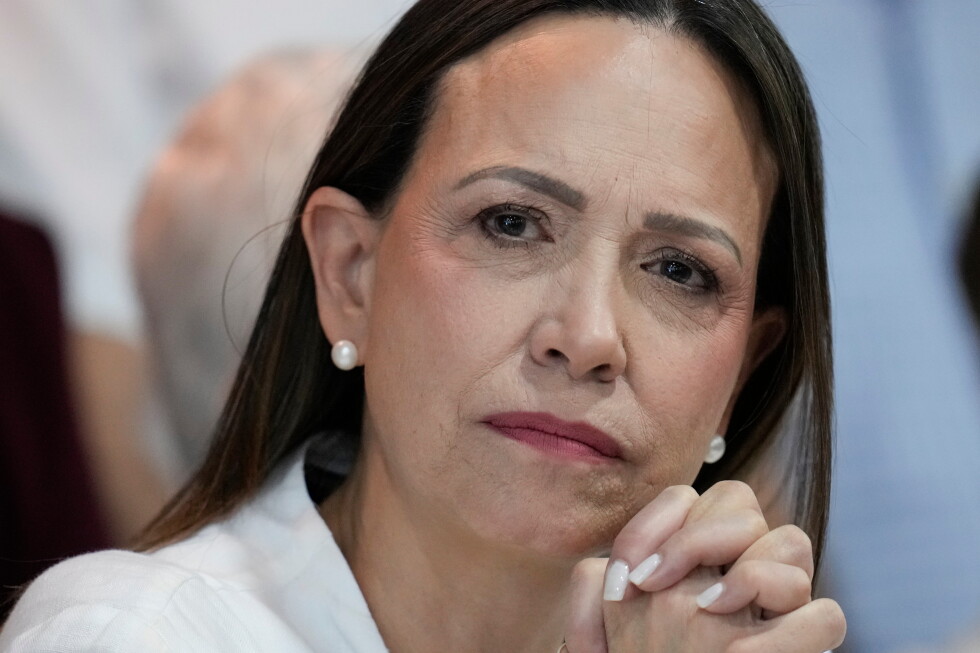
PANAMA CITY — In a meeting with fellow Venezuelan opposition figures held in Panama on Saturday, María Corina Machado, the exiled Venezuelan opposition leader and Nobel Peace Prize recipient, made a major political declaration: she will once again seek the Venezuelan presidency, and plans to return to her home country before the close of 2026.
Machado’s announcement arrives more than four months after a surprising policy shift from the White House, which set aside its previous backing for Machado to instead align with a loyalist from Venezuela’s ruling party following the U.S. military’s capture of former Venezuelan President Nicolás Maduro. The opposition figure has lived outside Venezuela since last December, when she left 11 months of hiding within the country to travel to Norway to accept her Nobel Peace Prize.
Speaking to reporters after the closed-door gathering, Machado emphasized that she and the assembled opposition leaders remain unified in their push for a peaceful democratic transition in Venezuela, a goal she said can only be achieved through “free and fair presidential elections, where all Venezuelans inside and outside the country vote.”
Despite the opposition’s clear call for open elections, the timeline for a constitutional presidential vote remains murky. Under Venezuela’s constitution, a new election must be held within 30 days of a sitting president becoming permanently unable to serve. But the Trump administration has downplayed and delayed discussions of holding an immediate vote, as it has thrown its support behind Maduro’s successor, acting President Delcy Rodríguez.
Rodríguez has drawn praise from U.S. President Donald Trump and top White House officials by opening Venezuela’s massive oil sector to expanded American investment at a moment when global oil prices are soaring, driven by ongoing conflict in Iran.
Machado laid out a clear timeline for organizing a legitimate democratic vote, explaining that a properly run election with full democratic safeguards would require seven to nine months of preparatory work. Key preconditions she outlined include the installation of nonpartisan electoral oversight bodies, updates to national voter registration rolls, and guarantees that all opposition candidates can campaign and appear on the ballot without interference from the ruling government.
Machado rose to prominence as Maduro’s most formidable political challenger in recent years. Ahead of Venezuela’s 2024 presidential election, Maduro’s government issued a ban barring Machado from running for office. In response, she tapped retired ambassador Edmundo González Urrutia to stand in as the opposition’s unity candidate.
On election night, ruling party officials quickly declared Maduro the winner just hours after polls closed, a move that drew widespread international skepticism. But Machado’s well-coordinated campaign network collected and published independent vote tally evidence showing González had defeated Maduro by a more than 2-to-1 margin.
On Saturday, Machado reaffirmed her commitment to open competition, saying she would face any other presidential candidate in what she called an “impeccable election.” “I will be a candidate, but there may be others, of course,” she told reporters. “I would love to compete with everyone, with anyone who wants to be a candidate.”