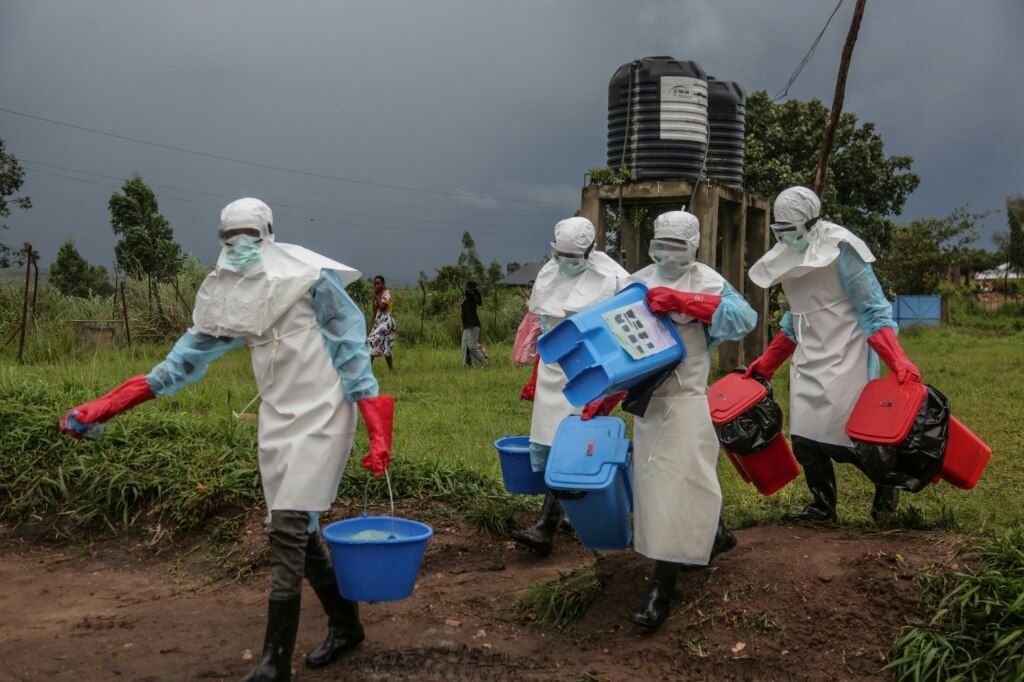
A worsening Ebola outbreak across central Africa has triggered new alarm this week, with Uganda reporting three fresh confirmed cases and the International Federation of Red Cross and Red Crescent Societies (IFRC) announcing three volunteer deaths in the neighboring Democratic Republic of the Congo. Health authorities are now warning that the deadly, highly contagious virus could extend beyond the two most affected nations to reach multiple other countries across the continent, pushing global health bodies to label the outbreak an international public health emergency.\n\nSpeaking over the weekend, Jean Kaseya, director of the Africa Centres for Disease Control and Prevention (Africa CDC), confirmed that 10 additional African nations have been flagged as at immediate risk of transmission: Angola, Burundi, the Central African Republic, the Republic of Congo, Ethiopia, Kenya, Rwanda, South Sudan, Tanzania and Zambia. Kaseya cited two major structural challenges fueling the outbreak’s spread: high cross-border population mobility across the region and widespread persistent insecurity that complicates outbreak response efforts.\n\nThe three new cases confirmed by Ugandan health officials on Saturday bring the east African nation’s total confirmed infections to five since the outbreak was first detected in both Uganda and the DRC on May 15. To date, Uganda has recorded one fatality from the virus, and the three newly confirmed patients – a Ugandan commercial driver, a Ugandan frontline health worker, and a Congolese woman – all remain alive as of Saturday’s update. Contact tracing has linked all three new cases back to initial cross-border infections originating in the DRC: the driver was operating the vehicle that carried the first confirmed Congolese patient into Uganda, the health worker was exposed while treating that infected patient, and the third case is a Congolese woman who crossed into Uganda for travel before returning to the DRC and testing positive.\n\nEbola is a lethal viral hemorrhagic fever that spreads through direct contact with infected bodily fluids, and can progress to severe internal bleeding, multi-organ failure, and death in a large share of untreated cases. The current outbreak is centered in conflict-ravaged eastern DRC, where the virus was first detected in Ituri province before spreading to the neighboring South Kivu region. Updated data from the World Health Organization (WHO), released Friday, puts the DRC’s current outbreak at 82 confirmed cases and seven confirmed deaths, alongside nearly 750 suspected cases and 177 suspected deaths that have yet to be formally verified.\n\nThe three Red Cross volunteers who died were Congolese staff deployed to Ituri for a humanitarian mission unrelated to Ebola response. On March 27, the group was tasked with managing the collection and burial of deceased community members, when the outbreak was still circulating undetected in the region. The IFRC confirmed Saturday that the three volunteers are among the first known fatalities linked to the current outbreak. Since the first recorded Ebola outbreak in 1976, the virus has killed more than 15,000 people across Africa over the past 50 years.\n\nLast Friday, the WHO upgraded the DRC’s national risk level for the outbreak to its highest classification: “very high”, while labeling the regional risk for central Africa “high” and maintaining the global risk classification at “low”. Unlike better-known Ebola strains, the current outbreak is caused by the rare Bundibugyo strain, for which no widely approved vaccines or targeted antiviral treatments are currently available. Outbreak investigators also suspect the virus was spreading undetected across the DRC for weeks before it was formally identified, allowing transmission to accelerate across border areas.\n\nFollowing confirmation of its first two cases, Uganda implemented a full suspension of public cross-border transport with the DRC last Thursday to slow transmission. The outbreak has laid bare the structural challenges of responding to a major epidemic in eastern DRC, a region that has faced decades of persistent conflict controlled by dozens of armed non-state groups. State health and administrative services have been largely absent from rural areas of Ituri for generations, and much of South Kivu is currently controlled by the Rwandan-backed M23 armed group, which has no prior experience managing large-scale public health emergencies like Ebola.\n\nAddressing a joint press conference in Addis Ababa alongside Kaseya, Congolese Health Minister Samuel Roger Kamba framed the outbreak as a shared global and regional responsibility. “This is everyone’s problem,” Kamba said, adding that the Congolese national government requires full territorial control across eastern DRC to implement effective outbreak containment measures and stop the virus from spreading further across the continent.