Rising tensions across the Middle East have reached a new flashpoint this weekend, as Iran’s top nuclear and security negotiator has issued a stark warning of devastating retaliation should the United States choose to resume open hostilities, while parallel violence on the Lebanon-Israel border continues to escalate despite tentative ceasefire efforts.
The warning came Saturday from Mohammad Bagher Ghalibaf, Iran’s chief negotiator, following recent American media reports that the White House is actively considering launching new military strikes against Iran amid stalled negotiations over a permanent end to the conflict that began when U.S. and Israeli forces launched attacks on the Islamic republic on February 28. Writing on his social media channels, Ghalibaf emphasized that Iran’s armed forces have used the current ceasefire, implemented on April 8, to rebuild and reposition their capabilities. “If Trump commits another act of folly and restarts the war, it will certainly be more crushing and bitter for the United States than on the first day of the war,” he wrote.
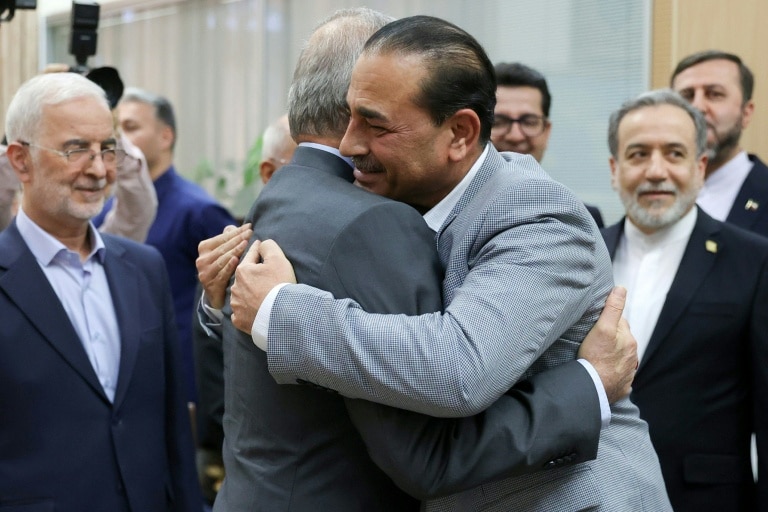
The statement came just after Pakistan’s influential army chief, Field Marshal Syed Asim Munir — who has served as a key international mediator in efforts to turn the temporary ceasefire into a long-term diplomatic settlement — concluded two days of talks with senior Iranian officials in Tehran and departed the capital Saturday. Iran’s leadership has repeatedly accused Washington of making unreasonable excessive demands that have stalled negotiations, leaving the region in a tense limbo between open conflict and formal peace.
Multiple U.S. media outlets, including Axios and CBS News, have recently cited anonymous sources confirming that the Trump administration is weighing the option of renewed military action if no breakthrough is reached in talks. U.S. Secretary of State Marco Rubio reinforced that posture last week, telling reporters on the sidelines of a NATO conference in Sweden that while there had been “some progress” toward a peaceful resolution, “things were not there yet.
Weeks of negotiations, including landmark direct talks hosted by the Pakistani government in Islamabad, have so far failed to produce a permanent ceasefire agreement or reopen full access to the Strait of Hormuz, the critical global oil chokepoint whose closure has disrupted millions of barrels of daily energy trade and roiled international markets. The ongoing impasse has left ordinary Iranian citizens facing profound uncertainty about their futures. Speaking to Agence France-Presse, 39-year-old Tehran resident Shahrzad summed up the widespread anxiety: “The state of ‘neither war nor peace’ is far filthier than war itself. You can’t even plan something as simple as signing up for a gym, let alone bigger things… I’m about to start a new job, and I’m scared war might break out again — that I’ll end up leaving the job like before, running off to another city out of fear.”
Diplomatic activity accelerated across the region over the weekend as global powers scrambled to de-escalate. Iranian Foreign Minister Abbas Araghchi spoke by phone with United Nations Secretary-General Antonio Guterres, emphasizing that Tehran remains committed to diplomatic efforts despite what he called Washington’s “repeated betrayals of diplomacy and military aggression against Iran, along with contradictory positions and repeated excessive demands.” Araghchi also held separate diplomatic calls with his counterparts from Turkey, Iraq, Qatar, and Oman, according to Iran’s official IRNA news agency. On the U.S. side, President Donald Trump spoke Saturday with Qatari Emir Sheikh Tamim bin Hamad Al Thani, whose office confirmed the Emir voiced support for “all initiatives aimed at containing the crisis through dialogue and diplomacy.”
Beyond the Iran-U.S. standoff, violence continues to escalate on the Lebanese front of the broader regional conflict. On Saturday, the Israeli military ordered residents of 10 southern Lebanese villages to evacuate their homes immediately ahead of planned airstrikes targeting alleged Hezbollah positions. Since a fragile April 17 ceasefire, Israel has maintained a steady campaign of strikes, infrastructure demolitions, and evacuation orders in southern Lebanon, framing the operations as necessary to counter Hezbollah, which has also continued to launch regular attacks on Israeli military positions.
Hezbollah entered the broader conflict on March 2, firing a barrage of rockets into Israel just days after U.S.-Israeli strikes killed Iran’s supreme leader. Lebanon’s state-run National News Agency (NNA) reported that Israeli warplanes hit roughly a dozen locations across southern Lebanon on Saturday, including an agricultural area where several Syrian workers were wounded. One overnight strike targeted a site adjacent to a hospital in the southern Lebanese city of Tyre, causing severe damage to the medical facility that currently cares for 40 patients. Hospital CEO Dr. Salman Aydibi told AFP that this marked the third Israeli strike near the facility since the outbreak of the war.