Ugandan health officials announced Saturday that three new positive Ebola cases have been detected in the country, all linked to an ongoing, rapidly spreading outbreak centered in the neighboring Democratic Republic of the Congo that the World Health Organization has already designated a public health emergency of international concern. This update brings Uganda’s total number of confirmed Ebola infections to five since the virus first crossed the country’s border and was detected locally on May 15.
Health authorities have publicly identified the three newly confirmed patients: a Ugandan long-haul driver, a Ugandan frontline healthcare worker, and a female patient from the DRC, where the outbreak originated. In an official statement posted to the social platform X, the Ugandan Ministry of Health confirmed that all three patients are still alive as of Saturday’s update.
The new diagnoses come just one day after the WHO upgraded the overall risk level of the DRC Ebola outbreak to its highest classification, “very high,” for the DRC itself. The UN health agency also noted that the regional risk level across central Africa remains “high,” while the global risk level is still categorized as “low.”
Ebola is an extremely virulent viral pathogen that spreads exclusively through direct contact with infected bodily fluids. In severe cases, it triggers catastrophic systemic symptoms including unstoppable internal bleeding and complete organ failure, with high mortality rates for unmanaged cases. According to the latest WHO data, the DRC has recorded 82 confirmed Ebola cases and seven confirmed deaths from the current outbreak, alongside nearly 750 suspected cases and 177 additional suspected fatalities.
Outbreak investigators say the epidemic spread undetected for an unknown period before it was officially identified. Complicating response efforts further, the outbreak is caused by the rare Bundibugyo Ebola strain, for which no specifically approved vaccines or targeted therapeutic treatments currently exist.
Days before the new cases were announced, on Thursday, Uganda enacted strict border control measures, suspending all public cross-border passenger and cargo transport to and from the DRC, after confirming the country’s first two Ebola cases. Both of those initial cases involved Congolese citizens who crossed the border into Uganda, and one of those patients died from the infection.
Contact tracing has revealed clear transmission links between the initial cross-border cases and the three new diagnoses. The infected Ugandan driver was operating the vehicle that carried the first ill Congolese patient into Uganda, while the Ugandan healthcare worker contracted the virus while providing care to that same infected cross-border patient. The third new case, the Congolese woman, had traveled to Kampala to receive treatment for abdominal pain, was discharged in apparent good health on May 14, and tested positive for Ebola after she returned to the DRC.
Ugandan health authorities stated that all known close contacts of the confirmed cases have already been identified and are currently under active, close medical monitoring to catch any new potential infections early.
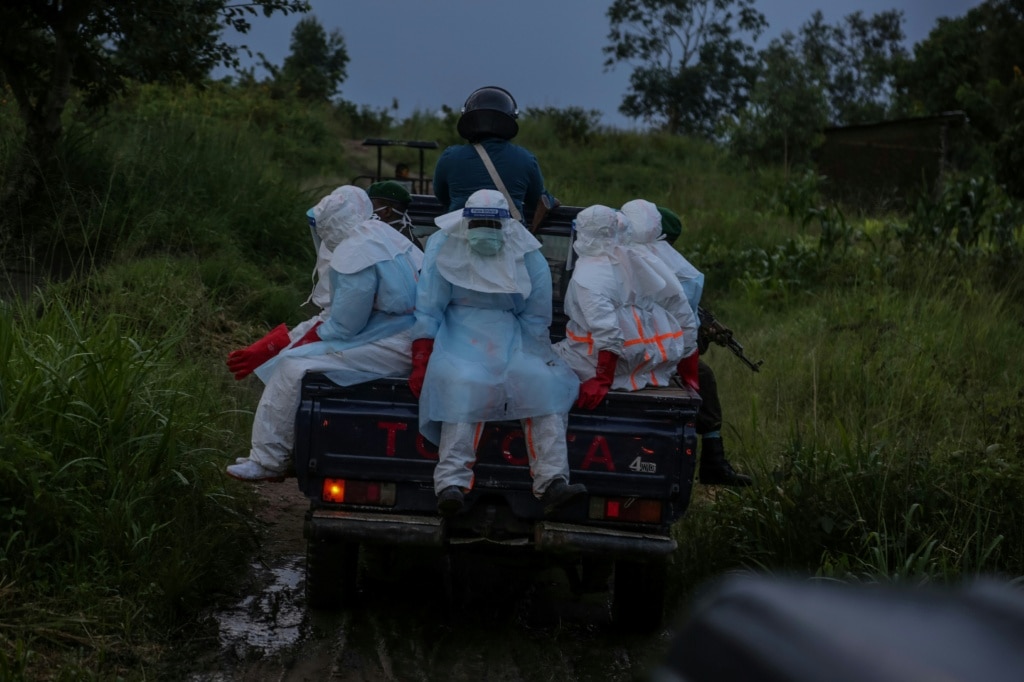
WHO Director-General Tedros Adhanom Ghebreyesus warned Friday that the ongoing response to the outbreak in the DRC faces unprecedented challenges. The epicenter of the epidemic lies in the eastern DRC, a region that has been torn by decades of persistent conflict between dozens of armed rebel groups and government forces, leaving it unstable and largely cut off from formal state services. This remote, insecure environment has forced response teams to work under extreme conditions to slow virus transmission and track down the contacts of all confirmed infected people.
The outbreak was first detected in the DRC’s Ituri province, and has since spread into areas of South Kivu that are currently controlled by the Rwanda-backed M23 militia. State healthcare infrastructure has been largely non-existent in rural parts of Ituri for decades, and local residents have grown increasingly critical of the Congolese national government for what they say is an unacceptably slow and under-resourced response to the crisis. Meanwhile, the M23 militia, which controls the affected parts of South Kivu, has no prior experience managing a large-scale outbreak of a deadly disease like Ebola, which has killed more than 15,000 people across Africa over the past 50 years.