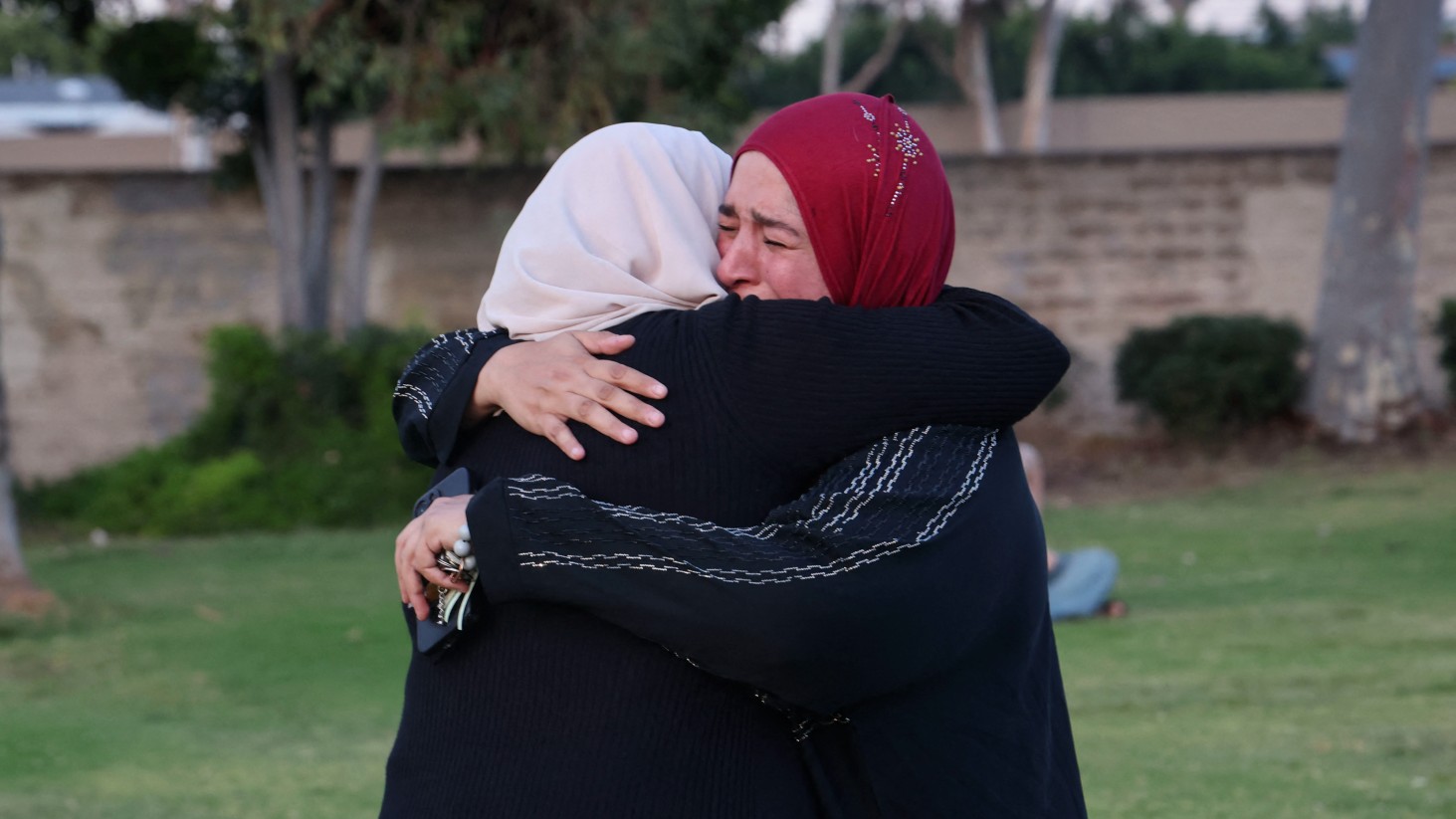
A brutal mass shooting at the Islamic Center of San Diego, the largest Muslim place of worship in San Diego County, has claimed three lives and left the region’s Muslim community in profound grief, simmering anger, and shattered sense of safety. The attack, which investigators have classified as a bias-fueled hate crime, has sparked widespread criticism of local leaders who community members say ignored years of repeated warnings about surging Islamophobia across the United States.
The violence unfolded shortly before midday prayers on a Monday, when two armed gunmen opened fire outside the mosque grounds. Killed in the attack were 51-year-old Amin Abdullah, 57-year-old Nadir Awad, and 78-year-old Mansour Kaziha, who was known to the community by the affectionate nickname Abu Ezz. The 140 children who attend the on-site mosque school were protected from further harm thanks to rapid action: Abdullah, who served as a security volunteer at the center, triggered an emergency lockdown that prevented the gunmen from accessing the full building. Community members have since honored the three victims as heroes, who all rushed toward danger to shield fellow worshippers and young people inside.
Osama Shabaik, a San Diego attorney and long-time regular attendee of the mosque, described the disbelieving shock that gripped him when he learned of the deaths. “We’ve had so many times where someone has driven by the masjid fired a BB gun – throwing something at the masjid, just a lot of incidents like that,” he explained to reporters. “Then my wife called me, and she’s like ‘did you see the news? Amin is dead’. I kinda just stopped in my tracks.” Shabaik remembered each victim warmly: Abdullah always greeted everyone with a wide smile, Kaziha served as a beloved mentor and unofficial caretaker for the mosque for decades, and Awad selflessly ran toward the gunfire after hearing shots from his nearby home, an act that saved multiple lives.
Two days after the attack, more than 2,000 people from across California and the United States gathered at the mosque for funeral prayers to honor the three men who gave their lives to protect their community.
Investigators from local police and the FBI have confirmed the attackers were radicalized by extremist ideology. Evidence collected after the shooting shows the pair were influenced by neo-Nazi propaganda and drew inspiration from previous anti-Muslim massacres, including the 2019 Christchurch mosque attack that killed 51 worshippers in New Zealand.
Community leaders say this deadly attack is the tragic culmination of a sharp national rise in anti-Muslim and anti-Arab hate incidents that began with the start of Israel’s military campaign in Gaza. The Council on American-Islamic Relations (CAIR), the nation’s largest Muslim civil rights organization, has documented at least 8,658 reported cases of Islamophobia and anti-Arab discrimination across the U.S. since the start of 2024.
For years, and particularly over the last three years of escalating anti-Palestinian hostility, Muslim organizers in San Diego have repeatedly reached out to local elected officials, university administrators, and law enforcement to flag the growing risk of violence. But those warnings, community members say, were largely dismissed.
Much of the community’s anger is directed at San Diego Mayor Todd Gloria, a vocal supporter of Israel who has publicly condemned pro-Palestinian protests and aligned closely with anti-Muslim Zionist groups. When Gloria visited the mosque shortly after the shooting to announce increased police patrols, he was met with furious pushback from local residents. When the mayor bailed on a scheduled meeting with Muslim community leaders immediately after the October 7 attacks last year, residents say that neglect proved deadly.
“Right after October 7, he bailed on our meeting last minute… and then had the audacity to show up on the day of the shooting,” said Samar Ismail, a graduate student at the University of California San Diego and community organizer. Shabaik echoed that criticism, saying: “Mayor Gloria is not someone that I would welcome into our Muslim spaces. He is someone who turned his back on the Muslim community years ago, and he turned his back on the issues that affect us.”
Beyond elected officials, community members are also questioning whether law enforcement missed clear warning signs that could have prevented the attack. Police have confirmed that one of the suspects’ mothers contacted authorities hours before the shooting to warn that her son was suicidal and had access to firearms. Shabaik also confirmed that community members were aware of threatening public posts made by one of the gunmen, Cain Clark, on the social platform Discord more than a month before the attack, where he shared photos of the same firearm and bulletproof vest he used in the shooting. Shabaik added that a member of the public had already alerted the FBI to Clark’s activity ahead of the attack, though federal authorities have not confirmed whether they acted on that tip.
For San Diego’s Muslim community, the attack has destroyed the safe haven the mosque represented for generations. For long-time attendees who grew up facing anti-Muslim bigotry in the U.S., the center had long been a space to escape that hostility. “We always grew up knowing that there’s a target on our back, the mosque always felt like a safe space from that,” Shabaik said. Ismail, who described the Islamic Center as her “second home,” added that the “illusion of safety has been shattered. Fear has now exacerbated within the community.”