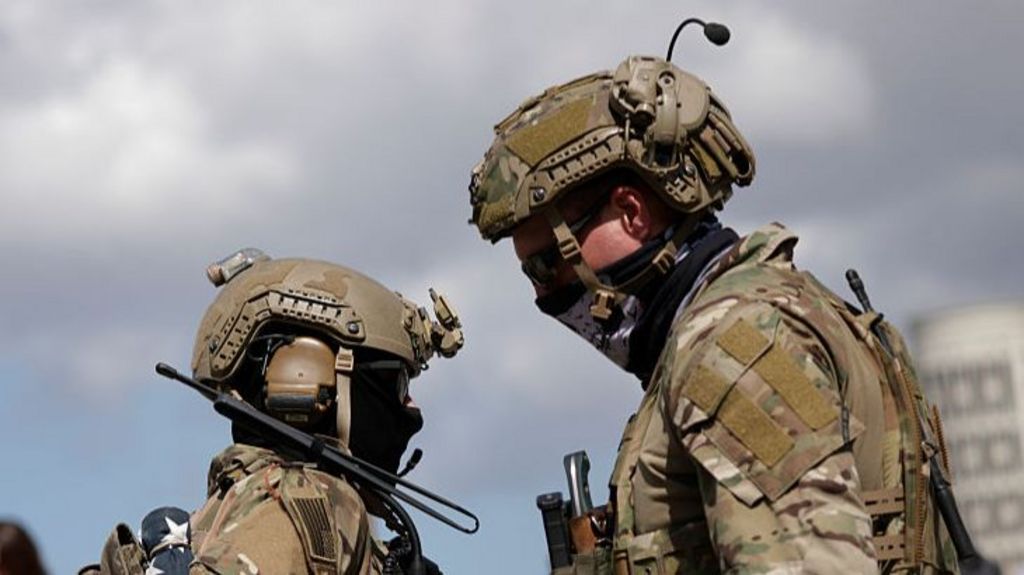
In a sudden reversal of a recent Pentagon decision, U.S. President Donald Trump announced Thursday that the United States will deploy an extra 5,000 troops to Poland. The announcement comes just seven days after the Department of Defense scrapped a planned deployment of 4,000 troops to the Eastern European nation, leaving defense analysts and European allies scrambling to interpret the shift in U.S. military posture on the continent.
Breaking the news via his social platform Truth Social, Trump framed the new deployment as a gesture rooted in his close personal and political alignment with Polish President Karol Nawrocki. Trump endorsed Nawrocki during Poland’s 2025 presidential election, and the Polish leader has repeatedly positioned himself as one of Trump’s most vocal European supporters. The U.S. president offered no additional clarity on whether the 5,000 additional troops represent an expansion of the original canceled deployment, a revised iteration of that plan, or an entirely separate military operation.
The revised troop plan arrives amid a broader restructuring of U.S. military presence across Europe, driven by the Trump administration’s signature “America First” policy agenda that has prioritized reducing overall U.S. defense commitments overseas. Earlier this month, Trump followed through on a threat to withdraw 5,000 U.S. troops from Germany amid a heated public dispute with German Chancellor Friedrich Merz over Washington’s approach to the ongoing conflict with Iran. Trump lashed out at Merz after the German leader suggested that U.S. negotiators had been “humiliated” during talks with Iranian officials, and the withdrawal moved forward quickly despite bipartisan pushback in Washington.
To date, it remains unconfirmed whether the troops bound for Poland are the same forces being drawn down from Germany, or an entirely new contingent. Beyond tensions with Germany, Trump has openly criticized fellow NATO allies for refusing to back the U.S. in escalating pressure on Iran over shipping access through the Strait of Hormuz, a critical global energy chokepoint.
The announcement comes ahead of a high-stakes NATO foreign ministers summit kicking off Friday in Stockholm, where U.S. Secretary of State Marco Rubio will lead the American delegation. Top of the agenda for Rubio is expected to be renewed demands for NATO member states to increase their own defense spending and share more of the alliance’s collective defense burden, a longstanding priority for the Trump administration.
Ahead of the summit, BBC reporters pressed Rubio on unconfirmed intelligence reports suggesting the U.S. plans to reduce its total available troop commitments for collective defense in the event of an attack on any NATO member. Rubio would not confirm the reports, but confirmed that “some of those issues” would be on the summit’s negotiating table, adding that Trump remains “very upset and disappointed” with the alliance over its failure to meet U.S. demands for greater burden sharing.
The U.S. Defense Department’s initial cancellation of the 4,000-troop deployment to Poland last week sparked widespread confusion across European capitals about U.S. security commitments. Defense Secretary Pete Hegseth later sought to calm those fears, framing the cancellation as nothing more than “a temporary delay” and reaffirming that the U.S. remains committed to maintaining a robust and credible military posture across Eastern Europe.
Nawrocki, who secured Poland’s presidency with Trump’s public backing, has long positioned himself as a staunch ally of both Trump and U.S. security goals in Europe. In a January interview with BBC Radio 4’s *Today* programme, Nawrocki argued that Trump is the only global leader with the ability to confront Russian President Vladimir Putin and negotiate an end to the ongoing war in Ukraine. Despite Trump’s repeated public criticism of the NATO alliance and his fractious relationships with other European leaders, Nawrocki has consistently maintained that the United States remains the primary guarantor of collective security across Europe.
Even within Trump’s own party, the administration’s shift on European troop deployments has drawn criticism. Multiple congressional Republicans have already spoken out against the planned withdrawal of 5,000 troops from Germany, warning that the drawdown risks sending a dangerous signal of weakened U.S. resolve to the Kremlin, which continues to maintain aggressive military posturing along NATO’s eastern border.
Currently, the United States maintains its largest European military footprint in Germany, hosting more than 36,000 active-duty troops across the country. By comparison, the U.S. has roughly 12,000 troops deployed in Italy and an additional 10,000 across the United Kingdom.