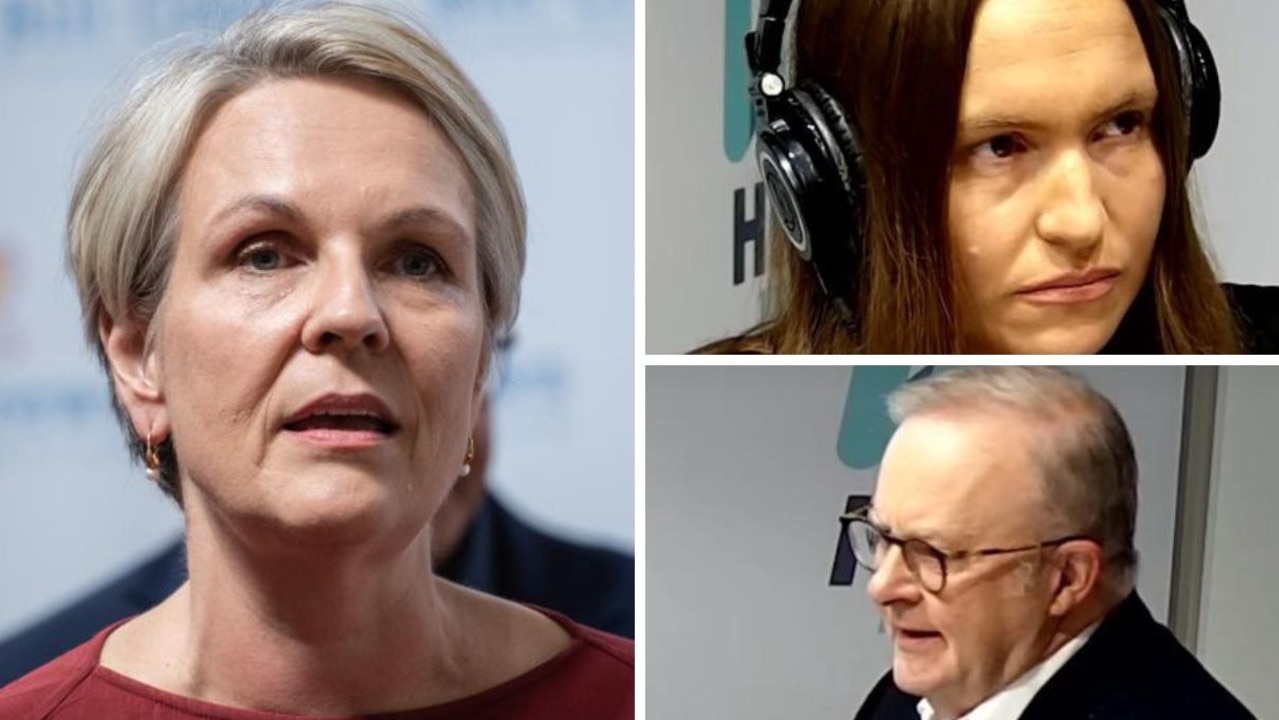
A heated political debate has erupted in Australia over Prime Minister Anthony Albanese’s comments rejecting calls for a national royal commission into femicide, with the government’s top minister for domestic violence issues stepping forward to defend his position amid widespread public anger.
The controversy began during a Monday radio interview on Hobart’s HIT 100.9FM, where host Christie Hayes—herself a prominent domestic violence advocate—pressed the Prime Minister on growing public demands for a national inquiry, coming off a grim week that saw four women killed in four consecutive days. When Hayes directly asked whether the government would commit to establishing a royal commission, Albanese pushed back on the utility of the formal inquiry.
“There’s calls for a royal commission about everything,” the Prime Minister initially responded. After Hayes interjected to argue that the deaths of women at the hands of intimate partners qualified as a uniquely urgent issue, Albanese agreed on the severity of the crisis but questioned the value of a formal commission, asking, “But you’ve got to work out, what does a royal commission do besides fund lawyers?” He added that policymakers already know what solutions are needed to address the crisis, and argued the nation should prioritize immediate action over prolonged inquiry processes.
Two days after the exchange, Hayes went public with her fierce criticism of the Prime Minister’s response, telling *The Mercury* she left the interview “shaking with anger” and accused Albanese of mansplaining the violence against women crisis to a survivor advocate.
On Friday, Social Services Minister Tanya Plibersek—whose portfolio explicitly covers family, domestic and sexual violence policy—came to Albanese’s defense in an interview with ABC Radio National, pushing back against claims that the Prime Minister is disrespectful or unconcerned about the issue, calling that characterisation “unfair.”
Plibersek drew on Albanese’s personal history to underscore his commitment to tackling the crisis, noting that the Prime Minister witnessed domestic abuse against his own mother during childhood, a trauma he has spoken of publicly on rare occasions. “It is something that we take seriously, from the Prime Minister, right through our government,” she said.
The minister did acknowledge the devastating severity of the national crisis, conceding that many members of the public still fail to grasp the full lifelong harm that family violence inflicts on survivors and bereaved families. Speaking from her own experience engaging daily with people impacted by abuse, Plibersek said, “I don’t think you can overstate the toll this takes, the gap that’s left when we lose someone and the lifelong impact of experiencing violence. I don’t think you can overstate how important this is. The statistics are overwhelming.”
Plibersek added that addressing femicide and domestic violence requires more than just government policy—it demands collective cultural change across all sectors of Australian society. “Violence is learnt as respect is learnt … We need to make sure that our schools, all of our sporting clubs, all of us work together with the same message, that violence and control in relationships is never OK,” she said. The minister also has personal proximity to the issue: her own daughter Anna Coutts-Trotter survived an abusive relationship as a teenager.