Fourteen years after one of the deadliest aviation disasters in modern European history, a Paris appeals court has upheld manslaughter convictions against two of France’s most iconic industrial firms, Airbus and Air France, over the 2009 crash of Flight 447 that claimed all 228 lives on board. But the ruling has sparked fresh legal wrangling, deep grief, and divided reactions among victims’ families, as the two companies immediately announced plans to appeal the verdict, extending a case that has already stretched for more than a decade.
The fatal flight, traveling from Rio de Janeiro to Paris on June 1, 2009, crashed into the Atlantic Ocean during a thunderstorm, disappearing from radar hours after departure. Recovery efforts took nearly two years, with search teams finally locating the aircraft wreckage and its critical black box flight recorders more than 13,000 feet (4,000 meters) below the ocean surface. Official investigations later confirmed that multiple overlapping failures led to the disaster: icing of the jet’s pitot tubes – external sensors that measure airspeed – combined with inadequate pilot response to the emergency caused the plane to lose control.
Longstanding scrutiny of the two companies has centered on systemic failures. An Associated Press investigation revealed Airbus had been aware of design flaws in the specific model of pitot tubes installed on the A330-200 aircraft as early as 2002, but did not order a replacement across the fleet until after the 2009 crash. Prosecutors also argued Airbus failed to promptly and clearly communicate the fault risks to partner airlines and flight crews, nor did it push for mandatory training to address potential sensor failures. For its part, Air France was found culpable for failing to implement specialized training for pilots to respond to pitot tube icing events, even after the hazard was documented.
The case has wound through French courts for years. In 2023, a lower first instance court acquitted both Airbus and Air France of manslaughter charges, a decision that triggered widespread anger and profound renewed grief among families who lost loved ones in the crash. Thursday’s appellate ruling overturned that acquittal, ordering each company to pay the maximum allowed fine of 225,000 euros (approximately $260,000). The conviction was welcomed by some victims’ representatives. Daniele Lamy, president of one victims’ association who lost her son Eric in the crash and attended both the original trial and this appellate proceeding, expressed support for the court’s decision. Victims’ lead attorney Alain Jakubowicz called the ruling a landmark win for ordinary people against global corporate giants, saying outside the courtroom, “there is no fight that it is unwinnable. Even when we are simply passengers, we can make global giants bend.” France’s National Union of Airline Pilots also endorsed the verdict, noting it was unacceptable to place full blame for the disaster solely on working pilots without accounting for the underlying institutional failures that set the stage for the crash.
Still, the fight for accountability remains far from over. Both Airbus and Air France have confirmed they will appeal the ruling to France’s highest court, a move that could extend the legal battle for years more. Air France said it regretted the conviction and acknowledged the appeal would prolong suffering for families, but defended its position noting its criminal liability had previously been thrown out by the lower court. Airbus said it seeks a reexamination of the core legal issues in the case before the highest judicial body.
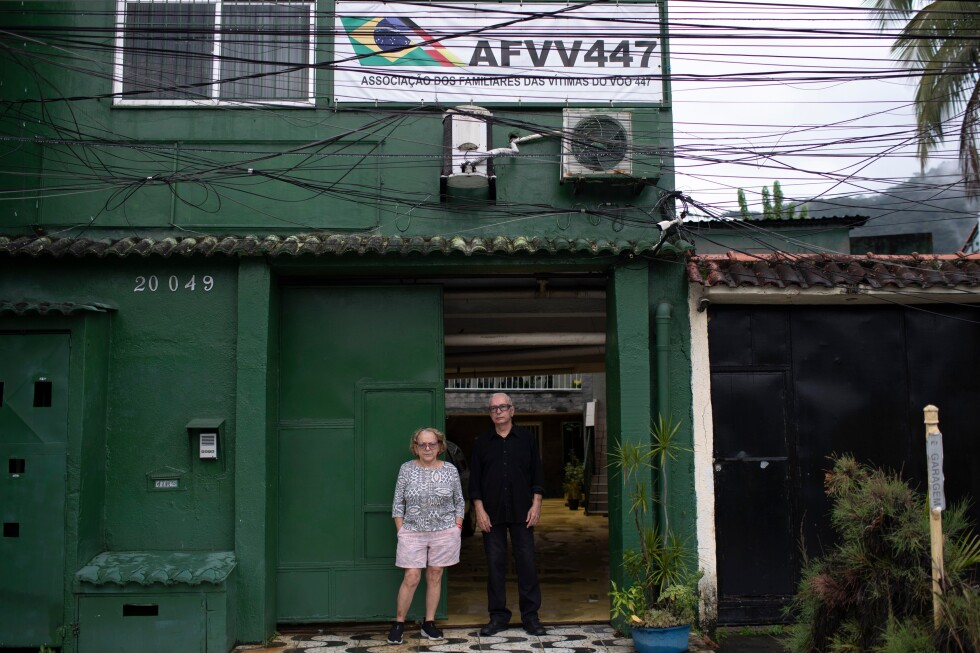
For many families, the ongoing legal process has kept their grief raw, 15 years after the crash. Nelson Faria Marinho, a Brazilian victims’ association leader who lost his son in the disaster, says full justice remains out of reach. In his Rio de Janeiro home office, lined with newspaper clippings and photographs documenting his 15-year campaign for accountability, Marinho said the pain of losing a child is impossible to put into words. Unlike some victims’ groups, he has rejected the verdict as insufficient, saying he will not accept anything less than prison sentences for the corporate executives who led the companies at the time of the crash – a demand that goes beyond the scope of the current case, which has only examined institutional rather than individual criminal liability.
Marinho’s wife Maria Eva echoed the enduring pain of their loss, saying the disaster left countless families with permanent wounds. Still, she noted, “as long as there is life there is hope.”
While the legal battle continues, the crash has already left a lasting legacy on global aviation: in the years following the disaster, international regulators implemented sweeping changes to requirements for airspeed sensor design and maintenance, as well as updated mandatory pilot training for in-flight sensor emergencies, rules that have improved safety for passenger flights worldwide.