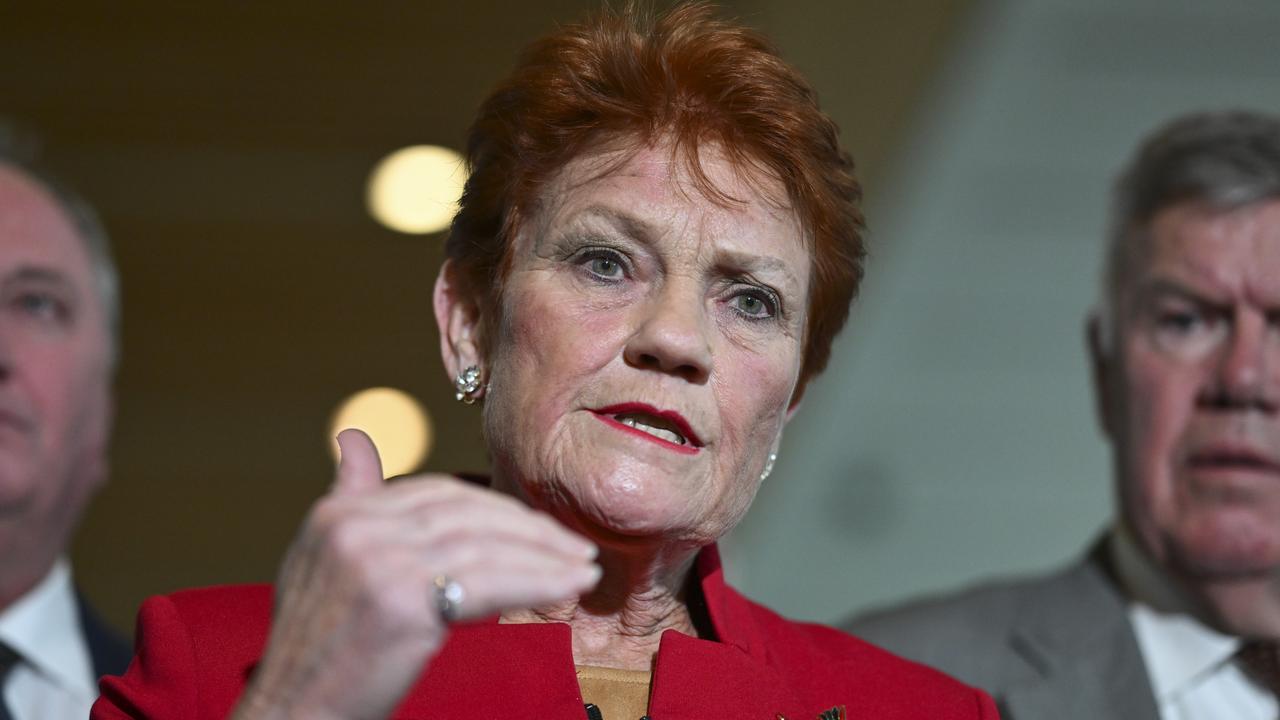
Australia’s right-wing populist party One Nation has put forward a Norway-modeled energy policy that would see the federal government take up to a 30 percent equity share in new offshore gas ventures, a proposal crafted to boost domestic production, secure public returns from natural resources and address investor concerns over policy volatility.
Speaking at the Australia Energy Producers conference in Adelaide on Thursday, party leader Senator Pauline Hanson framed the plan as a collaborative public-private partnership that spans the full lifecycle of gas projects, from initial exploration through to production and eventual decommissioning. Hanson stressed that the framework is designed to expand gas output rather than restrict it, while deliberately protecting the position of smaller domestic Australian gas producers that might be crowded out by larger players or sweeping policy changes.
Under the policy, the government will offer a 30 percent rebate to operators covering legitimate exploration costs in Commonwealth waters. In exchange, the Commonwealth reserves the right to claim a 30 percent equity stake in any approved production licenses that emerge from that exploration. The government will cover its proportional share of all project costs, including end-of-life decommissioning expenses, guaranteeing that environmental protection responsibilities are baked into project planning from day one and that Australian taxpayers will not be left covering unpaid cleanup costs down the line. In return for its equity contribution, the government will receive an equivalent share of project production.
All government-held equity will be owned by two newly established public entities: a Commonwealth special investment vehicle and the Australian National Wealth Investment Corporation. Hanson said these bodies will manage the public stake to align with Australia’s national interests, with all profits generated from the equity holdings directed into a national sovereign wealth fund that will be reinvested to grow long-term public wealth. Drawing a direct comparison to Norway’s successful resource model, Hanson noted that Norway’s state-led oil and gas strategy has built a $3 trillion sovereign wealth fund that benefits all Norwegian citizens, while Australia has yet to capture similar long-term value from its own abundant natural resources.
Hanson pushed back against claims that the policy amounts to a socialist nationalization of the gas sector, arguing instead that the framework brings much-needed predictability for international investors. She pointed out that major Australian gas export partners, including Japan and South Korea, have already started shifting their purchasing to other markets due to chronic policy instability in Australia’s energy sector, and this plan will reverse that trend by creating a clear, consistent regulatory and investment environment.
The One Nation leader also launched sharp criticism of a competing policy proposal, pushed by independent Senator David Pocock, the Greens and the Australia Institute, that would introduce a 25 percent export tax on gas. Hanson dismissed this approach as a deliberate attempt to dismantle Australia’s gas industry to advance an extreme green ideological agenda, arguing it would damage investment, kill jobs and erode Australia’s energy security.
In comments to reporters after her speech, Hanson shared that the policy has been in development for a long time, rooted in a close study of Norway’s successful approach to public ownership of domestic energy resources. One Nation MP Barnaby Joyce added that the plan would make every Australian a part-owner of the nation’s offshore gas resources, delivering shared benefits that extend far beyond industry profits. When asked about where the government would find the funds to cover its share of project costs, Joyce noted that savings could be reallocated from existing climate funding portfolios.
The proposal comes amid a shifting landscape for Australian gas policy: the federal Coalition has recently pledged to fast-track approval for new gas projects, while the ruling Labor government announced earlier this month that it will introduce a mandatory gas reservation scheme requiring exporters to set aside 20 percent of their total production for the domestic market to keep domestic energy prices stable.
Hanson also addressed apparent tensions between her national policy and the position of One Nation’s South Australian branch, which has gained significant political traction following strong results in the state’s March 2024 election and is opposing the state Labor government’s bill to lift the statewide blanket ban on hydraulic fracture stimulation, or fracking. Hanson clarified that her national plan applies exclusively to gas projects in Commonwealth offshore waters, not onshore land-based developments, so there is no conflict with the state branch’s position. She emphasized that she does not interfere in state-level policy decisions, noting that South Australian One Nation members made their own independent call on the fracking ban.
Hanson added that she personally opposes allowing fracking in South Australia’s southeast region, where One Nation holds the seat of MacKillop, because the area is prime agricultural production land situated over a critical water table. She also predicted that Premier Peter Malinauskas’ bill to lift the fracking ban will fail to pass state parliament, noting that the legislation lacks support from the Greens, the Liberal Party and One Nation. Hanson dismissed the push to lift the ban as a cynical political stunt rather than a serious policy proposal.