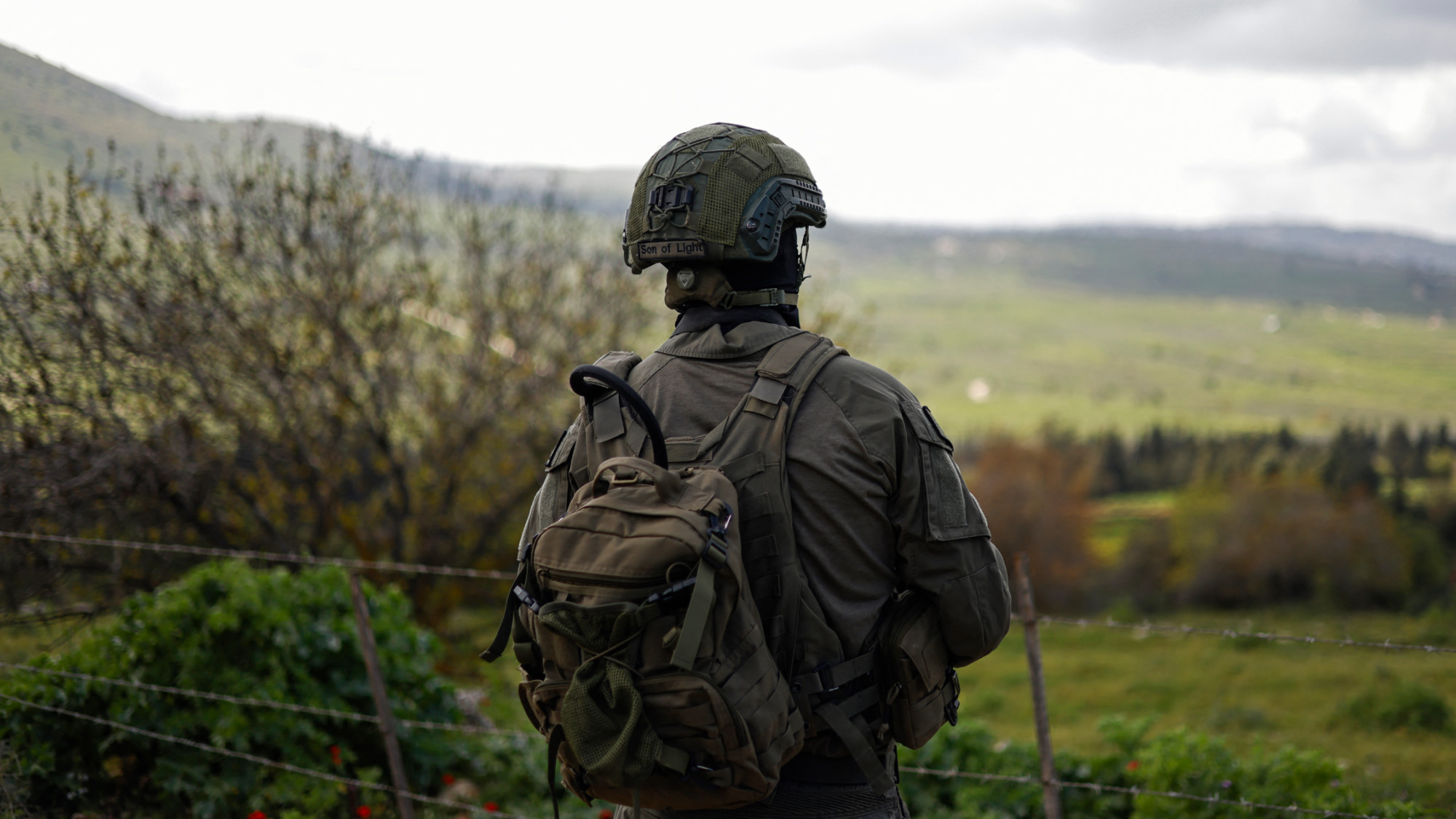
Fresh firsthand accounts from serving Israeli military reservists have laid bare systemic widespread looting and deliberate destruction of civilian property by Israeli troops operating in southern Lebanon, according to a new investigation published Wednesday by Israeli daily newspaper Haaretz. One reservist, who spoke to the outlet on condition of anonymity, laid out the consistent pattern of operations his unit followed: after opening fire on residential homes to clear any suspected Hezbollah fighters and confirm the area was secure, the unofficial, and in many cases primary, mission of stealing civilian property would begin. The reservist described that stolen goods ranging from fine rugs and upholstered armchairs to motorbikes and household heaters were pulled from private homes, while local shops were completely stripped of high-value merchandise. Even basic supplies used at Israeli military outposts in the region, including hand soap, were stolen from Lebanese properties, he added. Stolen spoils were stockpiled at forward outposts to be carried back to Israel when soldiers completed their tours of duty, and troops frequently argued over who would claim the most valuable items. This new account comes amid a growing tide of public reports of large-scale looting that have emerged since Israel-Hezbollah fighting escalated in March, following the joint Israeli-U.S. military strike on Iran. The issue of rampant theft by Israeli troops is not new: just one month prior, Haaretz first reported that soldiers had stolen sofas, televisions, and motorbikes from southern Lebanese households, with senior army commanders largely ignoring the practice. Earlier this month, Israeli outlet Ynet also reported that top military leaders have been unable to curb the scale of the looting across southern Lebanon. In comments made to senior commanders at a military conference last month, Israeli Army Chief of Staff Eyal Zamir publicly condemned the practice, stating, “the phenomenon of looting, if it exists, is disgraceful and could stain the entire military.” He added, “If such incidents occurred, we will investigate them. I am not willing for us to become an army of looters.” Following Zamir’s remarks, Israeli broadcaster Channel 14 reported that the chief of staff had asked frontline commanders operating in Lebanon to sign a public letter pledging to crack down on looting. However, at least one senior commander refused to sign, telling the outlet that discipline problems within the Israel Defense Forces (IDF) originate at the highest ranks of command. The reservist who spoke to Haaretz echoed this assessment, saying most senior commanders openly tolerated the looting. “The attitude was that there was no problem with looting as long as you didn’t get hurt. The higher command didn’t really try to stop us either,” he said. After initial reports of looting broke last month, the reservist said his own commanding officer ordered troops to halt theft – before entering local shops himself and smashing any remaining valuables so soldiers would have nothing left to steal. To date, no IDF soldiers have faced formal disciplinary action or punishment for participating in looting, the reservist confirmed. He added that some troops have even tried to justify the theft on religious grounds, while others argue that since most civilian properties were already slated for destruction, there was no reason to leave valuables intact. The reservist compared the IDF’s current approach to that of a historical Viking army, saying leadership allows widespread looting as a way to keep troops satisfied and willing to continue fighting. Israeli historian Adam Raz, who has extensively researched the looting of Palestinian property during the 1948 Nakba, noted last month that looting has been a consistent feature of every Israeli military campaign in the region. “What’s new is the total indifference,” Raz said. “The senior command turns a blind eye, the criminality continues, and the crime achieves its goals.” The findings from Haaretz’s latest investigation align with findings from international human rights groups. Last month, the Euro-Med Human Rights Monitor said on-the-ground reports from southern Lebanon confirm a clear, organized pattern of theft during Israeli military operations. The group documented that Israeli forces regularly raid civilian homes, rummage through personal belongings, and steal cash and private property, adding that the practice has become an official, unstated policy of the Israeli state and military. Euro-Med has also documented identical patterns of looting by Israeli forces in the Gaza Strip and the occupied West Bank. In a separate incident from January, Israeli forces were reported to have stolen roughly 250 goats from Syrian territory and transferred the animals to Israeli settlement outposts in the occupied West Bank. Even after the United States-brokered ceasefire between Israel and Hezbollah was announced last month, cross-border clashes and military operations have continued uninterrupted. Data from the United Nations Office for the Coordination of Humanitarian Affairs (OCHA) shows that roughly 100,000 Lebanese civilians have fled their homes in recent weeks out of fear of incoming Israeli strikes. Official figures from the Lebanese Ministry of Public Health confirm that Israeli forces have killed at least 3,020 people since the latest military offensive began in March, including 824 civilian and combatant deaths that have occurred since the April 17 ceasefire was announced. For its part, Hezbollah has killed at least 21 Israeli soldiers since March, eight of whom have died since the ceasefire, the majority of them invading troops stationed inside Lebanese territory. The new Haaretz testimonies also reveal that targeting Hezbollah fighters was not always the primary mission for Israeli troops on the ground. A second reservist told the outlet that the IDF’s core objective in southern Lebanon is not countering militant activity, but the deliberate destruction of civilian homes. “There was no reason other than revenge,” the reservist stated. He described a pre-invasion speech delivered by a battalion commander as “a pagan ritual”, adding that he had heard identical inflammatory rhetoric during previous Israeli military campaigns in Gaza and Lebanon. “When we entered the village, there were no militants. The houses were empty,” he said. “There was no fighting there at all – only operations to flatten homes.” The reservist noted that this destructive mission has been the IDF’s core focus in the region for the past two years, joking that the Israel Defense Forces should be renamed the “Israel Defence Forces for house demolitions”. He confirmed that even in areas with no sign of militant activity, soldiers still entered empty civilian homes to search for valuables to steal. According to his account, residential homes, public schools, and local clinics are destroyed without any formal military justification. Much of the demolition work is carried out by private contractors, including extreme Israeli settlers, as well as Bedouin and Druze laborers. For religiously observant soldiers in his unit, the reservist added, destroying Lebanese civilian homes is viewed as a sacred, ultimate mission. He also recounted that whenever troops raised the prospect of returning to Israeli territory, the battalion commander would respond: “This is Israel too.”
Looting and destruction are Israeli army’s ‘primary mission’ in Lebanon, soldiers say