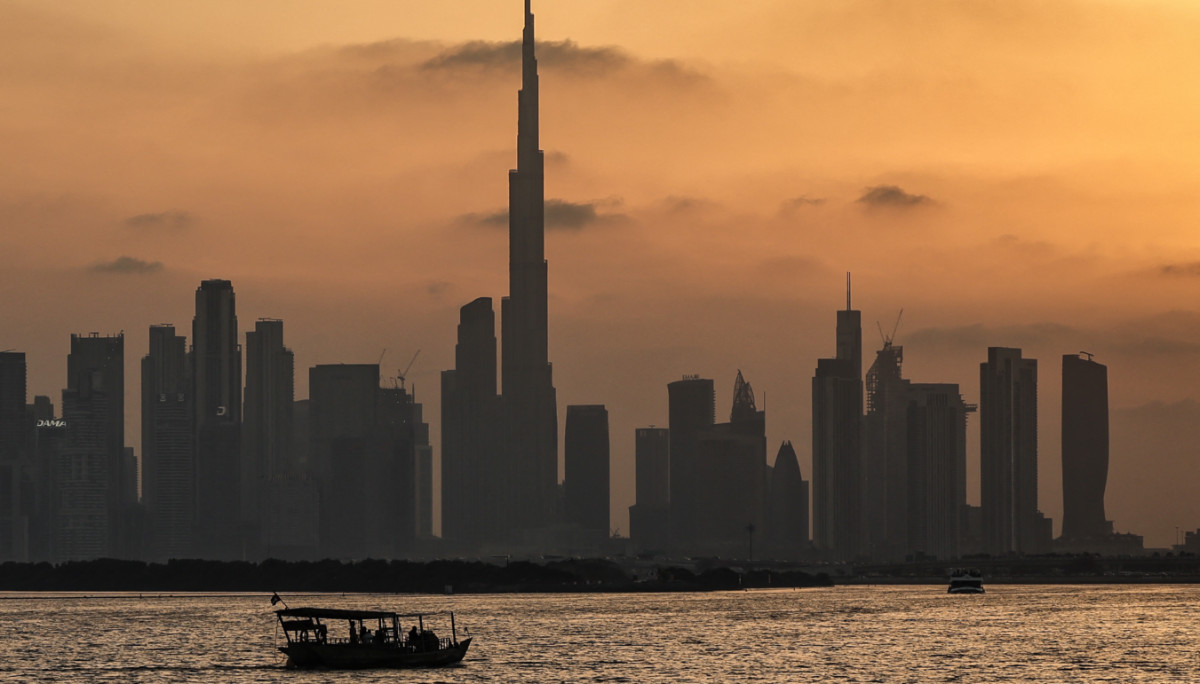
Escalating geopolitical tensions stemming from the US-Israeli conflict on Iran have driven a wave of western maritime industry professionals based in Dubai to explore relocation options outside the United Arab Emirates, multiple industry insiders including one ship owner have confirmed to Middle East Eye.
Industry sources note that Athens, Greece and Cyprus have emerged as top relocation candidates, drawing expats with their long-standing global leadership in shipping and competitive pro-industry tax frameworks that match the financial benefits Dubai has long offered. This push for new bases reflects a widespread expectation among mobile western expats that the Gulf region will not return to its pre-conflict stability and operational reliability in the near term.
The conflict has already roiled regional waterways: an estimated 2,000 commercial vessels remain stranded in the Gulf amid overlapping blockades imposed by the US and Iran. Paradoxically, the global shipping industry as a whole is experiencing an unprecedented boom, as vessel congestion has tightened global supply and triggered skyrocketing freight rates while global energy trade routes are redrawn amid the conflict. US oil and gas exports have climbed to all-time record highs as a result of the shifted demand, though longer transit routes from the US Gulf Coast to Asian markets add significant costs compared to traditional voyages from the Arabian Gulf.
The industry-wide upswing is highlighted by the performance of the Breakwave Tanker Shipping ETF, which tracks crude oil tanker rate pricing; the fund has surged 240% since the conflict in Iran began. This global prosperity stands in sharp contrast to the severe downturn hitting the UAE’s core maritime sector, which has borne the brunt of the regional blockade.
For decades, the UAE built itself into the undisputed leading logistics hub connecting the Middle East, Asia, and Africa. Its Jebel Ali Port ranks among the world’s largest container terminals and is a critical transshipment node for global trade moving between continents. Today, however, the sector is reeling: Iran’s control of the Strait of Hormuz has cut the UAE’s top export, crude oil, by more than half.
For many expats, the core issue is not just slowing business activity, but the eroded reputation of Dubai as a stable, reliable operational hub. “It’s not so much the slowdown in business, but the unreliability of Dubai as a hub. Can you count on a flight back to London or Paris for your family during war?” the anonymous ship owner told Middle East Eye.
Dubai’s golden age of rapid growth, which followed the Covid-19 pandemic, was unprecedented: the emirate capitalized on soaring global asset prices, the cryptocurrency boom, and the rise of remote work to attract global talent and capital. Its business-friendly policy framework — featuring low corporate tax rates, no personal income tax or capital gains tax, and streamlined bureaucracy — turned it into a magnet for international finance professionals from London and New York. Its financial ecosystem has also drawn capital from a wide range of sources, from Sudanese militia gold traders to Russian and Ukrainian expats fleeing conflict in Eastern Europe.
While most industry analysts still stop short of writing off Dubai’s long-term status as a regional business hub, thanks in large part to the UAE’s substantial sovereign financial reserves, the conflict has clearly brought an end to the emirate’s years of breakneck expansion. The ripple effects are already spreading beyond the shipping sector to Dubai’s key real estate market.
Arabian Business reported this week that thousands of Dubai real estate agencies could shut their doors in the coming months as a direct result of the conflict-driven uncertainty. A leading property search platform estimates that up to 30% of active agencies on its site could cease operations within five to six months. Similar to the trend among western shipping expats, the agencies most at risk are small operators and firms focused on highly speculative market segments such as off-plan property sales.
Lewis Allsopp, chairman and co-founder of leading Dubai real estate consultancy Allsopp & Allsopp, told Arabian Business that Dubai’s broker-to-resident ratio is drastically inflated compared to mature global property markets, standing at nearly 1,000 brokers per 100,000 residents. For context, London — one of the world’s busiest property markets — only counts roughly 176 brokers per 100,000 residents. This oversaturation, paired with new geopolitical risk, has set the stage for a widespread market correction.