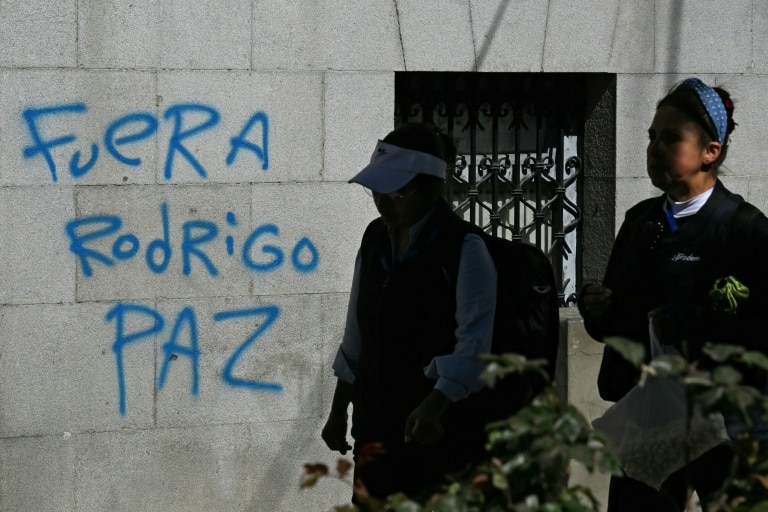
Bolivia is currently grappling with a deepening political crisis, as weeks of mass anti-government demonstrations have pushed the new center-right administration of President Rodrigo Paz into a defensive standoff with opposition groups and even neighboring nations. In an official address to the Organization of American States (OAS) on Wednesday, Bolivian Foreign Minister Fernando Aramayo issued a sharp rebuke of protesters demanding Paz’s resignation, claiming their coordinated actions — including widespread roadblocks and mass marches — are a deliberate attempt to destabilize the country’s democratic institutions.
The unrest, which has stretched on for weeks, has drawn participation from thousands of farmers, unionized laborers, miners, and public school teachers across the Andean nation. Protesters have coalesced around a list of grievances: galloping inflation that has eroded household purchasing power, persistent fuel shortages that have crippled daily life, and widespread opposition to what they frame as Paz’s pro-business free-market policy agenda, a sharp departure from the 20 years of socialist rule that preceded his administration.
Paz, who took office less than six months ago after winning a national election, campaigned on a pledge to pull Bolivia out of its worst economic crisis in four decades. In a controversial policy move aimed at shoring up the country’s plummeting dollar reserves, he eliminated long-standing, generous government fuel subsidies. To date, however, the reform has failed to deliver on its core promise of stabilizing fuel supplies — a key campaign issue that has become the most visible flashpoint of public anger.
Tensions boiled over on Monday in the capital city of La Paz, where riot police clashed with thousands of demonstrators attempting to march on government buildings to demand the president step down. Running battles between officers and protesters stretched on for hours. While a fragile calm has returned to La Paz in the days since, the broader national situation remains deeply tense and unstable.
The current crisis also carries the lingering shadow of former socialist president Evo Morales, the Indigenous coca farmer who launched Bolivia’s decades-long left-wing shift in the mid-2000s. Paz’s administration has directly accused Morales of fomenting a coup to overthrow the new government. Morales, 66, who served three terms in office before attempting an unsuccessful political comeback last year, currently lives as a fugitive in his coca-growing stronghold of Chapare, where he has hidden since late 2024. He is wanted by Bolivian authorities on charges of having a sexual relationship with a minor during his time in office, which he has denied. Morales has publicly expressed solidarity with the ongoing protests, and his supporters fear authorities are preparing imminently to move to arrest him.
International tensions have also flared alongside the domestic unrest. The United States has thrown its full weight behind Paz, who is part of a growing wave of newly elected right-wing leaders across Latin America, and has echoed the Bolivian government’s claims that the demonstrations amount to an illegal coup. On Wednesday, the Bolivian government announced it would expel Colombia’s ambassador to the country, citing unacceptable interference in Bolivian internal affairs by Colombian left-wing President Gustavo Petro. Petro had previously taken to social media to frame the Bolivian protests as a “popular insurrection” against “geopolitical arrogance”, a remark that drew fierce condemnation from La Paz. In response to the expulsion, Petro slammed the move, arguing it was evidence of ideological extremism on the part of Paz’s government.
Beyond the political sparring, the unrest has inflicted severe harm on ordinary Bolivians. Widespread roadblocks erected by demonstrators have severed supply chains across the country, disrupting the transport of fuel, food, and critical medicine, leading to acute shortages in urban and rural areas alike. “We have almost nothing left,” 43-year-old Sheyla Caya told AFP while waiting in a long queue to buy chicken in La Paz this week. “It’s impossible to even find an egg.”