In a surprising new discovery published in the journal *Royal Society Open Science* on Tuesday, marine researchers have documented two humpback whales completing unprecedented, record-breaking transoceanic crossings between Australia and Brazil, a journey spanning nearly 15,000 kilometers that upends long-held assumptions about the species’ migratory behaviors and population separation.
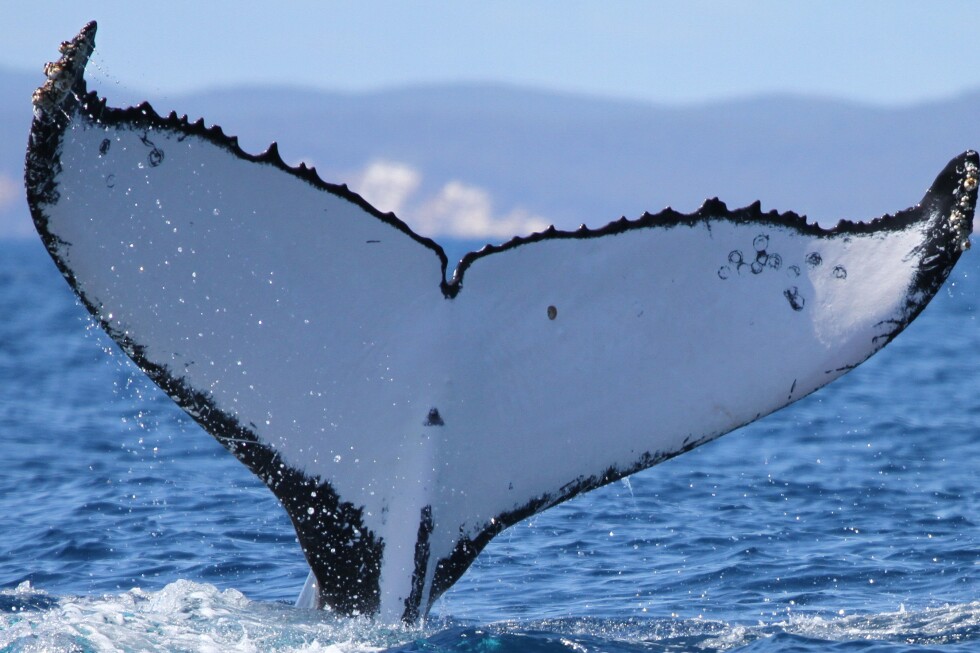
Each of the two whales was traced through their one-of-a-kind tail flukes, which bear unique color patterns and jagged edge markings that act like a human fingerprint for marine biologists. Spotted at locations more than 9,000 miles apart, the two animals traveled in opposite directions between the two coastal breeding grounds, with one clocking a journey of just over 9,300 miles — the longest recorded humpback migration to date, surpassing the previous record set by a humpback that swam from Colombia to Zanzibar.
Humpback whales have long been understood to follow rigid, predictable migratory routes passed down from mother to calf. Their annual cycle typically sees them travel to cold, nutrient-rich polar or subpolar waters to feed on krill and small fish during warmer months, then return to warm tropical breeding grounds for winter. Tracking the far-ranging movements of these deep-diving marine mammals has always been a major challenge for scientists, as the creatures spend the vast majority of their lives below the ocean surface out of direct observation.
To overcome this barrier, the research team behind the new study compiled and analyzed more than 19,000 whale photographs collected over four decades by both formal research groups and volunteer citizen scientists. Cutting-edge image recognition software was used to match unique tail markings across the entire dataset, leading to the groundbreaking identification of the two crossing individuals. Because photos only capture the whales at their starting and ending points, however, the research team has not been able to confirm the exact route the whales took across the entire South Pacific and Atlantic oceans.
According to study co-author Stephanie Stack of the Pacific Whale Foundation, the unusual inter-breeding-ground travel is not characteristic of humpback behavior, so the motivation for the two separate journeys remains unclear. One leading hypothesis is that the whales encountered other population groups on shared feeding grounds, then chose to follow those whales to a new breeding ground instead of returning to their original natal site.
The discovery of not one but two transoceanic crossings between geographically separate breeding sites challenges the scientific consensus that humpback populations in these regions are largely isolated from one another. Phillip Clapham, former head of a National Oceanic and Atmospheric Administration whale research program who was not involved in the new study, noted that while such extreme long-distance movements are very rare, they offer a striking illustration of how far these animals are capable of traveling.
Unlike in the Southern Hemisphere, large continental landmasses create barriers that make this kind of open cross-ocean odyssey far less feasible for humpback populations in the Northern Hemisphere. Beyond rewriting what we know about humpback range, researchers say the photo-identification method used in this study will prove critical for monitoring how whale migration and distribution shifts as climate change drives ocean warming, which is already altering the distribution of krill — humpbacks’ primary food source — and forcing changes to traditional feeding and breeding grounds.
The Associated Press’ Health and Science Department received funding support for this reporting from the Howard Hughes Medical Institute’s Department of Science Education and the Robert Wood Johnson Foundation, with the AP retaining full editorial control over all content.