Just 48 hours after a disruptive nationwide strike over skyrocketing fuel prices brought major Kenyan urban centers to a complete halt, public transport operators have agreed to pause industrial action through next Tuesday to allow for expanded negotiations with the national government. The walkout, which was sparked by a record-breaking fuel price increase tied to Middle East geopolitical instability, left a trail of violence and disruption in its opening days, killing at least four people, injuring 30 more, and leading to more than 700 arrests across the country, according to official Kenyan government figures.
The strike entered its second day on Tuesday when the tentative deal to suspend action was announced. Interior Cabinet Secretary Kipchumba Murkomen confirmed that the breakthrough followed closed-door consultations between senior government officials and public transport sector representatives. Per the agreement, high-level negotiations addressing the core demands of the transport operators will be convened within the coming seven days.
Edwin Mukabane, national chairman of the Federation of Public Transport Sector, emphasized that the suspension of the strike is not a sign of satisfaction with current government actions, but a deliberate choice to give diplomatic negotiations a fair shot. “If this is not taken seriously within the seven days, the strike will be back on,” Mukabane warned in a press statement following the talks.
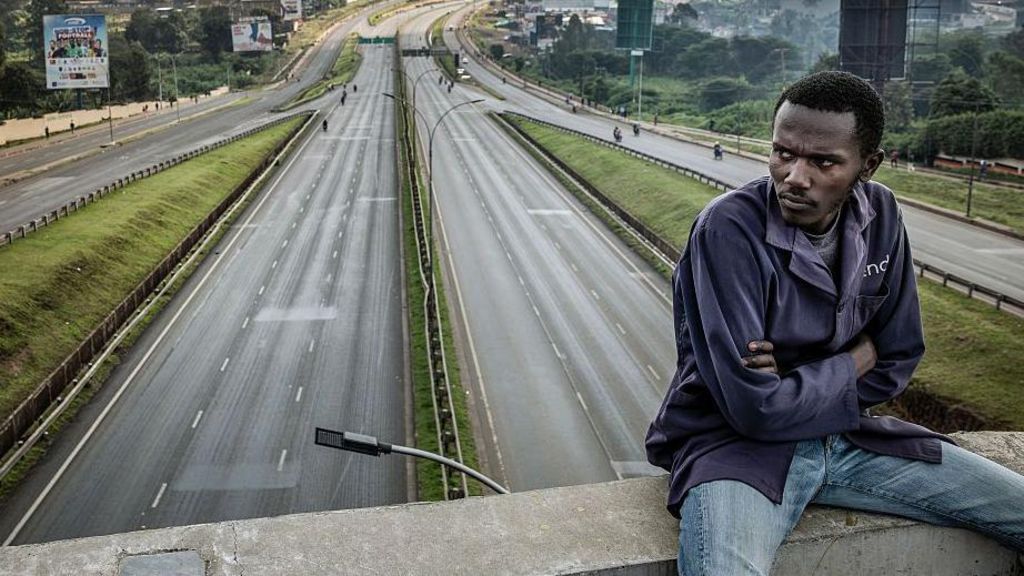
Well into Tuesday morning, key arterial roads across the capital Nairobi remained largely empty, with most businesses shuttered and schools keeping their doors closed following the unrest. Mirroring the conditions seen on Monday, thousands of ordinary Kenyans were forced to walk long distances to reach work, medical appointments, and other essential destinations, though a small fraction of public transport operators had resumed limited services on select routes by midday. Heavily armed police patrols were deployed across high-traffic areas of the capital to maintain public order, following reports that protesters had blocked key intersections and highways over the 48-hour period. Law enforcement officials have publicly urged all demonstrators to avoid violence, specifically warning against looting and the destruction of public and private property. The Directorate of Criminal Investigations confirmed that probes into Monday’s violent clashes are ongoing, with dozens of arrested suspects already arraigned in local courts.
The violence has drawn sharp criticism from Kenyan human rights groups. Vocal Africa, a prominent Kenyan civil rights organization, has publicly denounced what it calls “the use of lethal force by law enforcement” against peaceful demonstrators. The Kenya National Commission on Human Rights (KNCHR), a state-funded human rights oversight body, has joined the call for immediate independent investigations into the violence and property destruction that unfolded during the strike, while urging police commanders to mandate strict restraint among deployed officers.
In contrast to the lingering disruption in Nairobi, coastal tourist hub Mombasa had already returned to a near-normal state by Tuesday, with most public transport services back in operation.
The current unrest traces back to a record fuel price hike that hit consumers earlier this month. Early talks between government and transport representatives held on Monday produced a preliminary concession: Energy Minister Opiyo Wandayi announced an agreement to cut the price of diesel, which had surged to a historic high of 242 Kenyan shillings ($1.80 USD, £1.40 GBP) per liter. The national energy regulator subsequently implemented a 10-shilling per liter cut to diesel prices, leaving petrol prices unchanged at 214 shillings per liter.
That reduction fell far short of the transport sector’s demands, however, prompting operators to continue the strike following Monday’s initial meeting. After a follow-up negotiating session held Tuesday morning, Wandayi said the government remains committed to addressing the struggles of ordinary Kenyan fuel consumers and thanked transport leaders for agreeing to pause the strike. Transport operators are pushing for a total 46-shilling per liter cut to fuel prices, which would bring costs back to levels seen before the outbreak of conflict between Israel and Iran that began on 28 February.
Like many sub-Saharan African nations, Kenya relies almost entirely on imported fuel from Gulf Cooperation Council states, whose production and export routes have been severely disrupted by the ongoing regional conflict. Though a ceasefire has been agreed to by both parties, the Strait of Hormuz — the chokepoint through which roughly one-fifth of the world’s daily global oil supply transits — remains blocked, keeping global energy prices elevated. Last month, the Kenyan government already attempted to ease consumer pressure by cutting value-added tax on fuel from 16% to 8%, a reduction that will remain in place through July. But critics say the move has not been enough to offset the broader price increases driven by the Middle East conflict, leading to the widespread industrial action.