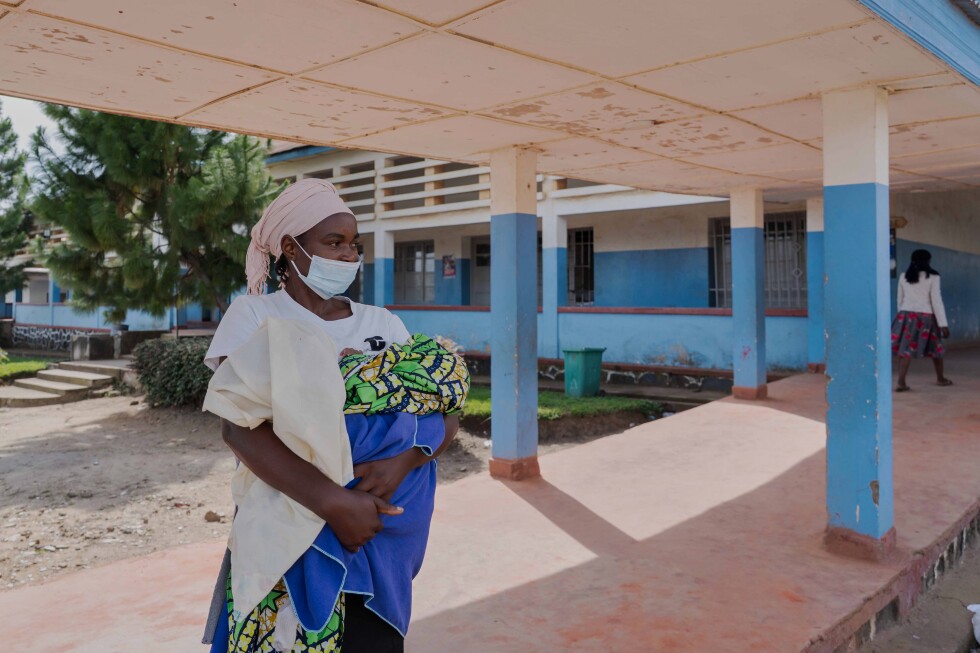
KINSHASA, Democratic Republic of Congo — A fast-escalating rare Ebola outbreak in eastern Democratic Republic of Congo has already claimed at least 131 lives and sparked over 500 suspected infections, Congolese health officials confirmed Tuesday, as the top leader of the World Health Organization (WHO) issued urgent warnings over the outbreak’s alarming scale and accelerating spread.
Health experts and humanitarian aid workers report the virus circulated undetected for several weeks after the first fatality, and delays in identifying and responding to the crisis have severely complicated efforts to contain transmission. Congolese Health Minister Samuel Roger Kamba told reporters the country has recorded 513 suspected cases and 131 deaths to date, noting that all fatalities are still under investigation to confirm linkage to the current outbreak. These figures represent a dramatic jump from just one day prior, when authorities reported 300 suspected cases, underscoring how much remains unknown about the full scope of the crisis.
WHO Director-General Tedros Adhanom Ghebreyesus stated he is “deeply concerned about the scale and speed of the epidemic”, and announced the U.N. health agency would convene its emergency committee later the same day to assess the outbreak and coordinate a global response. Tedros outlined key factors driving fears of further spread: transmission in densely populated urban centers, deaths of frontline healthcare workers, high volumes of population movement through the affected region, and critical shortages of targeted vaccines and treatment options.
The outbreak, formally confirmed on May 14, is caused by the Bundibugyo variant, a rare strain of Ebola for which no fully approved vaccines or specific therapeutics currently exist. Just three days after confirmation, on May 17, the WHO declared the event a Public Health Emergency of International Concern (PHEIC), the highest level of global health alert.
Confirmed cases have already been documented across five locations: Bunia, the rebel-held North Kivu provincial capital of Goma, Mongbwalu, Butembo, and Nyakunde. The outbreak has also crossed an international border, with one confirmed case and one death recorded in Uganda in an individual who traveled from the affected Congolese region.
In Ituri province’s capital of Bunia, one American physician has tested positive for the virus, according to Dr. Jean-Jacques Muyembe, medical director of the DRC’s National Institute of Bio-Medical Research. Dr. Peter Stafford, who was treating patients at a local hospital when he developed symptoms, works for the international medical organization SERVE. Three other SERVE staff members, including Stafford’s wife, were working at the same facility but have not reported any symptoms to date.
The chain of delayed detection stretches back to April 24, when the first recorded Ebola fatality occurred in Bunia. The victim’s body was subsequently transported for burial to the Mongbwalu health zone, a heavily populated gold mining region, a movement that health minister Kamba says directly fueled the outbreak’s rapid escalation.
When a second person fell ill on April 26, samples were shipped to the national capital Kinshasa for testing. Congolese officials report that samples were initially screened only for Zaire ebolavirus, the more common circulating strain, and returned a false negative result. Local authorities therefore ruled out Ebola and took no immediate containment action. It was not until May 5, when WHO was alerted to an unexplained cluster of 50 deaths in Mongbwalu—including four local health workers—that officials ordered expanded testing, leading to the formal confirmation of the outbreak on May 14.
Matthew M. Kavanagh, director of the Georgetown University Center for Global Health Policy and Politics, says the false negative result left global and local responders playing catch-up with a deadly pathogen. He criticized the former Trump administration’s decision to withdraw U.S. membership from the WHO and slash global health foreign aid funding, cuts that he says weakened the very early warning surveillance systems designed to detect these outbreaks before they grow out of control.
The U.S. State Department rejected criticism on Monday, noting that Washington had moved quickly to deploy support and already committed $13 million in emergency assistance to the outbreak response.
Esther Sterk, a representative for the humanitarian medical organization Medecins Sans Frontieres (Doctors Without Borders), told the Associated Press that the situation remains deeply worrying and is evolving much faster than initial projections. She added that delayed detection is not an uncommon challenge for Ebola outbreaks, as the disease shares early symptoms with many other common tropical illnesses.
Ebola is a highly contagious viral pathogen spread through direct contact with infected bodily fluids, including blood, vomit, and semen. While infections are rare, the disease causes severe illness that is frequently fatal. During the 2014-2016 West African Ebola epidemic that killed more than 11,000 people, many transmissions occurred during traditional funeral practices that involve close contact with deceased victims’ bodies.
Dr. Craig Spencer, an associate professor at Brown University School of Public Health who survived an Ebola infection he contracted while working in Guinea in 2014, notes that Ebola disproportionately harms those who care for the sick, a dynamic he describes as the “disease of compassion.” Common symptoms of infection include fever, headache, muscle pain, weakness, diarrhea, vomiting, abdominal pain, and unexplained bleeding or bruising.
Rising caseloads and severe symptoms have fueled growing panic among residents in Bunia’s neighborhoods. Noëla Lumo, a Bunia resident who previously lived through an Ebola outbreak in Beni, says she understands the threat firsthand and has already begun production of homemade protective cloth masks to distribute to her community.
The affected region of eastern DRC already faces overlapping crises that complicate the outbreak response. Mongbwalu is located in a remote part of Ituri province, more than 620 miles from Kinshasa, with poorly maintained road networks that slow the movement of medical supplies and response teams. Eastern DRC has been grappling with a years-long humanitarian crisis and ongoing violence from armed rebel groups, which have killed dozens of people and displaced thousands in Ituri alone over the past year. According to U.N. data, Ituri is home to more than 273,000 internally displaced people out of a total provincial population of just 1.9 million.
A U.N. official based in Bunia, speaking on condition of anonymity due to restrictions on speaking to media, confirmed that all U.N. staff in the region have been ordered to work remotely, avoid close physical contact with others, and stay away from crowded public spaces to reduce their risk of infection.