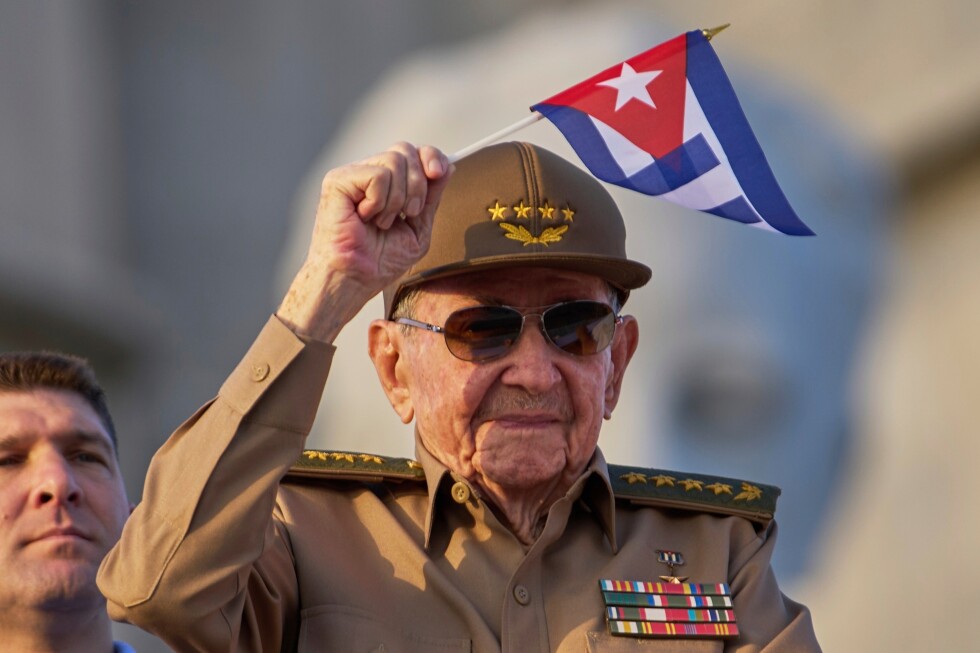
In the wake of a early-year Venezuelan military operation that resulted in the capture of embattled Venezuelan President Nicolás Maduro, the United States has steadily escalated diplomatic and economic pressure on Cuba, the Latin American nation long led by a communist government, according to reporting from multiple senior U.S. and international sources. The escalating standoff has put bilateral relations, already fraught after more than 60 years of enmity, at a critical turning point, with the U.S. Justice Department now moving toward a criminal indictment of former Cuban leader Raúl Castro, a step that could send regional tensions soaring.
A potential indictment against Castro would require approval from a federal grand jury before it can be formally filed, three anonymous sources familiar with the ongoing investigation confirmed to the Associated Press. Three insiders noted that the preliminary charge is tied to Castro’s alleged role in the 1996 downing of two aircraft operated by Brothers to the Rescue, a Miami-based Cuban exile group, an incident that left four people dead. At the time of the shootdown, Castro served as Cuba’s defense minister, and he retains behind-the-scenes influence over Cuban governance despite stepping down from official office years ago. The Cuban government has not issued any public response to multiple requests for comment on the pending investigation, which was first reported by CBS.
This push for legal action comes amid a year of rapidly shifting friction between the Donald Trump administration and Havana, unfolding concurrently with a fragile, uneasy ceasefire in the U.S. military conflict with Iran. To contextualize the fast-moving developments, here is a chronological breakdown of key milestones in U.S.-Cuba relations over the first five months of the year:
On January 4, just 24 hours after the Venezuelan operation that removed Maduro from power, Secretary of State Marco Rubio publicly warned that Cuba’s ruling government “is in a lot of trouble.” That same day, Trump renewed his long-stated public call for the United States to take control of Greenland, an autonomous territory owned by Denmark.
A week later on January 11, Trump issued a direct public ultimatum to Cuba, Maduro’s closest regional ally, as the island braced for potential domestic unrest following Maduro’s ousting. “Cuba needs to make a deal BEFORE IT IS TOO LATE,” Trump wrote in a social media post. Cuban President Miguel Díaz-Canel pushed back sharply on the threat, arguing that the U.S. government, which he criticized for turning even human lives into a commercial transaction, has no moral standing to judge Cuba’s actions.
On January 30, Trump signed a new executive order imposing punitive tariffs on any goods imported from nations that export or supply petroleum to Cuba. Policy analysts widely agree the move will further damage Cuba’s already fragile economy, which has been strained by decades of U.S. sanctions.
On February 26, one day before the U.S. launched its full-scale military campaign against Iran, Trump unexpectedly announced that Washington was holding high-level talks with Cuban officials and floated the possibility of a “friendly takeover of Cuba,” though he offered no further details on what such a framework would entail. He confirmed Rubio was leading discussions with senior Cuban leadership, noting that the decades-long adversarial relationship between the two nations was approaching a pivotal moment. That same month, Raúl Guillermo “Raúlito” Rodríguez Castro, Raúl Castro’s grandson and a rising figure in Cuban politics, held a secret closed-door meeting with Rubio on the sidelines of the Caribbean Community summit in St. Kitts.
It was not until March 13 that Díaz-Canel publicly confirmed the backchannel talks, marking the first official acknowledgement of negotiations between the two governments amid a crippling national energy crisis. He said in a public statement that the discussions “were aimed at finding solutions through dialogue to the bilateral differences between our two nations. International factors facilitated these exchanges.” Two weeks later on March 31, a Russian oil tanker that had been sanctioned by the U.S. docked in Cuba, delivering the first shipment of fuel to the island in three months.
Through early April, Díaz-Canel repeatedly rejected U.S. pressure to step down, stating in an April 12 interview with NBC’s *Meet the Press* that Washington has no legitimate justification for either a military invasion of Cuba or an attempt to remove his government from power. He warned that any U.S. military incursion would carry heavy costs and destabilize the entire Caribbean region. On April 16, during a mass rally in Havana marking the 65th anniversary of the Cuban Revolution’s formal declaration of socialism, Díaz-Canel called on the Cuban people to prepare for potential external aggression. “The moment is extremely challenging and calls upon us once again, as on April 16, 1961, to be ready to confront serious threats, including military aggression,” he told the crowd of hundreds of supporters. “We do not want it, but it is our duty to prepare to avoid it, and if it becomes inevitable, to defeat it.”
The following day, news broke of a new round of in-person talks between a U.S. delegation and senior Cuban government officials, marking a renewed push for diplomatic progress. This meeting was the third confirmed discussion between U.S. representatives and Rodríguez Castro, and a senior State Department official had met with the Cuban envoy earlier that month, a department official confirmed on condition of anonymity due to the sensitivity of the negotiations. The official declined to name the members of the U.S. delegation, while a second U.S. official clarified that Rubio was not part of the delegation that traveled to Havana.
On April 23, Cuban Ambassador to the United Nations Ernesto Soberón Guzmán told the AP that Havana would reject any U.S. ultimatums requiring the release of political prisoners as a condition of continuing talks, stating that all internal Cuban matters related to detentions “are not on the negotiating table.” The release of political prisoners has been a core demand from U.S. negotiators in the first formal bilateral talks held on Cuban soil in a decade. A week later on April 28, Senate Republicans blocked a Democratic-sponsored bill that would have forced Trump to lift the U.S. energy blockade against Cuba without prior congressional approval. The vote underscored unified Republican support for Trump’s unilateral exercise of U.S. military and diplomatic pressure across multiple global hotspots, including Venezuela, Iran, and Cuba.
By May 7, senior U.S. officials moved to quell widespread speculation about an imminent U.S. military strike on Cuba, despite repeated public threats from Trump that “Cuba is next” and hints that U.S. warships deployed to the Middle East for the Iran conflict could sail to Cuba after concluding their operations. The sources, who are involved in the ongoing preliminary talks with Cuban authorities, also told the AP that U.S. negotiators are not optimistic that Havana will accept a sweeping U.S. offer that includes tens of millions of dollars in humanitarian aid, two years of free Starlink internet access for all Cubans, agricultural support, and infrastructure investment. The proposal comes with strict policy conditions that the Cuban government has rejected for decades, though officials noted that Havana has not yet formally turned down the offer even after new Trump administration sanctions took effect.
One week later on May 14, both U.S. and Cuban officials confirmed that CIA Director John Ratcliffe had traveled to Havana for high-level meetings with Cuban officials, including Rodríguez Castro. Ratcliffe held discussions with Rodríguez Castro, Cuban Interior Minister Lázaro Álvarez Casas, and the head of Cuba’s national intelligence service, covering intelligence cooperation, economic stability, and regional security issues. A CIA spokesperson later confirmed the meeting to the AP. A day after that visit, the AP first reported that the Justice Department was moving forward with plans to seek a grand jury indictment against Raúl Castro, the latest development in a rapidly shifting standoff between the two nations.