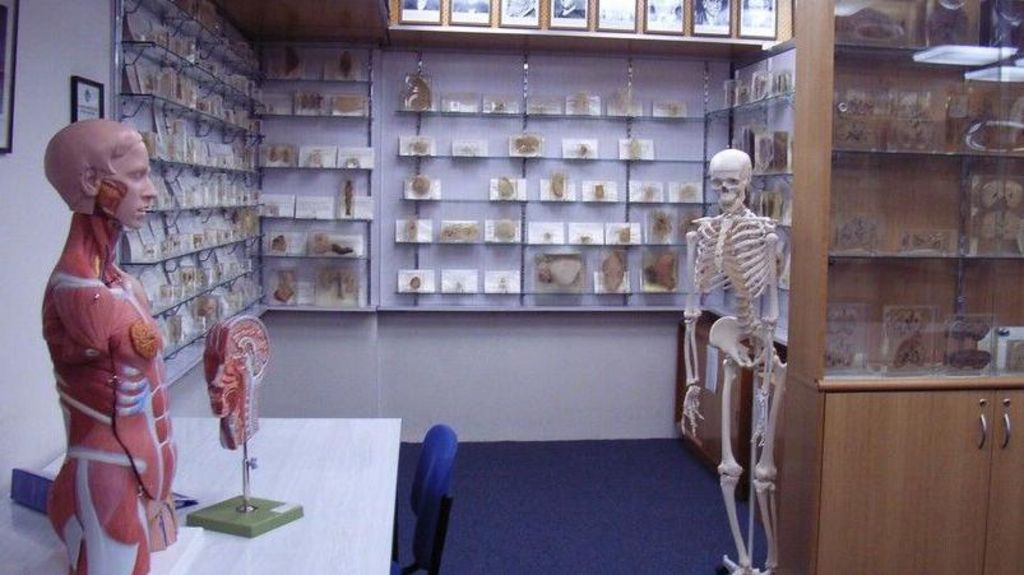
A decades-long breach of trust involving unauthorized retention and display of human body specimens at a University of Tasmania museum has come to a head, with the Tasmanian state government issuing a formal apology to affected families for the profound harm caused by the unethical practices.
The scandal traces its roots back to 1966, when the RA Rodda Pathology Museum was founded at the university’s Hobart campus to support medical education and research. For 25 years, ending in 1991, forensic pathologists secretly sourced 177 human tissue and organ specimens from coroner-ordered autopsies, transferring the samples to the museum without ever obtaining consent from the deceased’s next of kin or the coroners overseeing the cases. Coroner Simon Cooper’s 2024 investigation confirmed that the vast majority of these specimens were provided by the late Dr Royal Cummings, a prominent forensic pathologist, with the practice also carried out by his predecessors and successors. In many instances, pathologists actively sought out specimens for the museum collection, a deliberate violation of ethical and legal protocols.
Concerns about the museum’s collection first emerged in 2016, when three bone specimens were flagged as potentially obtained without family consent. The allegations prompted the state coroner to launch a full formal investigation in April 2023, with the final damaging findings released in September 2024. All 177 problematic specimens had already been removed from public display back in 2018, years before the investigation concluded.
On Tuesday, a number of affected family members gathered in Tasmania’s parliament to hear the health minister’s formal apology. Minister Bridget Archer addressed the lasting harm of the unethical practices, which ended 35 years ago but have continued to inflict trauma on surviving relatives. “Although these historical practices ended 35 years ago, the deep impact this has had on the families and loved ones of the deceased continues to this day,” Archer told parliament. “It’s important to remember that these were not just body parts or specimens or human remains. They were people.”
Many family members have carried decades of grief after learning their loved ones’ remains were held without permission. Cheryl Springfield’s 14-year-old brother David Maher died in a 1976 car crash; she described learning of the retained specimens as a lifelong nightmare. While she welcomed the apology, she stressed that it could not undo the harm. “It’s in the right direction, but it’s not going to fix it all,” she told local media. Similarly, John Santi, whose 19-year-old brother Tony died in a 1976 motorcycle accident, said his family buried his brother 50 years ago, only to discover decades later that his brain had been stolen for the museum collection. “We buried him 50 years ago, only to find out 50 years later that these people had stolen his brain,” Santi told Australian Associated Press.
Shortly after the government’s apology, University of Tasmania Deputy Vice-Chancellor for Health Professor Graeme Zosky also issued an acknowledgment of the wrongs committed, noting that university staff had already met with dozens of affected families. “While we recognise an apology cannot fix the hurt and distress families have felt, we are sorry,” Zosky said.