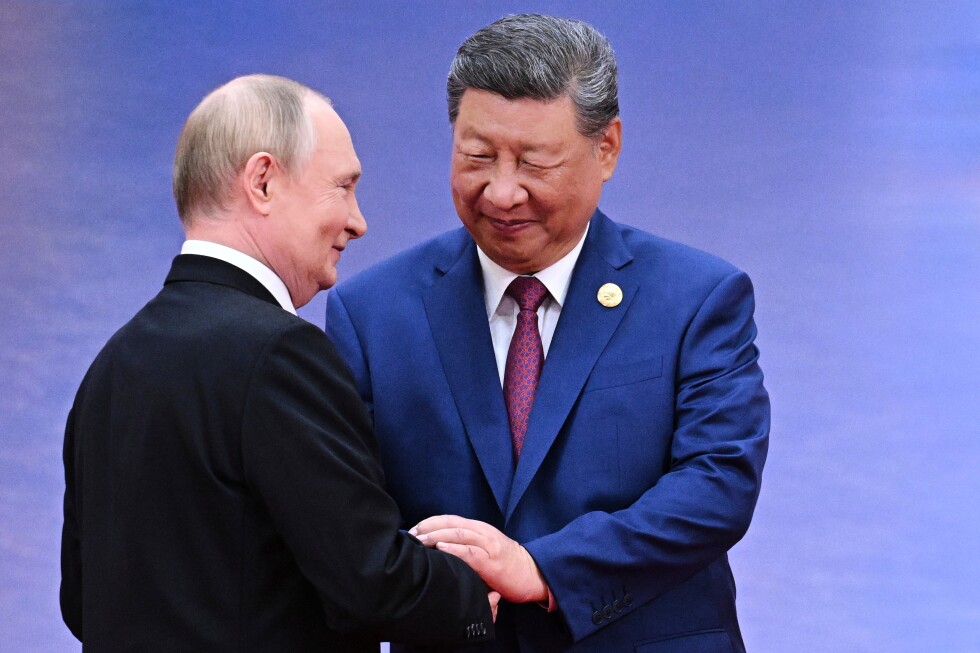
Just six days after former U.S. President Donald Trump concluded his high-stakes diplomatic trip to Beijing, Russian President Vladimir Putin is set to arrive in China for two days of bilateral talks with Chinese leader Xi Jinping, a diplomatic scheduling that has drawn close global attention to Beijing’s careful balancing act between major powers.
Scheduled for Tuesday and Wednesday, Putin’s visit comes as Beijing pursues two parallel diplomatic goals: forging stable, constructive relations with Washington while cementing its decades-long strategic partnership with Moscow. Experts note these two policy tracks are not contradictory for Chinese diplomacy. This year also marks the 25th anniversary of the landmark 2001 Sino-Russian Treaty of Friendship, adding symbolic weight to the summit.
The Kremlin has confirmed that the two leaders will cover a wide agenda, ranging from deepening bilateral economic and energy cooperation to addressing pressing global and regional security challenges. Kremlin spokesman Dmitry Peskov added that the trip will also create a critical opportunity for Russia to get direct, first-hand updates from China on recent U.S.-China talks, opening space for a frank exchange of views between Moscow and Beijing.
This is not Putin’s first visit to China in recent years. In September 2025, he traveled to Tianjin to attend the annual Shanghai Cooperation Organization summit, attended a military parade marking the 80th anniversary of the end of World War II, and held one-on-one talks with Xi. During that meeting, the two leaders openly referred to one another as friends: Xi called Putin an “old friend”, while Putin addressed Xi as “dear friend”. Just months earlier, in April 2025, Russian Foreign Minister Sergey Lavrov also traveled to Beijing for talks with Xi, who described the Sino-Russian bilateral relationship as “precious” amid the current fractured global context. Xi stressed at that time that Beijing and Moscow must strengthen strategic coordination to defend their shared legitimate interests and protect the collective unity of Global South nations.
During Trump’s recent Beijing visit, Xi framed the U.S.-China bilateral relationship as the most consequential in the world, urging both sides to embrace a partner mindset rather than framing one another as rivals. By the close of the two-day summit, the two nations announced they would work toward a new framework to guide a “constructive China-U.S. relationship of strategic stability”.
For observers, Putin’s trip serves as a clear reinforcement of the Sino-Russian partnership, which has grown significantly deeper since 2022, when Russia launched its full-scale invasion of Ukraine. China has maintained an official neutral stance on the conflict while continuing to expand trade ties with Moscow, despite sweeping economic and financial sanctions imposed on Russia by the U.S. and the European Union.
Today, China stands as Russia’s largest single trading partner, and is the top buyer of Russian crude oil and natural gas. Moscow has projected that regional tensions stemming from the war in Iran will further boost demand for Russian energy exports to China. China has also rejected Western demands to halt exports of high-tech components to Russia’s defense sector, a move that has drawn criticism from Western capitals.
Earlier this month, Putin highlighted that Moscow and Beijing have already made major progress in advancing energy cooperation. “We have reached agreement on practically all the key issues in the oil and gas sector,” Putin said. “If we can finalize the remaining details and conclude these agreements during my upcoming visit, I will be extremely pleased.”
Putin has also framed the Sino-Russian relationship as a critical balancing force for global order. “Interaction between such large nations as China and Russia undoubtedly acts as a factor of deterrence and global stability,” he noted. The Russian leader added that Moscow welcomes the recent dialogue between Beijing and Washington, viewing it as an additional stabilizing force for the global economy. “We only stand to benefit from stability and constructive engagement between the U.S. and China,” he said.
Wang Zichen, deputy secretary-general of the Beijing-based Center for China & Globalization, summed up Beijing’s diplomatic strategy: “The Trump visit focused on stabilizing the world’s most important bilateral relationship; the Putin visit is about reassuring a long-standing strategic partner. For China, these two tracks are not mutually exclusive. Beijing wants stable relations with the West, continued strategic trust with Moscow, and enough diplomatic space to position itself as an unbiased major power capable of engaging all sides.”