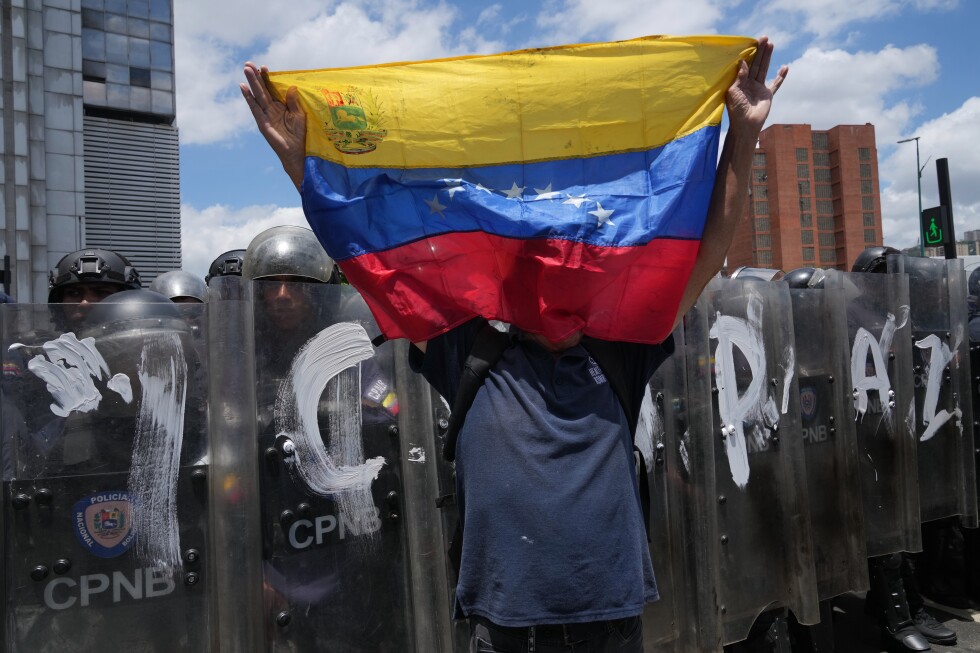
CARACAS, VENEZUELA – A solemn demonstration gripped Venezuela’s capital Monday, as dozens of protesters gathered to honor the life of Carmen Navas, an 82-year-old woman who died just days after finally learning her son had died in state custody nine months prior.
Mostly made up of college students, the crowd staged a temporary blockage of a major Caracas highway, directing sharp blame at the Venezuelan government for both deaths: that of 51-year-old Víctor Hugo Quero, whose detention has been widely categorized as politically motivated, and his elderly mother Navas, who spent months searching for answers about her son’s fate. Chanting calls for accountability, protesters carried a large banner emblazoned with Navas’ portrait, and unified in slogans declaring “They didn’t die; they were killed!” and “Justice for Carmen!”
Student leader Miguel Ángel Suárez summed up the public reaction to the pair’s deaths, noting, “What it stirs up in Venezuelans, in the Venezuelan youth, is rage.”
The timeline of the tragedy stretches back to January 2025, when Quero was first taken into state custody. For nine months, Navas waged a relentless search for information: she visited detention facilities, courthouses, and multiple government agencies, repeatedly demanding confirmation that her son was alive. It was only 10 days before her own death that Venezuela’s prisons agency released an official statement confirming Quero had died in July, after being hospitalized for an underlying gastrointestinal issue while in custody.
Per the government’s official account, Quero died of “acute respiratory failure secondary to pulmonary thromboembolism.” Officials attempted to justify the nine-month information blackout by claiming Quero had not provided emergency contact details for his family – a claim that has done little to quell public anger.
The incident has sparked immediate condemnation from across Venezuela’s political opposition, local and international human rights groups, and family members of other people detained on political charges in the country. According to Foro Penal, a prominent Venezuelan prisoners’ rights organization, more than 400 people are currently being held in the country for politically motivated reasons.
This development comes amid a string of ongoing political tensions across Latin America, with AP continuing full coverage of regional developments at its dedicated Latin America and the Caribbean hub.