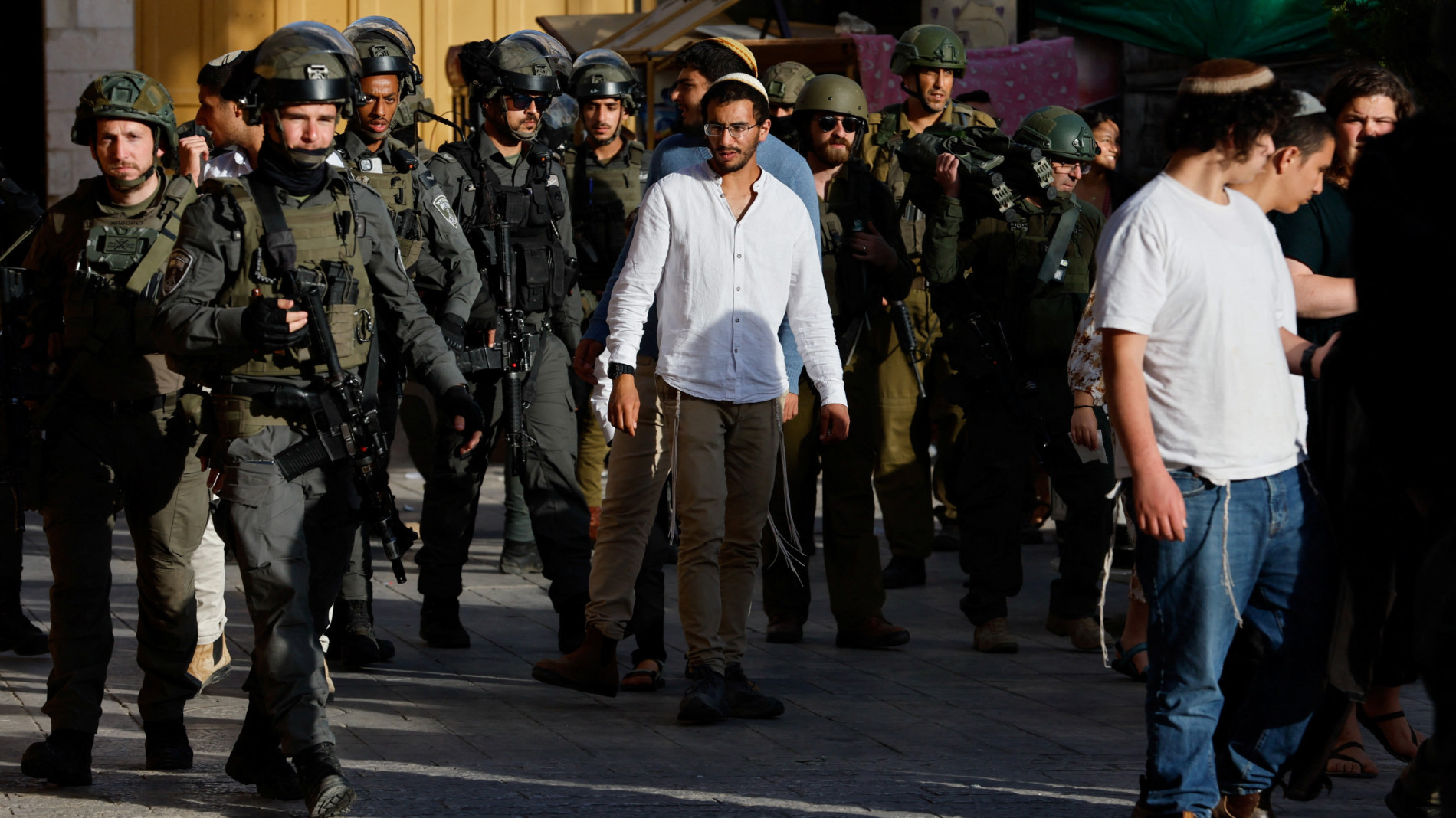
In the pre-dawn darkness of Sunday, a brutal assault by dozens of Israeli settlers upended the life of the Shalalda family in the al-Daraja region, just east of the West Bank city of Hebron, leaving four family members injured and deepening a long-running pattern of settler intimidation designed to push Palestinians off their ancestral land.
The attack began around 3 a.m., when Mohammed Shalalda, who was sleeping on the roof of his family’s decades-old home, woke to the sound of intruders. Before he could fully register what was happening, more than 15 settlers dragged him from his sleeping spot, beating him repeatedly with kicks and wooden clubs even as his blood soaked the ground.
“I started screaming to wake the residents and rescue me, but the settlers put a blanket over me and continued beating me violently. I was bleeding, and I didn’t know where the bleeding was coming from; my whole body was their prey,” Shalalda told independent outlet Middle East Eye in an interview after the assault.
During the beating, the settlers repeatedly demanded Shalalda tell them where the family’s sheep were kept. When he answered the family had no sheep present that night, they intensified the attack, spraying tear gas directly into his face from canisters they had brought to the scene.
Hearing his brother’s screams from inside the home, 36-year-old Amer Shalalda rushed outside to intervene. The settlers turned on him too, beating him severely before tying a rope around his neck. Seeing his brother being attacked, a badly injured Mohammed Shalalda shouted at the group, prompting one settler to pull a knife from his pocket and stab Shalalda in the leg — the same leg that was targeted in a previous settler attack.
As neighbors attempted to intervene, the number of attacking settlers grew, eventually splitting into five separate groups of at least 10 people each. Inside the home, 60-year-old Suad Shalalda and her 20-year-old daughter Arwa, who had been woken by the screams of Mohammed and Amer, initially hid inside, too afraid of being attacked to venture outside. Their safety did not last, however: the settlers soon stormed the home, ransacking every room.
Arwa Shalalda grabbed her phone to call for emergency help, but a settler snatched the device from her hand before she could make a call. When Suad Shalalda pushed the intruder away to protect her daughter, he shoved her forcefully into a wall, cutting her head open when her skull struck the plaster. Another settler struck Arwa in the head, leaving a deep gash, before the group sprayed gas directly into the women’s faces, targeting their eyes. Before leaving, the settlers smashed all mobile phones they found in the home to eliminate any evidence of the attack.
Eventually, a growing crowd of local residents gathered to chase the settlers off the property. The attackers fled before they could steal the family’s livestock, but not before leaving a trail of injury and destruction across the home.
The Shalalda family has lived and worked as livestock farmers in al-Daraja for more than 35 years, but they have faced repeated, near-fatal attacks from Israeli settlers seeking to claim the land for settlement expansion. Despite the violence, the family says they have no intention of leaving the only home they have ever known.
“There’s no leaving from here. We have nowhere else to live but this area where we built our homes, raise our sheep, and make our living from farming. This attack is not the first against us, and it won’t be the last,” Mohammed Shalalda said. Suad Shalalda added that leaving would only achieve the goal of far-right Israeli National Security Minister Itamar Ben Gvir, whose policies have enabled and encouraged settler harassment of Palestinian communities across the West Bank. “They were like madmen, wreaking havoc in the house. I didn’t know what to do,” she told Middle East Eye.
Al-Daraja is an open rural agricultural area on the eastern edge of Sair, bordering desert grazing lands, and holds strategic value for its fertile farmland, designated grazing areas, and historic herding routes. In recent years, and especially since October 2023, the eastern districts of Sair — including al-Daraja, Wadi Sair, and Jorat al-Khail — have emerged as major flashpoints for rising settler violence, as groups push to expand existing settlement outposts and the nearby formal settlements of Asfar and Kodovim.
Settlers in the region have carried out a systematic campaign of intimidation to force Palestinian communities out: they block farmers and herders from accessing their land, remove residents at gunpoint from grazing areas and agricultural roads, set fire to olive, almond, and grape orchards, cut down mature trees with chainsaws, steal livestock, and harass Bedouin and pastoral communities to pressure small Palestinian population centers to relocate.
Data from a recent report by the Palestine Liberation Organisation’s (PLO) Department of Labour and Planning underscores the dramatic surge in this violence. The report recorded 799 separate attacks by Israeli settlers against Palestinian civilians and their property in April 2025, representing a 135% increase compared to the same month in 2024. Between the start of 2025 and early May, 18 Palestinians have been killed by settlers, most from gunshot wounds. In April alone, there were 37 separate shooting attacks targeting Palestinians, settlers uprooted or destroyed 2,414 Palestinian-owned trees, and stole or slaughtered 488 head of livestock belonging to local farmers. Settlers also damaged 53 vehicles by arson and stone throwing, burned and destroyed five Palestinian homes, agricultural facilities, and service structures near Jerusalem and Nablus, and attempted to establish 20 new settlement outposts in April — the highest number of new outpost attempts recorded in a single month.
As of the end of 2024, approximately 778,000 Israeli settlers reside in occupied East Jerusalem and the West Bank, alongside an estimated 3.4 million Palestinians, according to United Nations data. The surge in settler violence has been widely linked to the expansionist policies of Israel’s current far-right government, which has relaxed restrictions on settler activity and formalized dozens of previously unauthorized outposts.