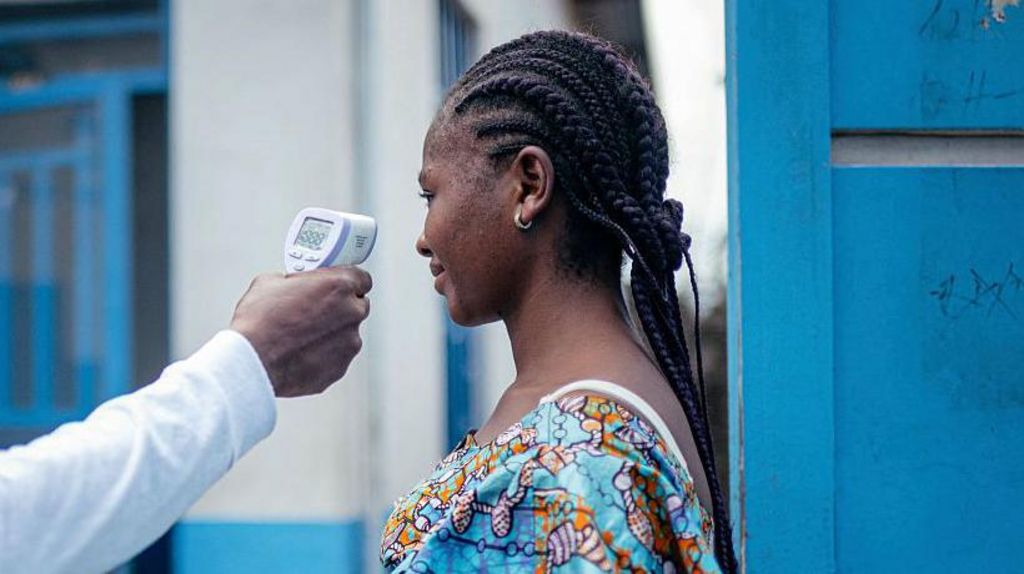
The World Health Organization (WHO) has formally designated an ongoing Ebola outbreak in the eastern region of the Democratic Republic of Congo (DRC) as a Public Health Emergency of International Concern (PHEIC), marking a major escalation of global response to a dangerous and uniquely challenging public health crisis.
Unlike more common Ebola variants that global health systems have experience addressing, this outbreak is driven by the Bundibugyo strain – an extremely rare subtype that has not triggered a major outbreak in more than 10 years. Only two previous Bundibugyo outbreaks have ever been recorded, with the virus claiming the lives of roughly one-third of all confirmed cases in those events. This rarity has created multiple layers of barriers to containment and treatment: standard initial Ebola diagnostic tests are calibrated to detect more common strains, leading to initial false negatives that delayed detection, and no officially approved vaccine or targeted antiviral treatment exists for this specific variant. While experimental vaccines are currently in development, researchers note that existing vaccines for the Zaire Ebola strain may offer partial cross-protection, though this has not been formally confirmed for widespread use.
Compounding these biological challenges is the outbreak’s location in an unstable conflict zone. Over a quarter of a million people have been displaced from their homes in the affected Ituri province, and porous, poorly monitored borders with neighboring countries have created constant risk of cross-border spread. The outbreak was not detected early after its initial emergence: the first documented case was a nurse who first developed symptoms on April 24, meaning the virus circulated undetected for multiple weeks before authorities were alerted. That nurse later died in Bunia, Ituri’s capital, and her body was transported back to Mongwalu – one of two gold-mining towns that have recorded the majority of confirmed cases. Congolese Health Minister Samuel Roger Kamba explained that widespread community transmission accelerated after the nurse’s funeral, where dozens of people were exposed to the infected body during traditional mourning practices. This mirrors patterns seen in past Ebola outbreaks across Africa, where funeral customs have repeatedly fueled spread.
Delayed reporting also stemmed from widespread misinformation in affected communities: many residents initially attributed the mysterious illness to witchcraft or a supernatural curse, leading sick people to seek care from traditional healers and prayer centers instead of formal medical facilities. This allowed transmission to continue uninterrupted for weeks. As of current reports, cases have been confirmed across three Ituri locations (Mongwalu, Rwampara, and Bunia) as well as Goma – the largest city in eastern DRC, home to 850,000 people and currently under the control of AFC-M23 rebel forces. The Goma case involves a woman who traveled to the city after her husband died of Ebola in Bunia. Alarmingly, two Congolese travelers who entered Uganda from the DRC have already died of Ebola in Kampala, Uganda’s capital, marking the first cross-border fatalities linked to the outbreak.
Contrary to widespread public speculation, WHO officials stress that this PHEIC declaration does not signal an impending COVID-19-style global pandemic. The overall risk of Ebola spread outside of East Africa remains categorized as minimal, with the greatest danger concentrated in the Great Lakes region of central Africa. Still, global health bodies are sounding the alarm about significant regional spread risks. The Africa Centres for Disease Control and Prevention (Africa CDC) has highlighted high risk of transmission to neighboring Uganda, Rwanda, and South Sudan, and is coordinating with officials from all four countries to strengthen cross-border surveillance and response capacity.
Neighboring nations have already implemented urgent precautionary measures. Rwanda, which shares a border with Goma, has ramped up entry screening for all travelers coming from the DRC, and has restricted entry for non-resident Congolese nationals coming from affected areas. In Uganda, President Yoweri Museveni has postponed the annual Martyrs’ Day pilgrimage – a major Christian event that draws thousands of Congolese visitors each year – to prevent large-scale gathering that could fuel transmission.
On the ground in the DRC, multiple response efforts are underway, but political fragmentation threatens to slow progress. The Congolese national government has deployed specialized health teams equipped with personal protective equipment to Bunia, and has launched a public awareness campaign alongside a toll-free hotline (151) for residents to report suspected symptoms. Public health officials have issued core guidance for residents: seek immediate medical care at the first sign of symptoms, avoid contact with bodies of people who died with suspected Ebola or dead wild animals, avoid eating raw or undercooked meat, and maintain physical distancing in public spaces. The WHO and medical humanitarian organization Médecins Sans Frontières (MSF) have also deployed personnel and resources to set up dedicated Ebola treatment centers and coordinate the overall response. In Goma, AFC-M23 rebel officials say they have activated their own response mechanisms in partnership with local health facilities to contain spread, but political tensions mean the Congolese national government is unlikely to collaborate with the rebel administration, creating a critical coordination gap that could hinder containment efforts.
Africa CDC Director Dr. Jean Kaseya says current public outreach efforts are focused on addressing the key risk factors that have driven spread so far, including educating communities on safe funeral practices, universal basic hygiene, and proper sanitation, as well as ensuring frontline health workers have access to adequate protective equipment to avoid infection while caring for patients.