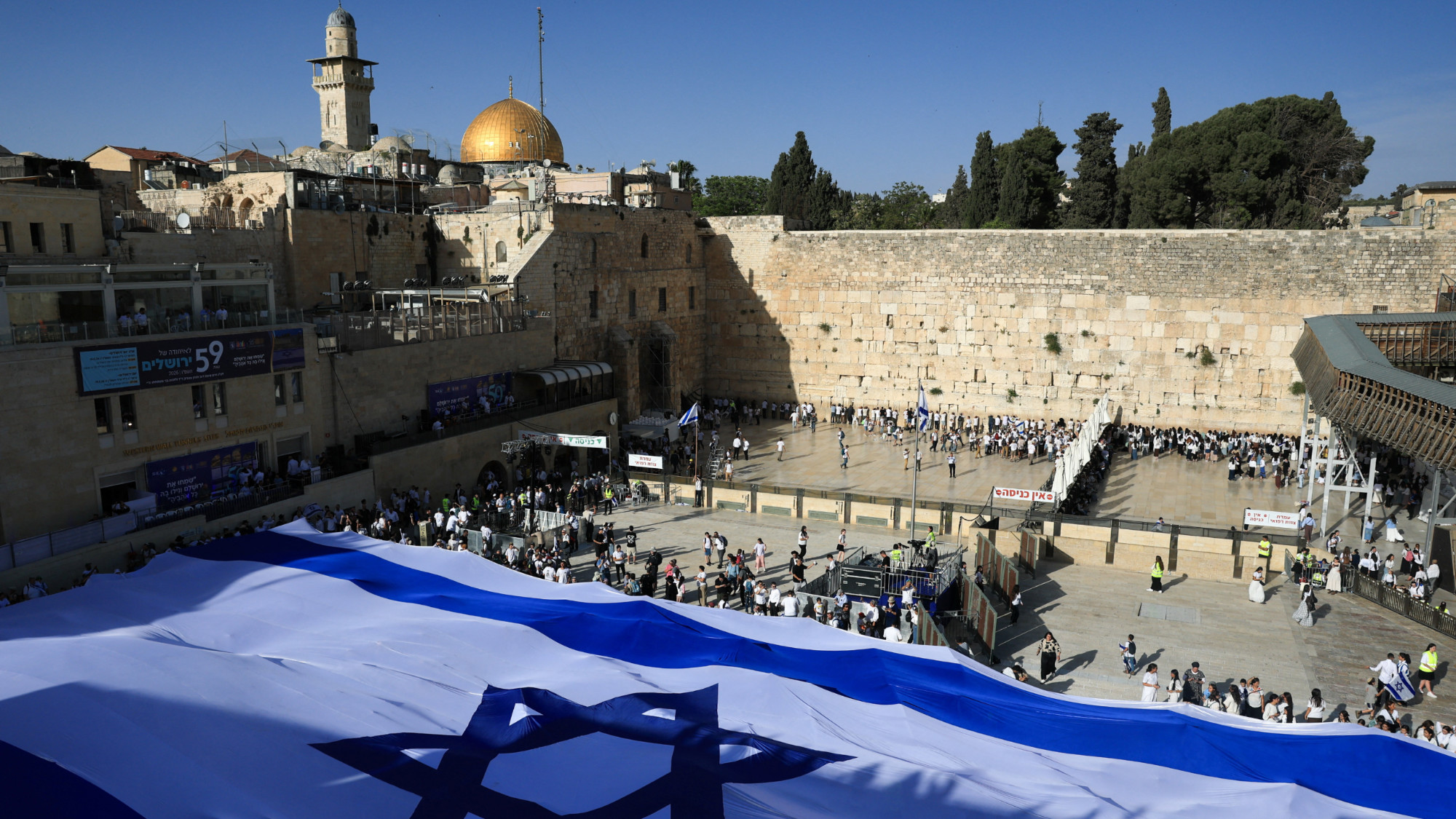
The Israeli government has moved forward with long-dormant plans to seize privately owned Palestinian property in the sensitive area surrounding Jerusalem’s Old City Al-Aqsa Mosque, a step Palestinian leaders and residents decry as a deliberate push to “Judaise” the contested holy city.
On Sunday, Israeli cabinet ministers voted unanimously to establish a cross-governmental working group tasked with clearing legal and bureaucratic barriers to enacting decades-old expropriation orders for properties along Chain Gate (known locally as Bab al-Silsila), the primary pedestrian corridor leading directly to the western entrances of Al-Aqsa Mosque.
Israeli officials and national Hebrew media frame the move as a routine measure to solidify Israeli sovereignty over the Old City and create connected thoroughfares linking Jaffa Gate, the Jewish Quarter and the Western Wall. Israeli government accounts frame the step as the finalization of a 1960s land seizure process, launched shortly after Israel occupied and annexed East Jerusalem in the 1967 Six-Day War. Official government documents repeatedly reference the need to “implement” long-overdue historic confiscation orders, noting the new inter-ministerial panel will resolve decades of legal and planning delays that kept the orders from being enacted.
Jerusalem municipal officials estimate the orders would impact approximately 15 to 20 Palestinian-owned residential homes and commercial storefronts located along the corridor. Stretching through one of the Old City’s most densely populated and politically sensitive districts, the narrow stone-paved Chain Gate route is flanked by centuries-old Islamic educational institutions, Mamluk and Ottoman-era historical structures, local shops and small family-owned restaurants, according to Sheikh Ekrima Sabri, the senior imam of Al-Aqsa Mosque. Sabri emphasized that most of the targeted properties are tied to Islamic waqf endowments and longstanding religious institutions that surround the Al-Aqsa Mosque compound, one of the most sacred sites in Islam.
“Every measure carried out by the occupation serves the project of changing Jerusalem’s identity,” Sabri told independent regional outlet Middle East Eye, labeling the latest decision as yet another deliberate attempt to erase Palestinian and Islamic identity from the city.
The approval of the confiscation plan comes at a moment of already soaring friction across occupied East Jerusalem, as Palestinians grow increasingly alarmed that Israeli authorities are ramping up territorial and demographic changes in the Old City while global attention is fixed on the ongoing war in Gaza and widening regional escalation. Palestinian officials and community activists argue that the global focus on the Gaza conflict has significantly reduced international scrutiny of Israeli policy shifts in Jerusalem, creating a window of opportunity for accelerated land seizures.
Khalil Tawfikji, a leading Jerusalem affairs analyst, explained that the targeted properties were first formally seized shortly after the 1967 occupation under Israeli legislation designed for expropriation for “public benefit” – a legal tool typically reserved for building schools, hospitals and public infrastructure, but which was instead deployed to transfer vast swathes of the Old City into Israeli state ownership.
“These properties were confiscated in the name of public benefit, but the public they meant was the Israeli public,” Tawfikji told Middle East Eye. “Not the Palestinian, Muslim, or Christian public.” Over the decades following the 1967 occupation, most Palestinian families living in the Bab al-Silsila area were gradually displaced, leaving only a small handful of Palestinian residents and business owners remaining today. Tawfikji pointed to the timing of the latest move as particularly significant, arguing Israeli leaders are actively exploiting the current distracted regional and international climate to consolidate full control over one of the Old City’s most geographically and politically strategic corridors. Already, he noted, Israeli settlers have occupied the upper floors of several targeted buildings, while Palestinian shopkeepers continue to operate on the ground level.
“This is about reshaping the area,” Tawfikji said. “Whoever controls the Old City controls the narrative presented to the world. Controlling this space means controlling the image of Jerusalem before the world.” The Bab al-Silsila corridor holds unique strategic importance not only for its direct access to Al-Aqsa Mosque and the Western Wall, but also for its proximity to the Via Dolorosa, the iconic Christian pilgrimage route that marks the path Jesus is believed to have walked to his crucifixion. “The Old City is where the three religions meet. For Christians, there is the Way of Sorrows; for Muslims, Al-Aqsa Mosque; and for Jews, the Western Wall,” Tawfikji added.
The Israeli government proposal also outlines a plan to create what it calls a “continuous urban space” that connects disparate sections of the Jewish Quarter and creates unbroken access routes to the Western Wall. Sabri reported that Palestinian and Islamic officials are currently mobilizing to block the confiscation plan through both domestic legal challenges and international diplomatic outreach, including coordination with Jordanian officials who hold formal jurisdiction over the Jerusalem Islamic waqf. “There are political and diplomatic efforts taking place,” Sabri confirmed.
For many Palestinian residents of Jerusalem, however, the anxiety surrounding the decision goes far beyond the specific properties at risk, reflecting broader fears of the steady erosion of Palestinian presence and identity around Al-Aqsa Mosque and across the Old City as a whole. The inter-ministerial working group is scheduled to deliver its recommendations for implementing the confiscation orders within the coming months.