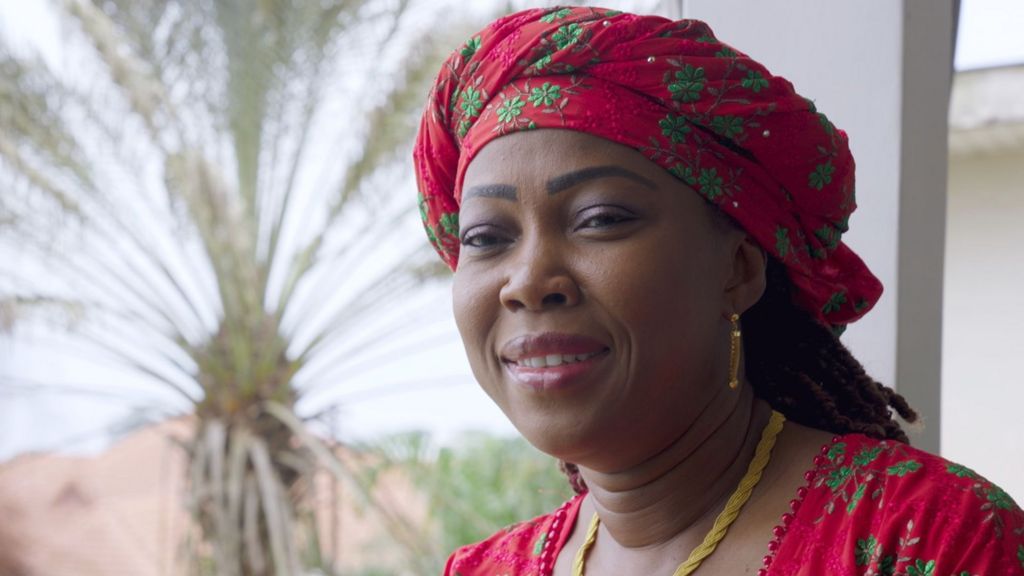
Against the backdrop of decades of civil conflict, public health crises, and persistent economic inequality in Sierra Leone, one woman has risen to become the country’s most debated public figure: Fatima Bio, the wife of President Julius Bio. Her life story is one of extraordinary escape, reinvention, and unapologetic activism that has split public opinion, turning her into both a beacon of women’s empowerment and a lightning rod for political criticism.
Fatima Bio’s fight for gender equality began long before she entered the presidential residence. Born to a diamond miner in Kano district, she was just 13 when her father arranged her marriage to a man in his 30s, a family acquaintance she had grown up knowing as an uncle. “There was no discussion. It was decided,” she recalls of the forced union. It was only the chaos of Sierra Leone’s 1996 civil war that created a window for her to escape, with help from relatives, and flee to the United Kingdom to claim asylum.
She arrived at London’s Gatwick Airport on Christmas Eve, clad only in a thin T-shirt, shocked by the biting British cold but overwhelmed with relief at the chance of a new life. Moving in with a distant relative, she carved out a new future for herself: building a career as an actress, and eventually meeting Julius Bio during an interview about prominent Sierra Leonean diaspora figures. Today, she still retains that humble starting point: she holds a subsidized council tenancy in Southwark, central London, where her children reside. This arrangement has drawn fierce criticism from media on both sides of the Atlantic, given that more than 18,000 people are on Southwark’s social housing waiting list, with even the most high-need applicants facing years of waiting. But Fatima Bio has vigorously defended her right to the home, noting her children are British citizens and she pays rent on the property herself, having broken no rules. Southwark Council has declined to comment on individual tenancies, confirming only that it conducts regular compliance checks for all tenants.
As first lady, Fatima Bio has broken long-held norms that frame the role as largely ceremonial. She has leveraged her personal experience of near child marriage to successfully champion a landmark national ban on child marriage, which came into force in 2024. She has also taken on the largely taboo issue of period poverty in Sierra Leone, where no national policy guarantees free sanitary products for schoolgirls. Unicef research confirms girls here often miss weeks of school each year due to a lack of access to hygiene products, and Fatima Bio has made free distribution of sanitary towels a core personal campaign. “If you miss 80 days of the school year, it is almost like missing an entire term. They are still not getting the equality they deserve,” she explains. “I want girls to get the education so they can be at the table, making decisions for themselves.”
This accessible, unfiltered approach has won her widespread acclaim, particularly among young Sierra Leoneans, and saw her elected as head of the Organization of African First Ladies for Development (OAFLAD). She has cultivated a huge social media following, regularly posting informal content, dancing, and engaging directly with supporters, pushing back against the outdated international narratives that have long defined Sierra Leone only by conflict and blood diamonds. An interfaith Muslim-Christian couple, Fatima and President Bio also highlight the country’s long history of religious tolerance, she notes, pointing to the fact that sub-Saharan Africa’s first girls’ high school was built in Sierra Leone.
But her refusal to stay in a traditional, ceremonial role has sparked fierce backlash. She is an active, visible member of the ruling Sierra Leone People’s Party (SLPP), openly campaigning for favored candidates, speaking at rallies without her husband, and publicly criticizing fellow politicians – even within her own party – and the Speaker of Parliament. During the 2025 State Opening of Parliament, she was booed and subjected to derogatory chants by opposition MPs. She responded by putting in earphones and listening to music, and shrugs off the hostility now: “It just shows that not all men are educated. Not all men believe in women’s empowerment and women’s equality. I have been an activist for far too long to be a calendar wife,” she says, rejecting the expectation that she only fill a symbolic role.
Further controversy has followed her over a 2025 incident in which a notorious European drug kingpin, Jos Leijdekkers – known as “Chubby Jos,” who was sentenced in absentia to 24 years in prison for cocaine trafficking – appeared in a deleted social media video behind the first couple at a public church service. Fatima Bio flatly denies knowing Leijdekkers, dismisses rumors of a family connection to him as lies, and notes that as a Muslim, she does not control access to church events she attends alongside her husband. Critics have also raised unsubstantiated questions about unreported properties the first family is alleged to own, including mansions in The Gambia, which Fatima Bio has declined to address, saying she will only respond when proof is presented.
Against the current backdrop of crippling cost-of-living pressures in Sierra Leone – exacerbated by global inflation, the fallout of the Russian invasion of Ukraine, and decades of uneven distribution of the country’s rich mineral wealth – most ordinary citizens prioritize daily survival over these controversies, political analysts note. Still, speculation has grown that Fatima Bio is laying groundwork to run for the presidency herself when her husband’s second and final term ends in 2028. While she dismisses claims of personal ambition, she leaves the door open to divine possibility: “I’m not hungry to be president. It’ll have to be the will of God. I’m a very fervent believer that when God wants something, he does it… If it is what God wants, no man can stop it.”
This profile is part of the BBC World Service’s Global Women series, which elevates underreported stories of impactful women across the globe.