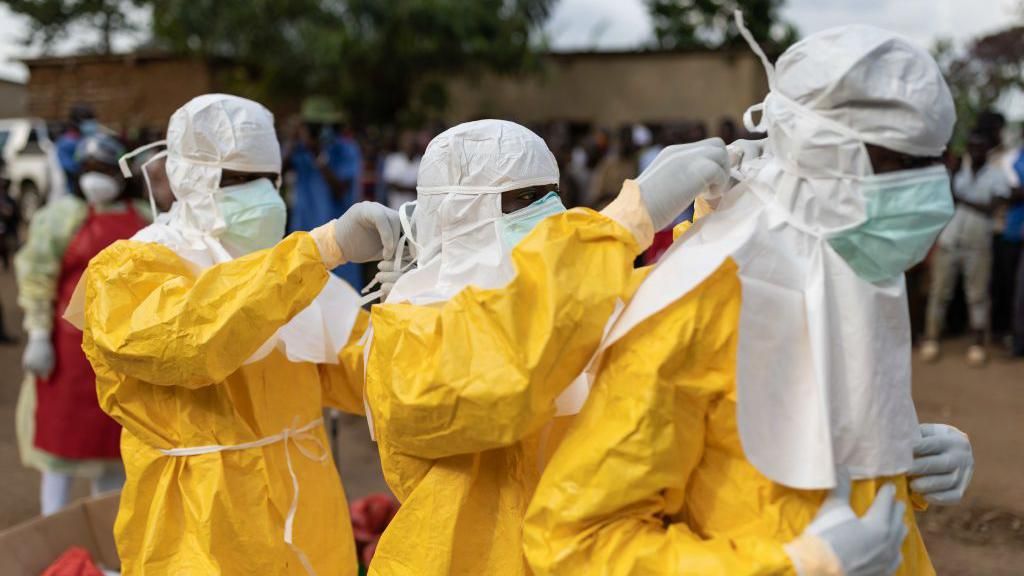
An evolving Ebola outbreak in the Democratic Republic of the Congo (DRC) has triggered urgent global concern, after weeks of undetected spread in a conflict-ravaged region that complicates containment efforts. Health officials warn that this outbreak, driven by the rare Bundibugyo Ebola species, carries unique challenges that put the global public health community at a critical turning point.
As of current reporting, nearly 250 suspected cases and 80 confirmed deaths have been recorded, with significant uncertainty around the true scope of transmission due to the late detection of the outbreak. The World Health Organization has designated the event a Public Health Emergency of International Concern (PHEIC) — a designation that does not predict a COVID-19-style global pandemic, but signals the complexity of the situation requires coordinated cross-border action.
“The overall global risk posed by this Ebola outbreak remains extremely low,” experts emphasize, echoing a reality seen even during the 2014-2016 West African disaster, the largest Ebola outbreak on record that infected more than 28,600 people and killed over 11,000, which only resulted in three cases in the United Kingdom, all among volunteer healthcare workers. But for the affected region and global public health, the stakes remain high.
Unlike more common Ebola strains that have proven vaccines and targeted treatments, Bundibugyo Ebola has only caused two prior outbreaks, recorded in 2007 and 2012, with mortality rates ranging between 30% and 50% of those infected. No vaccines or antiviral therapies have been formally approved for this specific strain, though a small number of experimental candidates are available. Even diagnostic testing for Bundibugyo is unreliable: initial test results for this outbreak returned negative for Ebola, requiring advanced laboratory analysis to confirm the rare strain was responsible.
Prof Trudie Lang, an expert from the University of Oxford, describes Bundibugyo as “one of the most significant concerns” of the current response. Ebola, a zoonotic disease that originates in wild animal populations (primarily fruit bats), spreads to humans through close contact with infected animals, then passes between people via exposure to infected bodily fluids, most often after symptoms develop.
Symptoms of Ebola emerge between 2 and 21 days after infection, beginning with flu-like indicators including fever, headache and fatigue, before progressing to severe vomiting, diarrhea, organ failure, and in some cases internal and external bleeding. Without approved targeted treatments for Bundibugyo, care relies on optimized supportive care — managing pain, secondary infections, fluid balance and nutrition — with early intervention dramatically improving survival odds.
The delayed detection of this outbreak is among the most worrying factors. The first confirmed case, a nurse, developed symptoms on April 24, but it took three weeks to confirm an Ebola outbreak was underway. “Ongoing transmission has occurred for several weeks, and the outbreak has been detected very late, which is concerning,” explained Dr Anne Cori of Imperial College London. This delay has put response teams at a disadvantage, with the World Health Organization noting the true number of infections is likely far higher than current reported figures.
Containment efforts are further complicated by the chaotic context of the outbreak zone: the eastern region of DRC has been torn by ongoing civil conflict, displacing more than 250,000 people from their homes. Most affected communities are located in mobile mining towns, where transient populations move frequently between local communities and across national borders, amplifying the risk of wider spread.
Despite these steep challenges, experts note that the DRC has accumulated extensive experience responding to repeated Ebola outbreaks over the past two decades. Dr Daniela Manno, a researcher at the London School of Hygiene & Tropical Medicine, points out that the national and international response capacity is “significantly stronger today than it was a decade ago,” ahead of the 2014 West African outbreak.
Core containment strategies focus on rapid identification of infected cases, contact tracing to stop chains of transmission, preventing spread within healthcare facilities where patients are most contagious, and conducting safe burials for victims, as deceased bodies remain highly infectious. The trajectory of the outbreak — whether it is quickly contained or spirals into a large-scale disaster like the 2014-2016 event — will depend entirely on the speed and effectiveness of the current response.