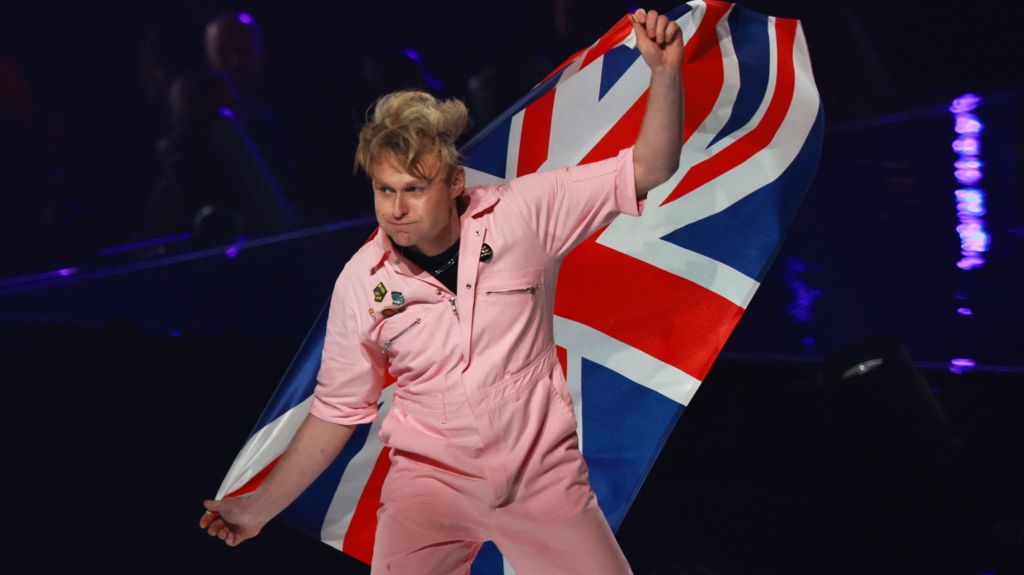
For the fourth year running, the United Kingdom is grappling with another disappointing Eurovision result, after eccentric independent artist Sam Battle — known professionally as Look Mum No Computer — placed dead last at the 2026 contest with just one single point from jury votes and zero public votes. This marks the UK’s third bottom-of-the-table finish since 2020, and only one top 10 ranking across 16 years dating back to 2010, leaving fans and industry observers questioning the country’s long-standing slump in the global song contest.
Battle entered the competition with his unapologetically quirky synth-pop track *Eins, Zwei, Drei*, a high-energy track about leaving a 9-to-5 office job to move to Germany that he performed in a bright pink boiler suit, bringing an unfiltered, distinctly British eccentricity to the Eurovision stage. Pre-contest predictions were already grim for the entry, but even so, Battle gave an unforgettable, high-octane performance that commentators framed as a welcome break from the UK’s history of safe, generic polished pop entries.
Adrian Bradley, a commentator for the Eurovision-focused *Euro Trip* podcast, praised the BBC’s ambitious choice to select an unconventional act. “They took a risk on something that maybe people won’t like, but which some people might pick up the phone and vote for,” he noted. Satoshi, this year’s Moldovan contest representative, echoed that praise, pointing out that the track’s distorted vocals and unique synth work carried a clear, authentic British creative identity — even if it was never going to appeal to every voter across Europe. Battle himself acknowledged the gamble ahead of the final, comparing his entry to Marmite: “You either love it or hate it – but I think there’s a slot open for our sort of thing.” Ultimately, that open slot never materialized, as the track’s hiccuping beat and quirky British cultural references left European voters and juries bewildered.
Many critics point to deep structural issues that have held the UK back for decades. Established British recording artists widely view representing the UK at Eurovision as a “poisoned chalice,” fearing a poor result will damage their mainstream careers. When established stars do participate, they often face harsh backlash: 2024 entrant Olly Alexander finished 18th with 46 total points, receiving zero public votes, and later called the experience “brutal,” advising future participants to seek mental health support after going into debt to fund his staging. This reputation has pushed the BBC to rely on emerging independent artists without major label backing, like Battle and 2025’s Remember Monday, leaving entries without the industry support that many competing countries enjoy.
International contestants and Eurovision insiders say the UK could turn its fortunes around by looking to Finland, which overcame a 15-year post-victory slump after 2006’s win by Lordi to reemerge as a consistent top contender. After the 2020 breakthrough of pop star Erika Vikman at Finland’s national selection contest Uuden Musiikin Kilpailu (UMK), a growing number of established Finnish artists have embraced the contest, creating a self-reinforcing cycle of success. Finland now leans into its unique creative identity, leading to viral breakout hits like 2023’s runner-up *Cha Cha Cha* by Käärijä, which cemented the country’s new reputation for bold, memorable entries.
Matti Myllyaho, Finland’s Eurovision show producer and organizer of UMK, says the key to Finland’s turnaround was embracing national quirkiness rather than shying away from it. When asked what advice he would give the UK, he noted: “In Finland, we started to realise our strengths, and own our slight weirdness. It’s hard to speak for the UK, but I think the path I’d recommend any Eurovision project to follow would be to, like, just own your quirkiness.”
Still, Battle’s bold quirky entry failed to deliver a better result, leading observers to note that a successful Eurovision bid requires far more than a unique identity: it needs alignment across 10 key factors, from a strong accessible song and a seasoned performer to impressive staging, pre-show promotion, favorable running order placement, and a dose of good luck. The BBC has consistently come close to putting all the pieces together, only to miss critical elements that sink its entry year after year.
With the good will built by 2022’s runner-up finish from Sam Ryder — the UK’s only major success in over a decade — now faded, the BBC faces the daunting task of rebuilding its Eurovision strategy. Recommendations from pundits and fans include courting major labels and established songwriters year-round instead of relying on outside collaborators, bringing in heads of music from UK’s leading radio networks to leverage their industry insight and connections, and adopting an open national selection format similar to Finland’s UMK or Sweden’s Melodifestivalen to draw broader public and industry engagement. Fans on the ground in Vienna offered their own takes, calling for bigger, more engaging stage productions, viral-friendly hooks, better embrace of multiple languages, and even a return of legendary British contest participants like Cliff Richard.
As the BBC begins preparations for 2027, the question remains: can the UK reverse its long Eurovision slump, or will last place finishes become the norm for one of the world’s most influential music industries?