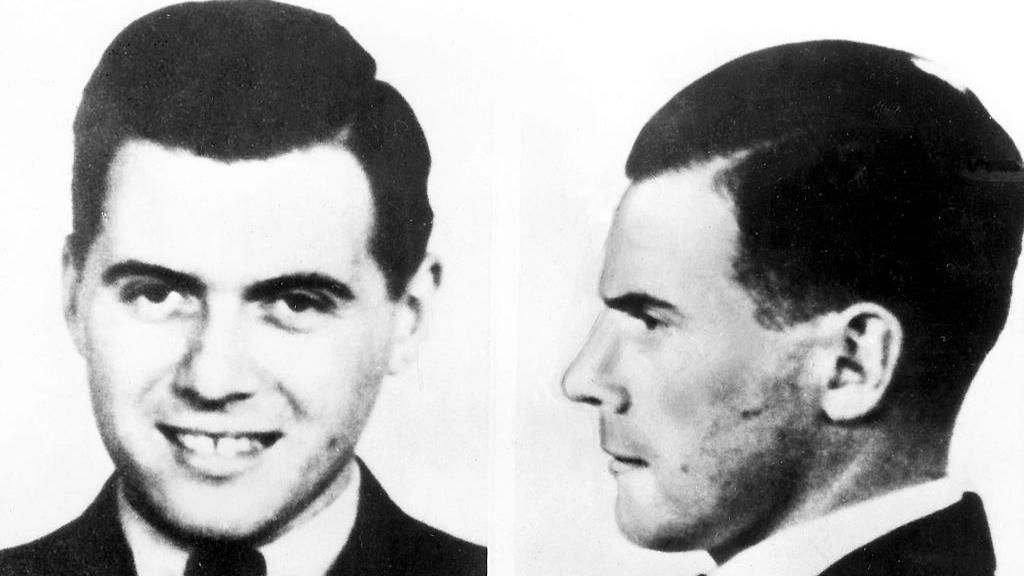
For decades, sealed federal files holding clues about the post-war movements of notorious Nazi war criminal Josef Mengele – infamously known as the “Angel of Death” of Auschwitz – have sparked fierce debate among historians and fueled widespread conspiracy theories about Switzerland’s role in hiding one of the Holocaust’s most brutal perpetrators. Now, following a high-profile legal challenge by a determined historian, the Swiss Federal Intelligence Service has announced it will finally open the long-closed records – though it has yet to announce a firm timeline for public access.
Mengele, a Waffen-SS doctor stationed at the Auschwitz extermination camp in Nazi-occupied Poland during World War II, bore responsibility for one of the worst chapters of Nazi atrocities. He personally selected more than 400,000 prisoners to be sent to the camp’s gas chambers, where an estimated 1.1 million people – 1 million of them Jewish – were murdered. Beyond his role in mass extermination, Mengele carried out grotesque, unscientific medical experiments on live prisoners, most often targeting children and twins, before killing the subjects of his research. When the war ended in 1945, Mengele escaped justice: he adopted a false identity, obtained fraudulent Red Cross travel documents from the organization’s Genoa, Italy consulate – a loophole the Red Cross later publicly apologized for allowing – and fled to South America, where he lived under an assumed name until his death in Brazil in 1979.
It has long been confirmed that Mengele visited Switzerland once for a private alpine skiing trip with his son Rolf in 1956, seven years after he fled Europe. But lingering questions have persisted about whether he returned to the country after an international arrest warrant was issued for him in 1959. Swiss historian Regula Bochsler, who has researched Switzerland’s role as a transit country for fleeing Nazi war criminals, uncovered key clues pointing to a possible unreported return: in June 1961, Austrian intelligence warned Swiss authorities that Mengele was traveling under a fake name and may have entered Swiss territory. Around the same time, Mengele’s wife rented an apartment in a modest Zurich suburb, a location conveniently close to Zurich’s international airport, and applied for permanent Swiss residency. Local Zurich police records confirm the apartment was placed under surveillance in 1961, and officers once documented Mrs. Mengele driving through the area with an unidentified man – whose identity has never been confirmed.
For decades, historians repeatedly requested access to federal intelligence files related to the case, but all requests were denied. The files were originally sealed until 2071, with authorities citing national security concerns and privacy protections for Mengele’s extended family. When Bochsler applied for access in 2019, she was turned away. In 2025, historian Gérard Wettstein made another attempt, and when his request was also rejected, he launched a legal challenge against the Swiss government, crowdfunding 18,000 Swiss francs ($23,000) to cover his legal costs. Just days after the public fundraising drive successfully hit its target, the Swiss Federal Intelligence Service reversed its longstanding position, announcing in an official statement that the appellant would be granted access to the file – though it added that access would be subject to unspecified terms and conditions that have not yet been finalized.
Historians are divided over what the files will actually reveal. Sacha Zala, president of the Swiss Society for History, says he is convinced the files will not contain new evidence confirming Mengele’s presence in Switzerland after 1956. Instead, he suspects the records likely contain sensitive references to Israeli intelligence agency Mossad, which actively hunted Nazi fugitives across the globe in the 1950s and 1960s and may have coordinated with Swiss authorities. Zala argues that keeping 70-year-old references to a widely known Nazi manhunt sealed is unnecessary, and that the arbitrary secrecy has only fueled unnecessary conspiracy theories. “It shows the stupidity of the declassification process without historical knowledge,” Zala said. “In this way, the administration fueled conspiracy theories.”
Other historians argue that the decades-long secrecy surrounding the files reveals more about Switzerland’s complicated relationship with its World War II history than it does about Mengele. Jakob Tanner, a historian who served on the 1990s Bergier Commission that investigated neutral Switzerland’s wartime relations with Nazi Germany, noted that the country has long grappled with public shame over its wartime actions: Swiss authorities turned away thousands of Jewish refugees at the border during the war, and Swiss banks held onto unclaimed assets from Jewish families murdered in the Holocaust for decades. “It’s a conflict between national security and historical transparency, and the former often prevails in Switzerland,” Tanner explained, adding that it is entirely plausible Mengele did visit Switzerland in 1961 – after Mossad captured another top Nazi fugitive, Adolf Eichmann, in Argentina in 1960, many Nazis hiding in South America feared they would be next, and may have fled to Europe to lay low.
Even with the announcement that the files will be opened, historians remain cautious about how much new information will actually come to light. Wettstein says he fears the released files will be heavily redacted, leaving key details blacked out. Bochsler shares that skepticism, noting that the decades-long sealing of the records has already created deep distrust among researchers. “Why have these Mengele files been closed for so long?” she asked.
Mengele never faced trial for his crimes, and his escape from justice has kept rumors and conspiracy theories about his post-war life alive for more than 75 years. While DNA testing confirmed in 1992 that the body buried under a false name in Brazil was indeed Mengele, the question of whether he secretly returned to Switzerland after 1956 remains unanswered. Even if the files are heavily redacted, historians say opening the records will at least bring much-needed transparency to a long-secret chapter of post-war history, and may help clear up decades of speculation.
“Maybe we will never get to the real truth,” Wettstein said. “We will never know if he was here or not… but maybe we can have at least a clearer idea.”