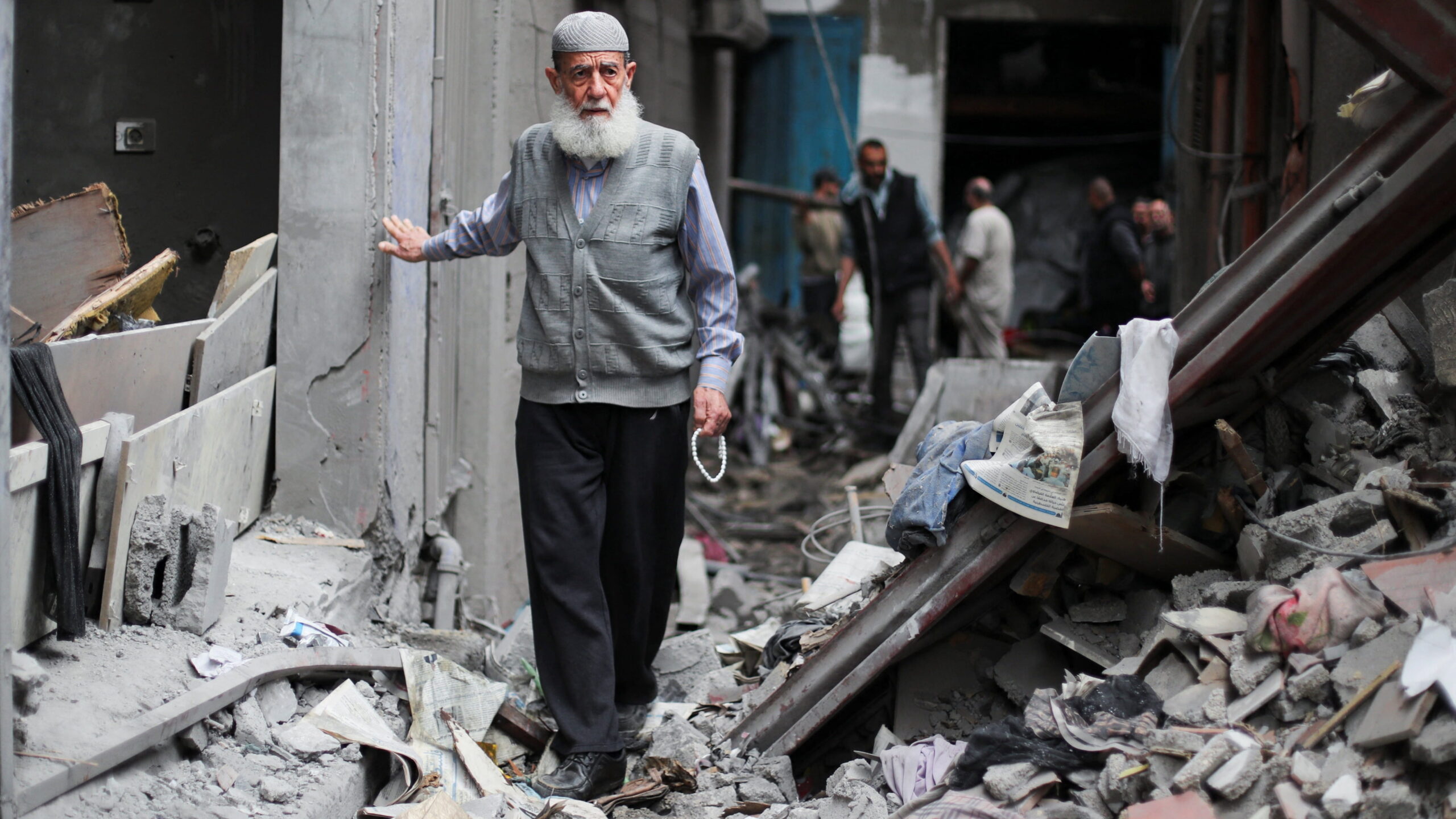
Seven months have passed since the United States announced a mediated ceasefire designed to end Israel’s two-year military campaign in Gaza, but the fragile truce has failed to deliver on its stated goals, with consistent Israeli violations and a still-unresolved humanitarian disaster continuing to unfold across the Palestinian enclave. While the intensity of Israeli operations has dropped from the pre-truce level, near-daily military strikes and breaches of the agreement have become the new normal, and Israel’s crippling land, air and sea blockade remains firmly in place, leaving Gaza’s civilian population trapped in a worsening crisis.
Israeli military officials have repeatedly attempted to justify their violations by claiming Palestinian armed factions have broken the terms of the ceasefire. However, verified data from Palestinian and international bodies confirms that the overwhelming majority of people killed, displaced and detained during this seven-month period have been unarmed civilians, including hundreds of children.
A core stumbling block remains the failure to implement even the first phase of the ceasefire agreement, and Washington has been unable to push forward negotiations for the planned second stage. That phase was originally intended to deliver tangible progress: the disarmament of Palestinian armed groups, deployment of international peacekeeping stabilisation forces, large-scale reconstruction of war-damaged infrastructure across Gaza, and a full withdrawal of all Israeli military forces from the enclave. This stalled progress has cast deep uncertainty over the future of the already fragile truce, as Israel continues to amass additional military units along Gaza’s borders and issues repeated threats of a large-scale new ground offensive.
According to official documentation released by the Gaza government media office, Israeli forces committed no fewer than 2,400 verified ceasefire violations between 10 October 2025 and 10 April 2026, with dozens of additional breaches recorded in the weeks since that six-month window. These violations break down into more than 1,100 air strikes and artillery shelling attacks, alongside 921 incidents of direct gunfire targeting civilian populations.
Official figures from the Palestinian Ministry of Health show that as of 14 May 2026, these ongoing attacks had killed at least 857 Palestinians and injured another 2,486 people. Of those killed, UNICEF confirms that at least 229 were children. The Gaza government media office also adds that Israeli forces have arbitrarily detained at least 50 Palestinians within Gaza during the ceasefire period.
Documented violations span a wide range of targets: attacks on civilian community gatherings, strikes on internally displaced person camps, targeted killings of Palestinian police officers, journalists and international aid workers, and repeated incursions into civilian areas. Israeli naval units have also consistently opened fire on Palestinian fishermen and civilian communities along Gaza’s coastline, arresting multiple fishermen. In one high-profile incident last month, Israeli gunboats shot and killed an unarmed Palestinian woman off the northwestern coast of Gaza.
Overall, the confirmed death toll from Israel’s military campaign, which began in October 2023, has now reached more than 72,700 Palestinians killed, with thousands more still missing and presumed dead beneath the rubble of destroyed residential and public buildings across the enclave.
The initial October 2025 ceasefire agreement included a core provision that all existing battle lines would remain frozen in place until subsequent phases of the agreement could be negotiated and implemented. This arrangement led to the creation of what Israel calls the “Yellow Line”, a unilateral Israeli demarcation that declared vast swathes of Gaza territory as off-limits to Palestinian civilians, barring them from returning to or accessing their own land. When the ceasefire was first signed, Israeli forces already controlled approximately 53 percent of Gaza’s total territory, spread across the enclave’s northern, southern and eastern regions. The agreement stipulated that future phases would include a gradual full withdrawal of Israeli forces from all of Gaza.
Instead of withdrawing, however, the Israeli military has expanded the area behind the Yellow Line, bringing roughly 64 percent of Gaza’s total territory under direct Israeli military control and forcing the enclave’s 2 million-plus civilian population into just 36 percent of their own land. Israeli forces have also carried out near-daily home demolitions across the enclave, another clear violation of the ceasefire terms. While most demolitions have occurred in areas Israel now claims beyond the Yellow Line, multiple demolitions have also been recorded in areas officially designated as under Palestinian control. An analysis published by The New York Times in January 2026 found that Israel had demolished more than 2,500 residential and public buildings in just the first three months of the ceasefire.
One of the most high-profile commitments Israel made under the ceasefire agreement was to ease its restrictions on humanitarian aid deliveries, and allow up to 600 trucks of food, fuel, medical supplies, emergency shelter materials and commercial goods to enter Gaza every single day. To date, these commitments have never been met, according to official United Nations data. Human rights organisations have repeatedly warned that ongoing Israeli restrictions on aid have prolonged the humanitarian catastrophe and severely limited the ability of relief groups to deliver life-saving support to Gaza’s population.
By the end of April 2026, the Gaza government media office confirms that just over 4,500 aid trucks had entered the enclave – that is only 25 percent of the 18,000 trucks that were stipulated under the terms of the agreement. That works out to an average of just over 200 trucks per day, less than a third of the agreed 600-truck daily threshold. Even the limited aid that has been allowed in has excluded many of the most urgently needed supplies, including emergency shelter materials like tents and prefabricated mobile homes, as well as essential life-saving medications, medical equipment and fuel for civilian infrastructure and emergency services.
These ongoing restrictions have triggered a new wave of severe food insecurity in recent months, with many Gaza residents now fearing a return to the full-scale famine conditions that the United Nations officially declared in parts of Gaza in August 2025, during the height of Israel’s siege. Doctors from Gaza’s Ministry of Health and civil defence rescue teams have repeatedly stated that shortages of fuel and medical supplies have left them unable to provide even basic adequate healthcare to injured and sick civilians, or carry out effective rescue operations for people trapped under rubble after Israeli strikes.
Another key commitment under the ceasefire agreement was that Israeli forces would withdraw from the Rafah border crossing with Egypt in southern Gaza, and allow unimpeded free movement of people through the crossing. With thousands of Palestinians suffering from severe war injuries requiring urgent specialist treatment that is not available inside Gaza, full reopening of the Rafah crossing was widely seen as a critical measure to reduce civilian suffering. Instead, Israel kept the Rafah crossing fully closed for nearly four months after the ceasefire agreement was signed.
In February 2026, Israel began allowing a maximum of 50 Palestinians a day to enter Gaza from Egypt, while limiting the number of people allowed to depart Gaza for treatment or other purposes to roughly 150 people per day. Even these greatly reduced quotas have not been consistently respected, with Israel repeatedly blocking movement for travellers who had already received official approval, and shutting the crossing down for extended periods. One of the longest shutdowns came in late February, during Israel’s military strike campaign against Iran.
Official data from the Gaza government media office shows that between 2 February and 30 April 2026, only 1,567 people crossed through Rafah, out of the 6,000 people that the agreement allowed to cross during this period. That puts Israeli compliance with the Rafah crossing terms at just 26 percent. According to the Palestinian Ministry of Health, these movement restrictions have contributed to the deaths of up to 10 Palestinian civilians every single day, who die before they can access the urgent medical treatment they need abroad.