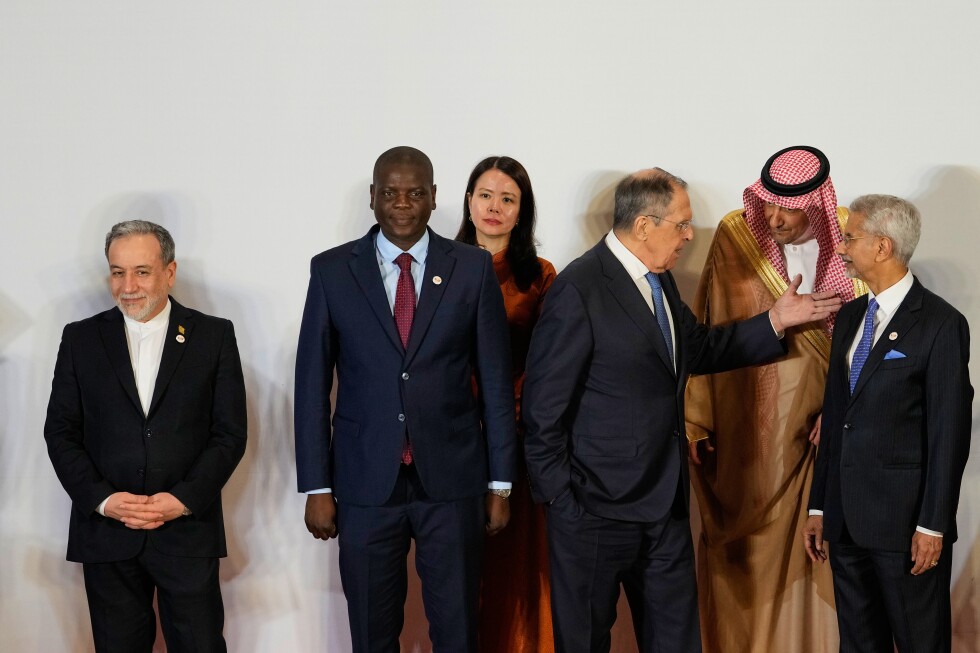
NEW DELHI – A key two-day gathering of foreign ministers from the BRICS bloc wrapped up in the Indian capital on Friday, falling short of the traditional outcome of a unified joint statement. The failure to reach a consensus was attributed to deep-seated differing perspectives on the ongoing Middle East crisis among some member states, host India confirmed in an official statement released after the meeting. This breakdown in collective agreement has laid bare the growing strains holding the bloc together at a time when BRICS is actively working to expand its global geopolitical influence.
India’s official statement noted that despite the inability to agree on a unified text, all BRICS members did present their individual national stances and exchanged a broad spectrum of views across multiple priority topics. These discussions covered core principles of national sovereignty, global maritime security, and the critical need to protect both civilian infrastructure and innocent civilian lives amid the turmoil in the Middle East.
A detailed footnote added to the Indian statement further specified that one member state had formal reservations over key portions of the draft text addressing the ongoing conflict in Gaza and the evolving security situation in the Red Sea and the strategic Bab al-Mandeb Strait, a critical global shipping chokepoint connecting the Indian Ocean and the Red Sea.
BRICS, which was originally founded with five core emerging economies, has expanded significantly in recent years. The bloc now counts 10 full members: Brazil, Russia, India, China, South Africa, Ethiopia, Egypt, Iran, the United Arab Emirates and Indonesia, the latest addition to the grouping.
Internal rifts within the bloc have become increasingly pronounced amid the escalating regional tensions across the Middle East, particularly sharp divisions between two recent joining members, Iran and the United Arab Emirates. On the first day of the meeting Thursday, Iranian Foreign Minister Abbas Araghchi took a hard line, calling on all BRICS member nations to formally issue a condemnation of the United States and Israel over what he labeled as “unlawful aggression” in the region. He also urged fellow member states to push back against what he described as the improper politicization of multilateral global institutions.