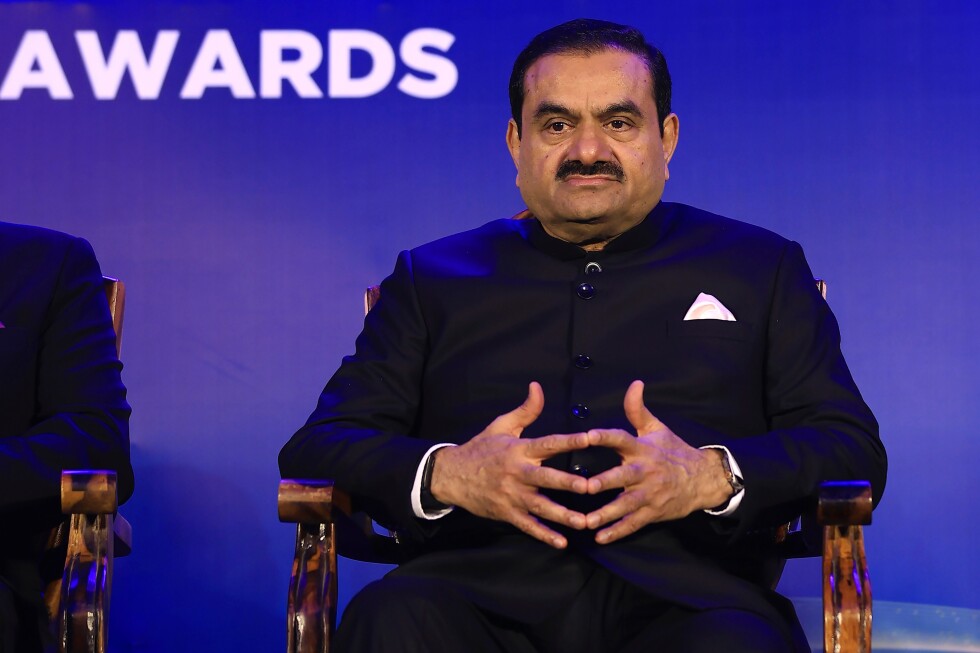
Court filings made public Thursday have confirmed that the U.S. government has reached a civil settlement in a high-profile fraud lawsuit against Indian billionaire Gautam Adani and his nephew Sagar Adani, leaders of the global energy conglomerate Adani Green Energy Limited. The case, filed by the U.S. Securities and Exchange Commission (SEC) in late 2024, centers on allegations that the pair misled international investors by hiding a large-scale alleged bribery scheme tied to the company’s massive Indian solar energy project. According to the SEC’s original complaint, the Adanis promised hundreds of millions of dollars in bribes to Indian government officials in exchange for lucrative public contracts that guaranteed inflated rates for energy purchased from the company. At the same time, the conglomerate raised billions of dollars in capital from Wall Street investors, who were falsely assured that the firm maintained a rigorous anti-bribery compliance framework and that senior leadership had committed to no corrupt practices. The SEC asserts these actions directly violated U.S. securities law anti-fraud provisions. Under the terms of the proposed settlement, Gautam Adani will pay $6 million in civil penalties, while Sagar Adani will pay $12 million. Critically, the agreement does not require either defendant to admit guilt to the allegations brought by the SEC. The Adani Group has repeatedly denied all claims since the lawsuit was filed, describing them as entirely baseless, and requests for comment from the Adanis’ legal teams Thursday went unanswered. Alongside the civil settlement, multiple major U.S. news outlets including The New York Times and Bloomberg reported Thursday that the criminal securities fraud and conspiracy charges brought against the pair in a New York federal court in late 2024 are expected to be dropped. Requests for confirmation from prosecutors for the Eastern District of New York have not yet been returned. The impending dismissal of criminal charges follows a sequence of events that many observers see as a clear foreshadowing of the move, starting after former President Donald Trump won a second term in the 2024 U.S. presidential election, an outcome Gautam Adani publicly praised extensively. In March 2025, Trump issued an executive order suspending enforcement of the Foreign Corrupt Practices Act, the federal law that bans U.S.-linked companies from paying bribes to foreign officials to secure business deals. The move immediately led to widespread speculation in Indian business and political circles that the entire Adani prosecution would be derailed. For decades, Gautam Adani has built one of the world’s largest personal fortunes and emerged as one of India’s most powerful business figures. He got his start building a coal business in the 1990s, before expanding the Adani Group into a sprawling conglomerate with holdings across critical sectors including renewable energy, defense, and agriculture. Marketing itself under the slogan “Growth with Goodness,” the group has built one of the world’s largest renewable energy portfolios, totaling more than 20 gigawatts of installed capacity, including a massive solar power plant in the southern Indian state of Tamil Nadu. The firm has publicly committed to investing $70 billion in new clean energy projects by 2032, with a stated goal of becoming India’s largest clean energy producer by 2030. Adani’s career has long been marked by controversy, however. His well-documented close political ties to Indian Prime Minister Narendra Modi and the ruling national government have repeatedly drawn accusations of crony capitalism, with critics claiming he has secured unfair preferential treatment for government contracts, claims the Adani Group has consistently denied. In 2023, U.S.-based short seller Hindenburg Research released a scathing report accusing Adani and his conglomerate of “brazen stock manipulation” and systemic accounting fraud, claims the group dismissed as a malicious set of outdated, discredited, and selective misinformation. This latest U.S. legal action has already had global ripple effects on Adani’s international business: after the original indictment was announced in Brooklyn, Kenya’s president scrapped hundreds of millions of dollars in planned contracts with the Adani Group for airport modernization and energy infrastructure. Adani Green Energy was also forced to withdraw planned wind energy projects from Sri Lanka after the country moved to renegotiate contracted pricing, while a major French energy giant paused all new planned investments in Adani-led projects. Market analysts note that Adani’s decades-long rapid rise to power has been largely driven by his ability to align the Adani Group’s strategic priorities with the policy goals of the Modi government, a dynamic that has kept him at the center of Indian political and economic life even as controversy has followed his career. The impending end of the U.S. criminal case marks a major turning point in the legal saga, though questions about the conglomerate’s business practices and political ties remain unresolved.
US agrees to settle lawsuit that accused an Indian billionaire of hiding an alleged bribery scheme