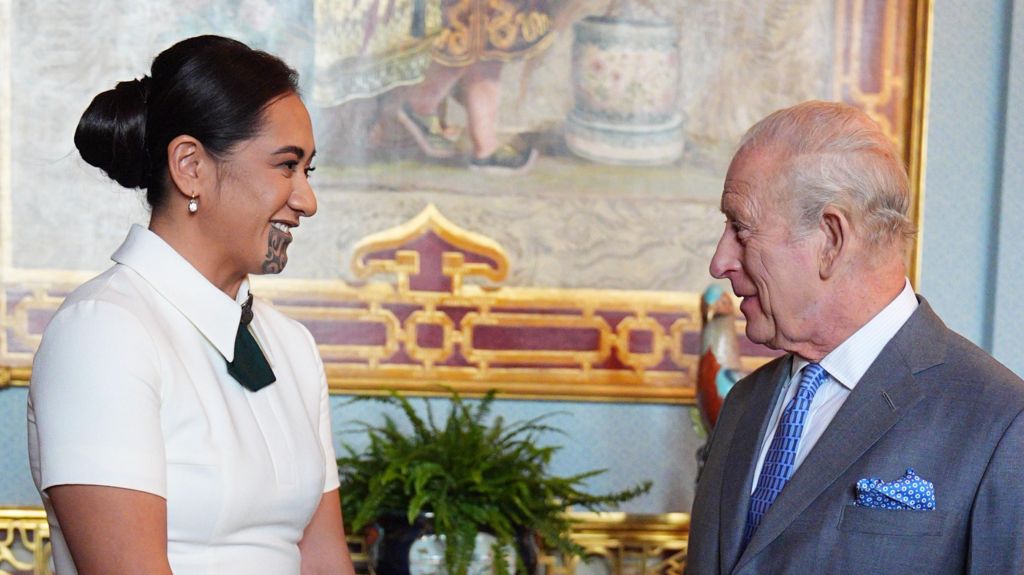
In a landmark moment marking nearly two centuries of formal ties between Māori people and the British Crown, New Zealand’s newly installed Māori Queen Te Arikinui Kuini Nga Wai hono i te po has held her first official audience with King Charles III at London’s Buckingham Palace. This meeting comes two years after Te Arikinui ascended to the Māori throne in 2024, following the passing of her father Kiingi Tuheitia, the previous Māori monarch.
Earlier the same week, the Māori Queen was formally welcomed by Prince William at Windsor Castle, in a meeting that covered a broad spectrum of pressing global issues. In an Instagram post following the encounter, Prince William shared that it had been a great pleasure to welcome Te Arikinui and host her at the royal residence. A post-meeting statement from Kīngitanga, the Māori monarchy institution, confirmed that Te Arikinui used the discussion to reaffirm her conviction that indigenous knowledge and long-term, cross-generational environmental stewardship are critical tools to address the world’s most urgent environmental and social challenges.
Te Arikinui’s ascension in 2024 made her only the second Māori queen in the history of the Kīngitanga movement; the first was her grandmother, Te Arikinui Dame Te Atairangikaahu, who held the role for four decades. The institution of Māori monarchy was first established in the 19th century, when disparate Māori iwi (tribes) united to create a single unifying leadership figure modeled on the European monarchical structure. At its founding, the movement was conceived as a defensive strategy to slow widespread land loss to British colonial settlers and protect Māori cultural identity from erasure. Today, the role remains largely ceremonial, but carries enormous cultural and symbolic weight for Māori communities across New Zealand.
The historic meeting at Buckingham Palace underscores a bilateral relationship that was first formalized with the 1840 signing of the Treaty of Waitangi, one of the foundational founding documents of modern New Zealand. According to a spokesperson for Te Arikinui, the conversation between the Māori Queen and King Charles III was warm and heartfelt. It included reflections on the passing of Queen Elizabeth II, the late mother of King Charles III, alongside discussions focused on deepening and strengthening the long-standing relationship between the Māori monarchy and the British Crown.