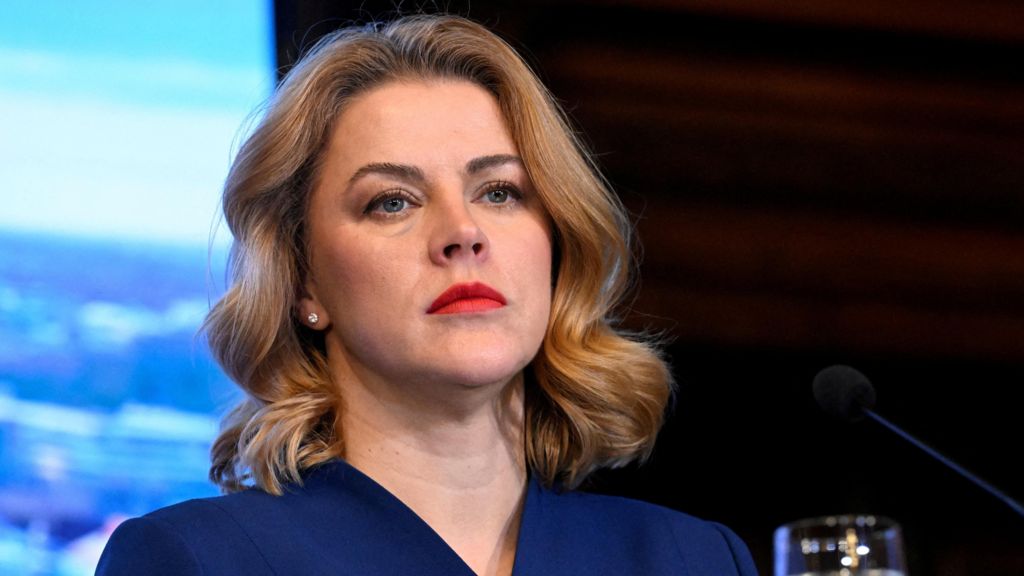
A sudden political upheaval has shaken the Baltic nation of Latvia, where Prime Minister Evika Silina has formally stepped down after her ruling four-party coalition collapsed earlier this week, triggered by a controversy over stray Ukrainian drones bound for Russia that entered Latvian airspace.
The chain of events that ended Silina’s premiership began on May 7, when three unmanned aerial vehicles crossed into Latvia’s eastern territory. This marked the second unintended drone incursion recorded in the country since the start of 2026. Both Latvian and Ukrainian officials have confirmed the drones were originally launched by Ukrainian forces targeting Russian positions, but signal jamming interference knocked them off course, leading them to stray across the border.
Of the three errant drones, one crashed onto undamaged ground, a second hit an unoccupied oil storage facility near the eastern Latvian town of Rezekne, and the third transited Latvian airspace before exiting. No casualties or injuries were reported in the incidents, but public anger quickly grew over what local residents described as a delayed and inadequate official response. Residents told reporters that Latvia’s emergency cell broadcast alert system was not activated until a full hour after the first crash near Rezekne, leaving local communities unaware of potential risk.
Last week, Silina moved to take decisive action: she dismissed Defence Minister Andris Spruds over his handling of the incursion, criticizing his response as insufficient and naming an immediate replacement for the post. In response, Spruds’ party, the Progressives, withdrew all its legislative and governing support from Silina’s ruling coalition, effectively collapsing the government just five months ahead of the scheduled October 2026 general election.
Speaking to reporters on Thursday, Silina hit back at what she described as political posturing from her former coalition partners. “Seeing a strong candidate for the post of defence minister… political windbags have chosen a crisis,” she said, adding: “I am resigning but I am not giving up.” Silina also justified her dismissal of Spruds by pointing to broader performance issues across Latvia’s defence sector. Noting that Latvia currently allocates 5% of its gross domestic product to national defence — one of the highest shares among NATO members — she argued that this level of investment demands far greater accountability and tangible results for the Latvian public.
First appointed prime minister in September 2023, Silina led a centrist four-party coalition that maintained unwavering support for Ukraine in its war against Russian invasion. Like its Baltic neighbors Estonia and Lithuania, Latvia has grown increasingly concerned about potential Russian territorial aggression since Moscow launched its full-scale invasion of Ukraine in 2022. In response, the country has sharply expanded its defence spending and procurement, and reintroduced compulsory military service in 2023, just one year after the full-scale invasion began.
Latvian President Edgars Rinkevics has announced he will make a formal decision on the fastest possible pathway to forming a new caretaker government on May 15, as the country prepares for its upcoming general election this autumn.