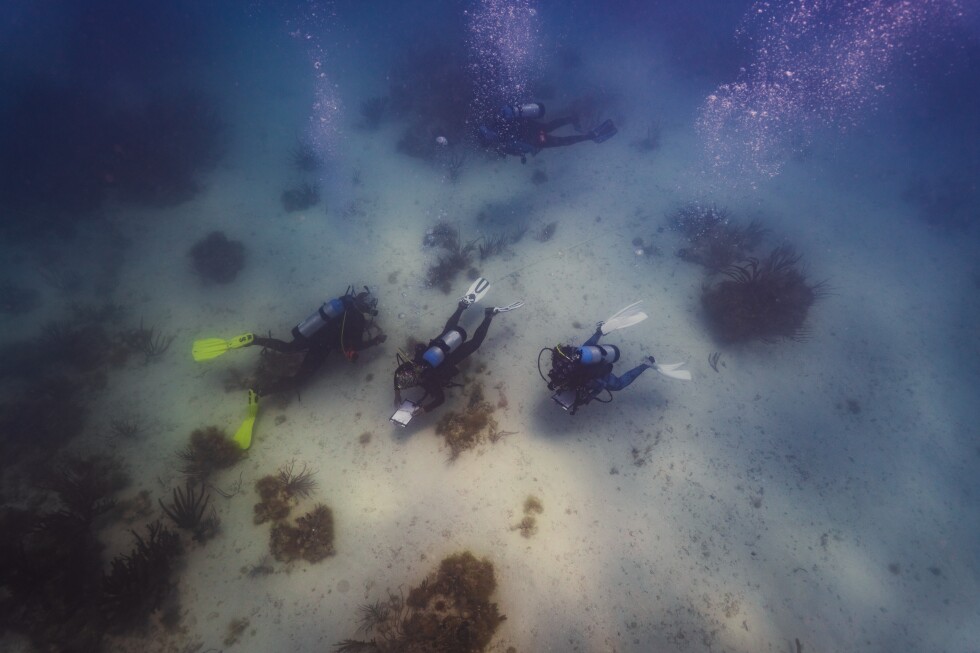
Off the sun-dappled coast of Key West, Florida, Ruthie Browning slipped into the glassy Atlantic waters in early May, expecting nothing more than a quiet moment of respect at a sunken memorial. She had joined a cohort of Black divers and community advocates on a journey to a sacred maritime site: the final resting place of the Henrietta Marie, a British slave ship that sank 326 years ago, at the height of the brutal trans-Atlantic slave trade.
The vessel’s tragic story is etched into the seafloor: after delivering 200 kidnapped West African people into chattel slavery in Jamaica, the ship set sail for Britain in 1700, only to be swallowed by a storm at New Ground Reef, where the Atlantic merges with the Gulf of Mexico. Today, a six-meter-deep concrete marker anchors the site, a permanent tribute to the lives stolen and forever altered by the trans-Atlantic slave trade. Browning arrived ready to observe, honor, and depart—but the moment she reached the marker, an unexpected wave of emotion overtook her.
Staring at the memorial, now a thriving micro-reef draped in soft corals and sponges, tears flooded her eyes. As she quieted her mind to listen, she felt a gentle, unmistakeable connection to the ancestors whose stories the site holds: “My daughter, we’re so glad you’re here.” Overwhelmed by gratitude, she lingered at the marker, which bears the inscription: “Henrietta Marie. In memory and recognition of the courage, pain and suffering on enslaved African people. Speak her name and gently touch the souls of our ancestors.” “Without their stamina, their spirit and survival, I wouldn’t be here today. None of us would be here today,” Browning reflected after her dive.
This pilgrimage was years in the making. The group’s 2023 attempt to reach the site was foiled by dangerously choppy waters, which group members framed as a sign the timing was not right. “The ancestors were not smiling down on us then,” said Jay Haigler, a master diving instructor with Underwater Adventure Seekers, the world’s oldest Black scuba diving club. “This year was different.”
Michael Cottman, an author of two books on the Henrietta Marie and a member of the National Association of Black Scuba Divers that installed the memorial in 1992, noted that this journey was never supposed to be simple. The site carries what he calls “spiritual turbulence”: “Even if it wasn’t carrying enslaved people, it embodies the oppression of our people.” After annual pilgrimages in the 1990s lapsed, the 2024 trip was revived by an underwater oral history project led by Stanford University anthropologist Ayana Omilade Flewellen, who serves on the board of Diving With a Purpose, a Black-led nonprofit dedicated to documenting and preserving slave shipwreck sites.
For Flewellen, the submerged interviews conducted during the pilgrimage became a deeply personal spiritual practice. “I felt a kind of tenderness in my heart,” she said. Processing the traumatic history of death and suffering that defines the site has long been a challenge, she explained: “It’s hard to attach your life with this history. The only way I could do that was turn toward what the divers were experiencing on this pilgrimage. That’s where it all bloomed and blossomed.”
Beyond the underwater memorial, the pilgrimage also included a land-based ritual at Higgs Beach, where 297 African refugees who were rescued from three illegal slave ships in 1860 are buried. After the U.S. Navy intercepted the ships *Wildfire*, *William* and *Bogota*, the government housed more than 1,400 surviving refugees in a coastal compound, but hundreds died from the devastating health effects of their inhumane confinement on the crossing, explained Corey Malcom, lead historian at the Florida Keys History Center.
Forgotten for nearly 150 years, the burial ground was rediscovered by researchers using ground-penetrating radar, and in 2010 a mass grave holding 100 additional bodies was found at a nearby community dog park, which has since been fenced off to protect the site. During this year’s pilgrimage, the group gathered at the cemetery to hold a traditional libation ceremony, an ancient Afro-Caribbean spiritual practice. One by one, members poured white rum—believed to act as a messenger between the living and ancestral worlds—onto the sand, tearfully honoring the lives lost. “To honor your ancestors and the road they’ve traveled is very, very important because we’re all connected,” said Addeliar Guy, a group elder and lifelong diver.
For many participants, the most striking revelation of the pilgrimage was that the Henrietta Marie site is not merely a place of death and grief—it is a place of living history. Joel Johnson, president and CEO of the National Marine Sanctuary Foundation, trained for weeks to complete his first open-water dive at the site. He was surprised by the vibrant life that now surrounds the memorial: colorful fish dart through swaying corals, and seashells dot the sandy seafloor. Protecting these marine habitats, he said, is inextricably linked to protecting the history they hold. “This was not a place of death, but a place of life,” Johnson explained. “I didn’t feel like I was grieving for my ancestors. I felt like I was in the stream of history, recognizing that I’m a part of that. It made me happy.”
Michael Philip Davenport, president of Underwater Adventure Seekers, left the site inspired to create new art depicting ancestors emerging from the memorial. “Their spirituality is still in that space,” he said. “I was feeling their lives and their tragedy.”
For Dr. Melody Garrett, an anesthesiologist who has worked with Diving With a Purpose to locate another slave shipwreck, the Guerrero, this pilgrimage is more urgent now than ever. She pointed to recent political efforts to erase references to slavery and Black history from U.S. national parks and federal cultural institutions, including moves during the Trump administration that labeled teachings on slavery as divisive “anti-American propaganda.” As the United States prepares to mark its 250th founding anniversary, Garrett said the site reinforces a fundamental truth about American identity: “Black people have been here since before this country’s inception, longer than many other people have. This is our country.”
Fragments of the Henrietta Marie’s wooden hull still rest beneath the sand at the wreck site. Discovered in 1972 by treasure hunter Mel Fisher, the wreck was fully excavated in 1983, yielding hundreds of intact artifacts. Out of an estimated 35,000 ships that transported more than 12 million enslaved African people across the Atlantic, only a handful have ever been located—most were destroyed intentionally to cover up evidence of the illicit trade. Today, the Henrietta Marie’s artifacts fill an entire floor of Key West’s Mel Fisher Maritime Museum, including more than 80 sets of iron shackles, many sized for children.
When Kory Lamberts, who runs a nonprofit working to expand equitable access to aquatic recreation, first visited the exhibit, the wooden display planks creaked under his feet, and the gravity of the history hit him instantly. “It was visceral,” he said. “It took me to a place. It also tells me that these were young people — children. These are baby shackles. There’s no sugarcoating it. The truth really hits you.” After his dive, Lamberts brought back fish caught near the Henrietta Marie site—fish he believes carry the ancestral DNA of those who died there. The group ate the fish for dinner the night after their dives, a quiet sacrament of connection. “I don’t practice a faith, but isn’t this what people are doing every Sunday at church?” he asked. “I wasn’t just bonded with this site through the experience of being there, but at this molecular level with a full circle moment of connection with myself and my history.”
This coverage of religious and cultural practice is supported by the Associated Press through a partnership with The Conversation US, with funding from Lilly Endowment Inc. The AP holds sole responsibility for this content.