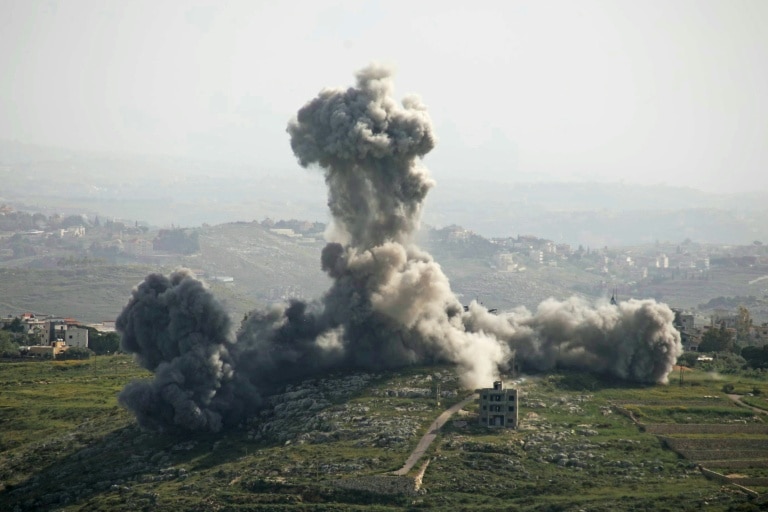
As a fragile ceasefire between Lebanon and Israel approaches its scheduled expiration, the two long-adversarial nations are preparing to convene a new round of US-mediated peace negotiations in Washington, set to kick off Thursday. The talks come against a grim backdrop of intensifying Israeli airstrikes that have claimed dozens of lives just one day before negotiations get underway, deepening skepticism that a lasting truce can be reached.
On Wednesday, Lebanon’s Ministry of Health confirmed that 22 people, among them eight children, were killed in a wave of intensified Israeli attacks across the country. Lebanon’s state-owned National News Agency (NNA) reported that the strikes targeted roughly 40 locations across southern and eastern Lebanon, sending civilian communities into renewed panic. This latest escalation brings the total death toll from Israeli strikes during the current ceasefire period to more than 400, according to an Agence France-Presse tally compiled from official Lebanese government data.
The current truce first went into effect on April 17, and was extended for three weeks during the last round of talks held at the White House on April 23. During that previous meeting, then-President Donald Trump announced the ceasefire extension and publicly predicted that he would host a landmark first summit between Israeli Prime Minister Benjamin Netanyahu and Lebanese President Joseph Aoun in Washington before the truce expired. That planned summit never materialized: Aoun pushed back, stating that a full security agreement and a complete end to Israeli attacks would be required before any high-level meeting could take place. The extended ceasefire is now set to expire on Sunday.
Israel has repeatedly rejected calls to halt its military campaign, vowing to continue targeting Hezbollah, the Iran-backed Shia political and armed movement. Hezbollah launched its cross-border retaliatory campaign in late February, following the assassination of Iran’s supreme leader Ayatollah Ali Khamenei at the opening of the US-Israeli regional war. “Anyone who threatens the State of Israel will die because of his actions,” Netanyahu stated last week, after an Israeli strike deep in central Beirut killed a senior Hezbollah commander.
A senior Lebanese official, speaking to AFP on condition of anonymity, outlined Lebanon’s core priority for the upcoming talks: “The first thing is to put an end to the death and destruction. We will seek the consolidation of the ceasefire.” Iran, a key external stakeholder in the conflict, has already rejected US appeals to accept a peace deal on Washington’s terms, demanding a permanent ceasefire in Lebanon before any agreement to end the wider regional conflict can be reached. The ongoing Middle East war has already spilled across national borders, roiling global energy and commodity markets and disrupting daily life for hundreds of millions of people across the region.
In a separate development that added to regional tensions this week, Netanyahu’s office announced Wednesday that the Israeli prime minister had made an unannounced secret visit to the United Arab Emirates, where he met with UAE President Sheikh Mohammed bin Zayed Al Nahyan. UAE officials quickly issued a public denial, rejecting all reports of the visit and adding that no Israeli military delegation has been received on Emirati soil. The UAE has faced repeated attacks from Iran during the wider regional war.
Since Israel launched its large-scale offensive against Hezbollah in early March, more than 2,800 people have been killed in Lebanon, according to Lebanese official data, with at least 200 of the dead being children. Hezbollah has confirmed that the toll includes its fighters. Israel has heavily bombed majority-Shia areas of Lebanon, including the southern suburbs of Beirut, and has reoccupied a stretch of border territory that it held from the 1982 Lebanon invasion until its full withdrawal in 2000.
The US, which is brokering the latest talks, has publicly backed Lebanon’s claim to full sovereignty over all its territory, while simultaneously pressuring Lebanese authorities to disarm Hezbollah. “The United States recognizes that comprehensive peace is contingent on the full restoration of Lebanese state authority and the complete disarmament of Hezbollah,” a recent State Department statement read. “These talks aim to break decisively from the failed approach of the past two decades, which allowed terrorist groups to entrench and enrich themselves, undermine the authority of the Lebanese state, and endanger Israel’s northern border.”
This will be the third round of official talks between Lebanon and Israel, which have never maintained formal diplomatic relations. Unlike the April round, which was hosted by Trump at the White House, neither Trump nor Secretary of State Marco Rubio will attend the upcoming two-day meeting at the State Department, as the president is currently undertaking a state visit to China. Leading the US mediation team will be Mike Huckabee, the US ambassador to Israel, an evangelical pastor and open supporter of Israel’s regional military ambitions; Michel Issa, the US ambassador to Lebanon, a Lebanese-born businessman and long-time golf associate of Trump; and Mike Needham, a senior advisor to Rubio. Lebanon’s delegation will be led by special envoy Simon Karam, a veteran diplomat and lawyer who has long advocated fiercely for Lebanese sovereignty, alongside the country’s Washington-based ambassador. Israel’s negotiating team will be headed by Yechiel Leiter, Israel’s ambassador to the US, a close ally of Netanyahu with deep ties to the Israeli settler movement in the occupied West Bank.