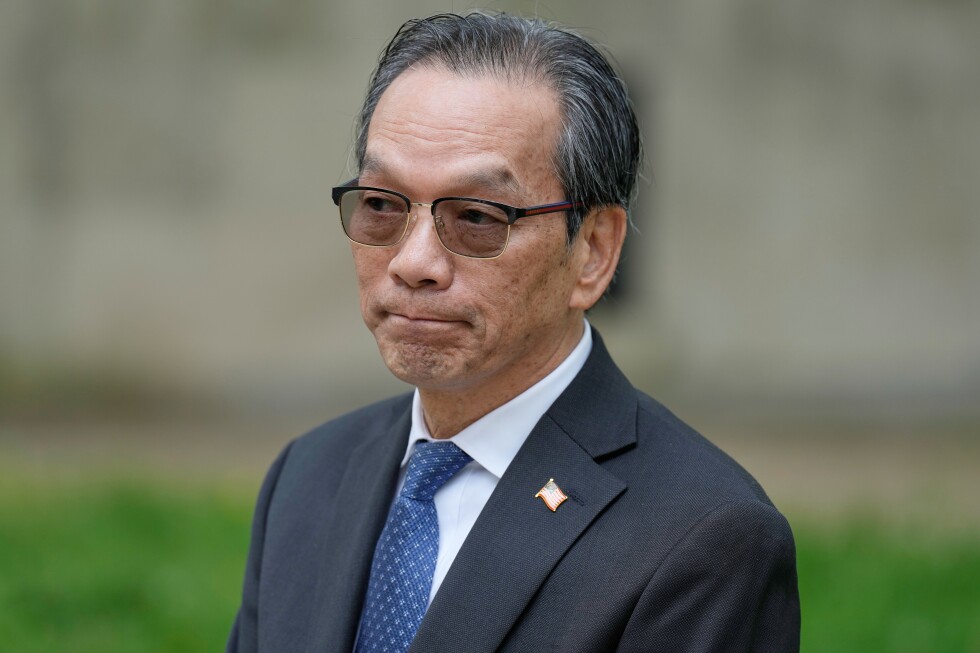
NEW YORK – After a high-profile federal trial that underscores escalating U.S. tensions over transnational Chinese surveillance operations on American soil, a 64-year-old Chinese-American man has been found guilty of acting as an unregistered illegal foreign agent and deleting communications tied to a Chinese government contact. Lu Jianwang, who also goes by Harry Lu, was acquitted of a separate conspiracy charge, delivering a mixed outcome to a case that has highlighted deep divides over how U.S. law enforcement addresses China’s global transnational repression efforts.
Federal prosecutors allege that Lu and co-defendant Chen Jinping founded the secret outpost in Manhattan’s Chinatown in 2022, shortly after Lu attended an official ceremony in China’s Fujian province where China’s Ministry of Public Security unveiled a global network of 30 so-called “overseas police stations.” The Chinese government has publicly acknowledged operating these outposts to monitor and target individuals it labels as opponents to its interests, including pro-democracy dissidents living abroad.
The Manhattan outpost operated out of shared office space with the America ChangLe Association, a community group co-run by Lu – a U.S. citizen for decades – and his brother Jimmy. The organization characterizes itself as a social hub for Fujianese immigrants in the city, a framing the defense has leaned into heavily throughout the legal proceedings. During the trial, Lu’s legal team argued the space was never a covert spy hub, but rather a legitimate community resource that helped overseas Chinese renew their Chinese driver’s licenses remotely when COVID-19 border restrictions shut down cross-border travel, alongside serving as a gathering spot for locals to play mahjong and ping-pong. Defense attorney John Carman has repeatedly dismissed the prosecution’s case as an overreach, claiming prosecutors twisted an innocent bureaucratic misstep by a well-meaning community leader into a fabricated espionage narrative, dressing up a routine paperwork violation with baseless claims of intelligence gathering.
Prosecutors pushed back on that narrative, noting that even if Lu’s only official activity was facilitating driver’s license renewals on behalf of the Chinese government, that still violates U.S. laws requiring foreign agents to formally register their activities with U.S. authorities. Jurors were presented with direct evidence during the trial, including a large banner hung at the Chinatown location explicitly labeling the space the “Fuzhou Police Overseas Service Station, New York USA.”
The case traces back to an FBI raid conducted in October 2022, launched after investigators received a tip from a watchdog organization that tracks transnational repression by Chinese authorities. During the raid, agents seized digital devices including a computer and multiple cellphones, rummaged through documents, and accessed locked storage cabinets and a safe on the property. The day after the search, prosecutors confirm Lu admitted to FBI agents that he had launched the outpost, communicated with his Chinese government handler via the messaging platform WeChat, and deliberately deleted all of those conversations ahead of the raid.
Lu spoke briefly to supporters as he exited Brooklyn Federal Court following the verdict, but declined to respond to questions from assembled reporters. He remains free on bail as he awaits sentencing, which has not yet been scheduled. His co-defendant Chen Jinping accepted a guilty plea in December 2024 to one count of conspiracy to act as an unregistered foreign agent, resolving her part of the case ahead of Lu’s trial.
The conviction comes amid growing bipartisan concern in the U.S. over China’s widespread campaign of transnational repression, which has targeted dissidents, activists, and minority groups living in countries across the globe. The verdict is expected to add fuel to ongoing debates over how U.S. law enforcement should balance national security concerns with protecting the rights of Chinese-American communities.