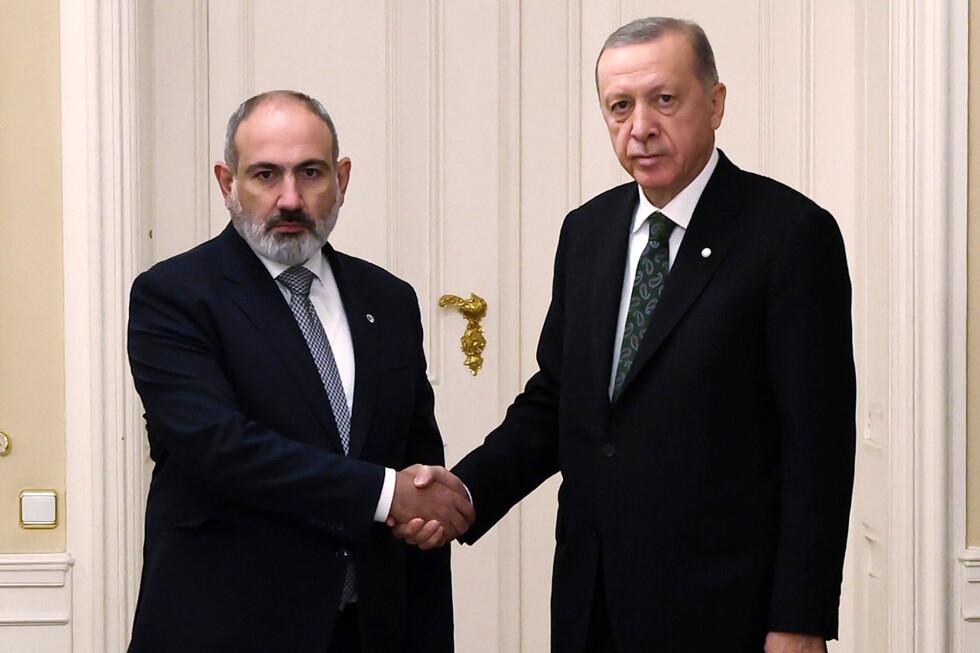
Decades of frozen relations between longstanding regional rivals Turkey and Armenia have taken a major step toward normalization, as Ankara announced it is removing a long-held restriction on direct bilateral trade this Wednesday. The diplomatic move is being widely framed as a symbolic gesture of goodwill to advance ongoing efforts to repair ties between the two neighboring countries.
Turkey and Armenia have not maintained formal diplomatic relations since the 1990s, when Ankara closed the shared Turkey-Armenia border in 1993. The closure came as a show of solidarity with Turkey’s close strategic ally Azerbaijan, which was engaged in armed conflict with Armenia over the disputed Nagorno-Karabakh region, a territory recognized under international law as part of Azerbaijan.
Tensions have run high between the two nations for more than a century, compounded by deep-seated historic grievances beyond the Nagorno-Karabakh dispute. The divergent narratives around the 1915 mass deaths of an estimated 1.5 million Armenians under Ottoman Turkey remain a major sticking point: while most international historians classify the events as a genocide, the Turkish government rejects the label, acknowledging widespread casualties but disputing the death toll and framing the deaths as a consequence of early 20th-century civil unrest.
More recently, Turkey again threw its full support behind Azerbaijan in the 2020 six-week armed conflict over Nagorno-Karabakh, providing Baku with key military hardware including combat drones. That conflict ended with Azerbaijan retaking control of large swathes of the disputed territory that had been held by ethnic Armenian forces backed by Yerevan.
It was not until late 2021 that the two countries made a formal breakthrough, when they reached an agreement to launch a structured dialogue to improve bilateral relations, appointing special envoys tasked with negotiating reconciliation and the eventual full opening of the closed border. Over the course of two years of gradual talks, the process has already delivered tangible incremental progress: direct commercial flights between the two nations have resumed, and some visa requirements for travelers have been relaxed.
Announcing the latest policy change via a post on social platform X, Turkish Foreign Ministry spokesman Oncu Keceli confirmed that ongoing technical and administrative work to fully open the shared border is still progressing. Under the new policy adjustment, goods shipped between Turkey and Armenia via third countries will now be permitted to explicitly list Turkey or Armenia as their official point of origin or final destination on trade documents, ending a decades-long restriction that banned this direct labeling.
Writing in his statement, Keceli emphasized Turkey’s commitment to regional stability, noting: “In the light of the historic opportunity seized to strengthen lasting peace and prosperity in the South Caucasus, Türkiye will continue to contribute to the development of economic relations in the region and to further advancing cooperation for the benefit of all countries and peoples of the region.”
The diplomatic shift has already been met with a positive response from Armenia. Armenian Foreign Ministry spokeswoman Ani Badalyan called the move a meaningful milestone on the path to full bilateral normalization, saying in her own X post: “We would like to emphasize that this is an important step toward the establishment of full and normalized relations between our two countries, which could logically continue through the opening of the Armenia-Turkey border and the establishment of diplomatic relations.”
Analysts note the move comes amid a shifting geopolitical landscape in the South Caucasus, as Armenia deepens its engagement with European institutions and moves away from its traditional alignment with Russia, making progress on the Turkey-Armenia reconciliation track all the more significant for regional security.