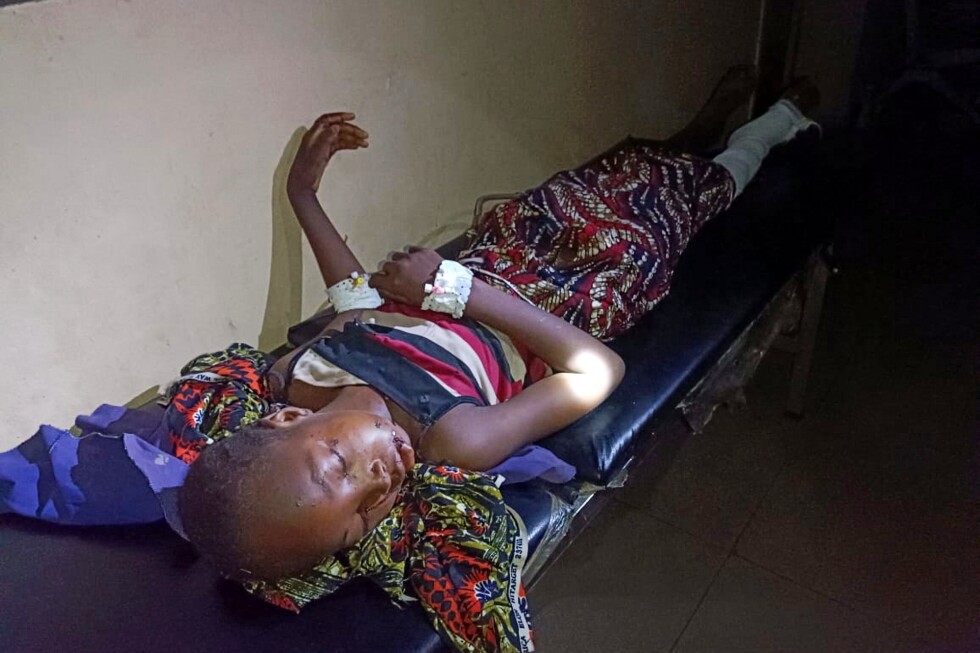
ABUJA, NIGERIA — A deadly airstrike targeting alleged armed militants in northwestern Nigeria has once again left scores of civilians dead, fueling renewed questions about the counterinsurgency practices of a key U.S. security partner in the fight against regional extremism and organized armed violence. The incident, which unfolded Sunday in the market of Tumfa, Zamfara State, has claimed the lives of at least 100 civilians — including multiple children, according to Amnesty International’s Nigeria branch. A senior state-level Red Cross official corroborated the airstrike to the Associated Press, confirming the deaths of multiple civilian non-combatants.
Nigeria’s military has publicly rejected claims of civilian harm, however. Major General Michael Onoza confirmed that an airstrike was carried out at the Tumfa market location, but claimed there is “no verifiable evidence of civilian casualties.” He added that counterinsurgency operations are still ongoing across the area.
Accidental civilian deaths from mistaken military airstrikes are not a new issue in Nigeria’s conflict-affected northern regions, where security forces rely heavily on aerial bombardment to target scattered armed group hideouts. Unlike conventional military forces, these non-state fighters typically travel in large groups on motorcycles across remote forest and village areas that are largely inaccessible to Nigerian ground troops, making air attacks a go-to tactic for military command.
Data collected by Lagos-based independent research firm SBM Intelligence, which aggregates on-the-ground reports from conflict-impacted communities, shows that mistaken military airstrikes have killed more than 500 civilians across Nigeria since 2017. While Nigerian authorities have on rare occasions acknowledged accidental civilian casualties from these operations, local residents and security analysts agree such incidents are growing more frequent. Nigeria’s Defense Minister Christopher Musa has pushed back against this criticism, asserting that the military has made tangible progress improving its human rights record and holds service members accountable for errors.
The United States, a key security ally to Nigeria, recently deployed additional U.S. troops and surveillance drones to the country to provide intelligence and logistics support for counterinsurgency operations. It remains unclear whether intelligence provided by the U.S. was used to plan and execute the latest Sunday airstrike.
Beyond the well-documented Boko Haram insurgency that launched in 2009 to establish a radical Islamist state in northeastern Nigeria, dozens of separate armed factions operate across the country’s northwest and central regions. Most of these groups originated from long-simmering conflicts between pastoralist communities and farming populations competing for access to shrinking land and water resources. Once armed only with basic weapons, these factions now have access to large stockpiles of illegally smuggled firearms, fueling a crisis that kills thousands of Nigerians annually.
Analysts note that these armed groups carry out mass casualty attacks and kidnappings for ransom across the northwest, while also extorting illegal “taxes” from local communities to fund their operations. With little sustained security presence in many remote rural villages, fighters can launch multi-day attacks and then evade detection by relocating frequently and blending into civilian populations.
Nigerian government officials have long argued that avoiding civilian casualties is uniquely challenging in this conflict because armed groups deliberately use local civilians as human shields. “Bandits and terrorists, unlike professional soldiers, don’t respect the rules of engagement. They don’t care about killing their hostages if they come under attack,” former Nigerian President Muhammadu Buhari previously stated.
But Abuja-based security analyst Senator Iroegbu argues that the consistent pattern of civilian deaths stems from more than insurgent tactics: gaps in intelligence gathering, and poor coordination between ground troops, air command and local community stakeholders also play a major role.
While the Nigerian government and military have repeatedly promised to launch post-incident investigations to prevent future accidental civilian deaths, analysts say these probes rarely result in meaningful policy or procedural changes. In 2024, military officials took a rare step forward by prosecuting two service members in connection with a 2023 airstrike that killed more than 80 civilians in Kaduna State. While authorities promised to release the full public investigation report for that incident, no document has been made public to date.
Oluwole Ojewale, a security researcher with the Africa-focused Institute for Security Studies, says long-term reform requires targeted investment: improved pilot training, upgraded aircraft and modern precision targeting systems are critical to reducing accidental casualties. Beyond equipment and training, Ojewale adds that the military must first rebuild trust with local communities, whose on-the-ground intelligence about armed group movements is irreplaceable for accurate targeting of militant hideouts.