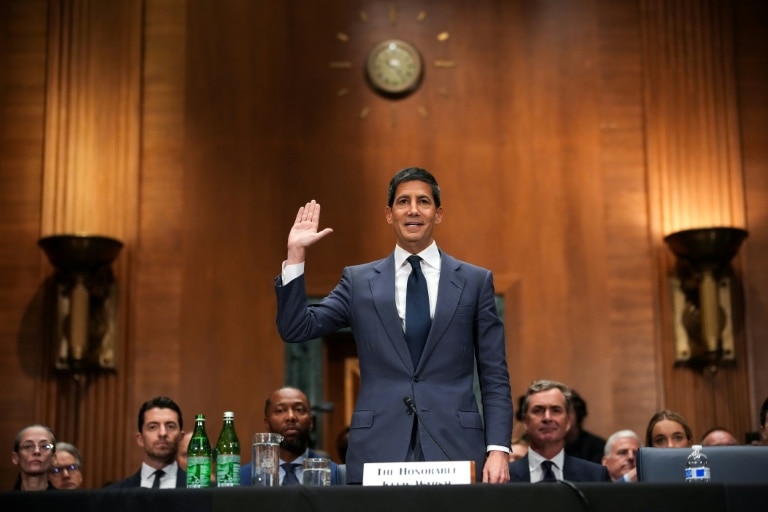
As the U.S. Senate gears up to confirm Kevin Warsh, President Donald Trump’s nominee for Federal Reserve Chair, the incoming leader confronts a trio of extraordinary challenges: unprecedented political interference from the White House, persistent inflationary pressures buffeting the American economy, and deep internal divisions among the central bank’s top policymakers.
The confirmation vote is scheduled for 2:00 pm local time (1800 GMT) Wednesday, with Trump’s Republican party holding a narrow majority that is all but guaranteed to push Warsh’s nomination through to replace departing chair Jerome Powell. Once a well-known hardliner on inflation (commonly referred to as a monetary “hawk”), Warsh has shifted his policy stance in recent months to align with Trump’s aggressive public campaign for deep interest rate cuts. He has also pledged to implement what he calls “regime change” at the central bank, criticizing the institution for what he claims is excessive politicization and overly transparent communication around its monetary policy decisions.
But Warsh’s path to immediate rate cuts faces steep barriers. Inflation currently remains well above the Fed’s long-term 2% target, climbing to 3.8% year-over-year in April amid soaring global oil prices sparked by the escalating conflict between the U.S.-backed Israeli campaign against Iran. With price growth still stubbornly elevated, the new chair faces an uphill battle convincing members of the Federal Open Market Committee (FOMC), the Fed’s rate-setting body, to back an immediate rate reduction. That gridlock sets the stage for renewed public attacks from Trump, who spent years relentlessly criticizing Powell over his policy decisions and has made no secret of his demand for lower borrowing costs to boost the economy ahead of elections.
“Warsh’s biggest challenge will likely be dealing with President Trump,” noted David Wessel, senior fellow at the Brookings Institution. “The president does not respect the independence of the Fed and he wants interest rates to be lower.”
Trump’s repeated attacks on the Fed and its leadership already represent an unprecedented assault on the central bank’s long-held institutional independence. Earlier this year, Powell claimed a criminal probe launched by the Department of Justice into cost overruns for a Fed building renovation project was a deliberate attempt to pressure him into changing his monetary policy stances. That move came on the heels of a separate Trump administration effort to remove Fed Governor Lisa Cook from the central bank’s board.
The Justice Department dropped the criminal probe into Powell as the administration moved to clear procedural hurdles for Warsh’s nomination, but the Supreme Court still has a pending case on the legality of Cook’s attempted removal. Columbia Law School professor Kathryn Judge, an expert in banking regulation, called both actions “unprecedented,” warning that the pressure on Fed officials is unlikely to ease even after Warsh takes office.
“Fed officials have been put on notice that this president is willing to use all available tools to bully them into acceding to his demands,” Judge explained.
Beyond political interference, Warsh takes the helm of the world’s largest economy still reeling from years of successive economic shocks. The COVID-19 pandemic sent inflation soaring to a 40-year peak of 9.1% in mid-2022; while price growth has cooled from that high, American households have still been grappling with persistent above-target price increases that have eroded purchasing power.
The Fed’s dual mandate creates a particularly intractable policy dilemma for the new chair. While the unemployment rate has held steady at roughly 4.3% — a level near historic lows — that stable headline number hides significant underlying turbulence. Monthly job growth has been weak and volatile for months, swinging between small gains and losses, with nearly all new job creation concentrated in the health care sector. The stable unemployment rate is also propped up by a sharp drop in labor supply, driven by both Trump’s aggressive deportation policies and the ongoing aging of the American population.
The conflicting signals leave policymakers stuck between competing goals: raise rates to bring inflation fully back to target, or cut rates to stimulate sagging job growth?
Compounding these challenges is deep internal division on the FOMC over the appropriate path forward. At the committee’s most recent meeting, an unusual three members publicly dissented from the group’s position, arguing the Fed should signal that a rate hike remains a possible option to rein in persistent inflation. Wessel pointed out that these divisions, which sometimes fall along partisan lines, represent a marked shift from the Fed’s traditionally consensus-driven culture of the past.
Adding an extra layer of institutional uncertainty is the unusual situation of outgoing chair Powell, who will remain on the Fed’s board of governors after stepping down from the leadership role — a break from more than 70 years of precedent where departing chairs leave the board when their term as chair expires.