The 70th iteration of Europe’s iconic annual Eurovision Song Contest, held this year in Vienna, has become the center of a growing global controversy, as widespread anger over Israel’s devastating military campaign in Gaza has sparked mass boycotts, alternative performances, and loud demands for Israel’s expulsion from the competition.
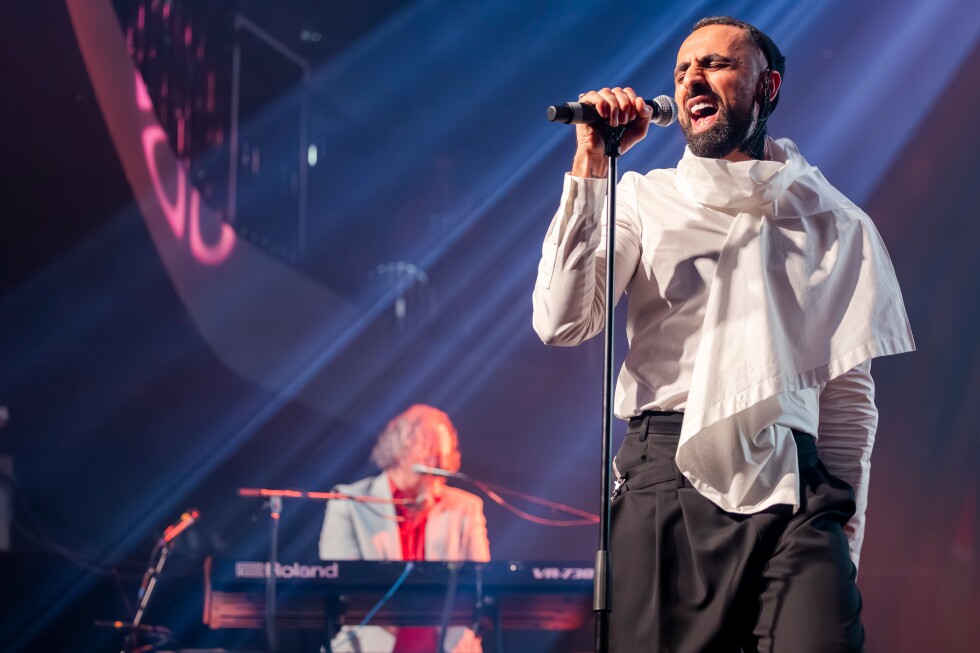
On a Tuesday evening in an ornate Brussels concert venue, Palestinian singer-songwriter Bashar Murad took the stage before hundreds of attendees to deliver a haunting, bilingual rendition of Nina Simone’s civil rights anthem *I Wish I Knew How It Would Feel to Be Free*, blending English and Arabic lyrics. When the final note faded, the crowd erupted into thunderous applause, capping off a performance that anchored one of the largest alternative pro-Palestinian events organized to counter the official contest. This Brussels gathering, titled *United for Palestine*, brought together European artists and Palestinian creators to protest Israel’s spot in the 35-nation lineup, and it is one of dozens of parallel events taking place across the continent this week.
The controversy has already split participating countries: five nations — Spain, Ireland, the Netherlands, Slovenia, and Iceland — have formally withdrawn from the kitschy, widely beloved pop extravaganza, declining to send competitors or broadcast the final. Despite the rising pressure, the Geneva-based European Broadcasting Union (EBU), which administers the contest, has refused to remove Israel from the roster, a decision that has amplified outrage across activist circles and political bodies. Ahead of this year’s event, the EBU did tighten contest voting rules to address persistent allegations of Israeli government interference to boost its competitor, but stopped short of the full expulsion demanded by critics.
The debate over Israel’s participation stretches back decades. Murad, who nearly became Iceland’s 2024 Eurovision competitor, has a personal connection to the fight for Palestinian inclusion: in 2005, his father, a founding member of the iconic Palestinian musical collective Sabreen, joined a petition to the EBU to grant Palestine official entry to the contest, a request that was ultimately denied. Israel, by contrast, has been a participating member since 1973, has claimed four contest victories, and the event holds deep cultural resonance for the Israeli public.
But as the death toll from Israel’s military operations in Gaza, the West Bank, Lebanon, and Iran has mounted, public fury has spread across Europe. Mass pro-Palestinian protests have been held from Rome to Madrid, and senior European Union officials are currently considering new sanctions against Israel over the humanitarian crisis in Gaza. Amnesty International’s Secretary General Agnès Callamard has joined the calls for expulsion, drawing a parallel to the EBU’s 2022 decision to ban Russia following its full-scale invasion of Ukraine. “Songs and sequins must not be allowed to drown out or distract from Israel’s atrocities or Palestinian suffering,” Callamard stated.
In response to the EBU’s refusal to remove Israel, grassroots activists and public broadcasters have stepped up to organize alternative programming across the continent. SOS Belgium, one of the organizers of the Brussels alternative concert, told reporters that parallel events are also running in Austria, Germany, Slovenia, Italy, and Spain. In Spain, public broadcaster RTVE, which has aired Eurovision for decades, will not broadcast the 2025 final; instead, it will air *La Casa de la Música*, a special 70th anniversary tribute to the broadcaster’s musical legacy that features 20 performers, including the winners of Spain’s national selection contest Benidorm Fest, who would have normally competed at Eurovision.
On Tuesday, the first set of finalists was confirmed, with Israel and fan-favorite Finland securing spots in the grand final, which will be held this weekend. The official contest, which carries this year’s motto “United by Music,” drew 162 million global viewers in 2025 and retains a massive, dedicated fanbase that far outpaces the audience of any alternative event.
Still, Murad and other organizers of the alternative gatherings say their goal is not to compete with Eurovision directly, but to push the contest to live up to its stated founding mission of uniting people across borders through music. “The purpose of these alternative programs that are happening is to remind Eurovision what it’s actually about and to try to hopefully bring it back, to correct its course, and make it actually live up to the things that it claims to be about,” Murad said. “A lot of people in the world feel that the competition has lost its meaning.” “It’s always amazing to be in the same room with people who believe in the same things as you and people who believe that we can’t just let the show go on,” he added.