A landmark court ruling has upended the legal outcome of a high-profile Sydney protest against the Israeli president’s Australian visit, after judges struck down as unconstitutional the police legislation that authorities relied on to break up the gathering and make multiple arrests.
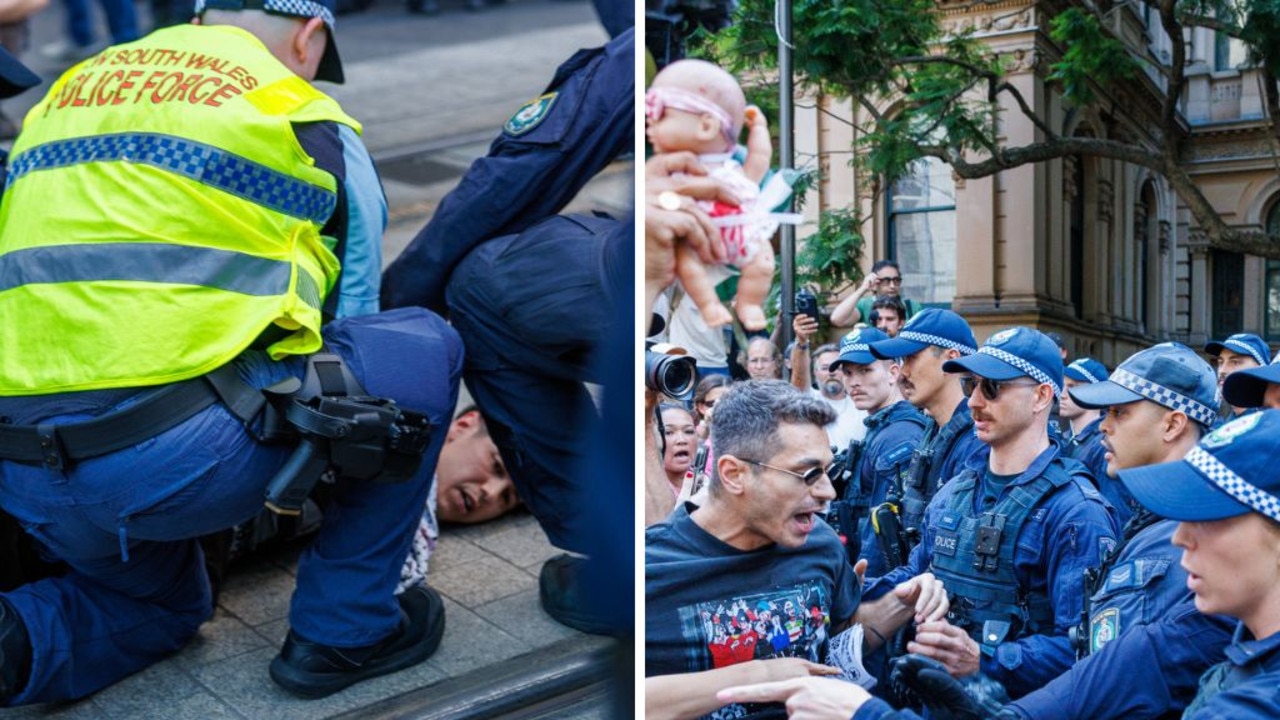
The February demonstration, which drew hundreds of participants to Sydney Town Hall to oppose the presidential visit, saw New South Wales Police move to block the group’s planned march route, disperse sections of the crowd, and take dozens of protesters into custody. Officers based their actions on the Public Assembly Restriction Declaration (PARD), a sweeping post-terror attack law that granted police broad power to restrict public gatherings for up to 90 days following a major extremist incident.
Last month, the NSW Court of Appeal delivered a decisive ruling on the law, siding with a legal challenge mounted by the Palestine Action Group and Blak Caucus. Judges found PARD unlawfully overreached executive power by expanding police authority far beyond what the state constitution allows, invalidating the entire legislative framework.
The law had been rushed into passage by state authorities after the deadly December Bondi Beach terror attack, which left 15 people dead and more than 40 injured when two attackers opened fire during a Hanukkah gathering at the coastal site.
On Wednesday morning, NSW Police Commissioner Mal Lanyon confirmed to ABC Radio that all charges laid directly under PARD for the Town Hall protest will be dropped pending a formal departmental review. Of the 29 protesters facing charges connected to the demonstration, it remains unclear how many will see their cases dismissed, as many accused face additional unrelated offences including assaulting police, offensive conduct, and throwing projectiles, which are being processed separately through the courts.
Legal advocates have raised further questions about whether all police directions issued during the protest operation, including charges for failing to comply with officer instructions, were rooted in the now-invalidated framework, casting doubt over a broader range of charges. State Premier Chris Minns had previously argued that many charges could still stand under a separate major events declaration, a regulation typically used for large-scale sporting and entertainment gatherings that was active during the Israeli president’s visit. But the Palestine Action Group has already signaled it intends to launch a new legal challenge to that framework, arguing it was also improperly used to suppress peaceful political protest.
Greens Member of Parliament and solicitor Sue Higginson welcomed the announcement of charge reviews, saying the commissioner’s confirmation that charges were laid under an unconstitutional law proves the entire police operation was legally flawed. “People were wrongfully arrested and brutally assaulted because the Minns Labor Government chose to impose unconstitutional anti-protest laws on the people of NSW,” Higginson said in a statement, calling for all charges connected to the night of protest to be dropped entirely.
The Human Rights Law Centre also added its voice to calls for sweeping change after last month’s court ruling, noting that judges found PARD unlawfully restricted protected political communication and exceeded the state government’s constitutional authority. The organization is calling for all remaining charges to be dismissed and for a full overhaul of NSW’s protest-related legislation to bring it into line with constitutional protections for peaceful assembly and free speech.