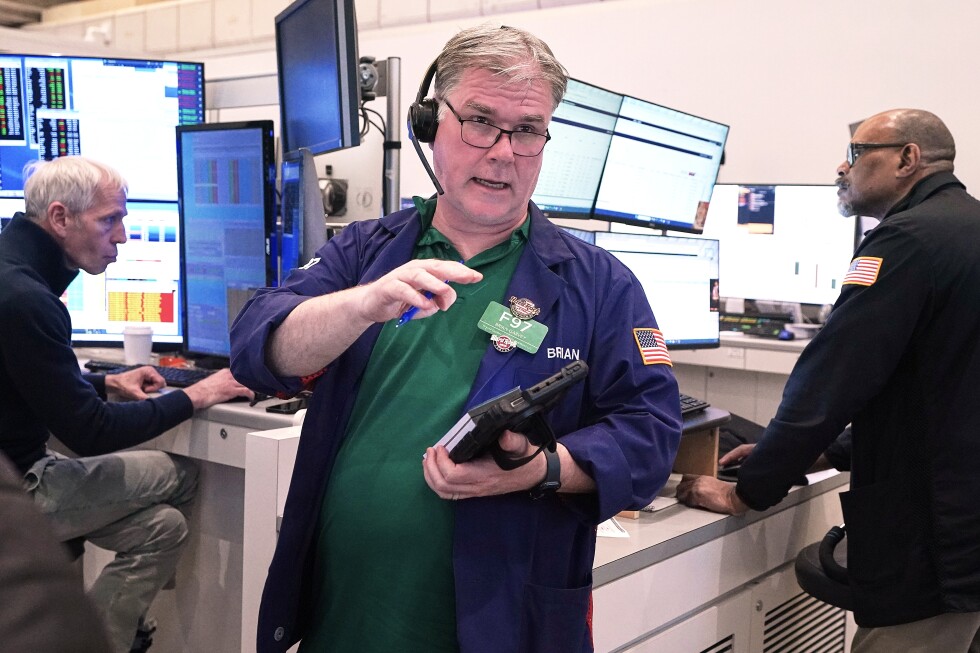
After a weeks-long stretch of record-setting gains that pushed major U.S. benchmarks to all-time highs, Wall Street’s rally came to an abrupt halt on Tuesday, dragged down by a sudden pullback in red-hot artificial intelligence stocks and growing market jitters over spiking oil prices fueled by the ongoing conflict with Iran.
The day’s trading ended with a mixed picture across major indexes. The benchmark S&P 500 pulled back 0.2% from the record high it notched a day earlier, dropping 11.88 points to close at 7,400.96. The blue-chip Dow Jones Industrial Average bucked the downward trend, adding 56.09 points, or 0.1%, to finish at 49,760.56. It was the tech-heavy Nasdaq composite that bore the brunt of the selling, sinking 0.7% or 185.92 points to close at 26,088.20, retreating from its own recent all-time peak.
The steepest losses were concentrated among the semiconductor manufacturers and AI-linked equities that have posted explosive gains through 2026, riding the global AI boom to triple-digit year-to-date returns. Intel led the downturn, slumping 6.8% after its share price had already surged more than 200% so far this year. Micron Technology, which entered Tuesday with a nearly 180% gain for 2026, dropped 3.6%, while AI-focused firm CoreWeave fell 6.1%, trimming its year-to-date gain to 60%.
This pullback in AI stocks actually originated in Asian markets earlier in the trading day. South Korea’s Kospi index tumbled 2.3% down from its own all-time high, as investors reacted to fears that the South Korean government could redistribute excess windfall profits earned by domestic AI companies directly to citizens.
A second major headwind weighed on U.S. markets on Tuesday: a sharp new jump in global crude oil prices, driven by growing fears that the ongoing conflict with Iran will become protracted and disrupt global energy supplies. Brent crude, the global benchmark, climbed 3.4% to settle at $107.77 per barrel, up from roughly $70 per barrel before the conflict began. The rally came as a fragile U.S.-Iran ceasefire grows increasingly tenuous, and the ongoing war has effectively blocked all oil tanker traffic through the Strait of Hormuz, a critical chokepoint for global energy trade, leaving millions of barrels of crude stuck in the Persian Gulf unable to reach customers worldwide.
The rapid run-up in oil prices pushed U.S. inflation higher last month by a larger margin than most economists had projected, according to government data released Tuesday. Even when stripping out volatile gasoline and food costs, core price acceleration outpaced expert forecasts in April, extending a streak of discouraging inflation data. Brian Jacobsen, chief economic strategist at Annex Wealth Management, noted that higher tariffs and unseasonable bad weather have also contributed to upward pressure on consumer prices.
In response to the hotter-than-expected inflation report, Treasury yields moved higher in the bond market after an early period of volatile whipsaw trading. The yield on the 10-year Treasury note rose to 4.45%, up from 4.42% late Monday, and remains well above the 3.97% level it traded at before the Iran conflict began. Rising yields signal that investors now expect the Federal Reserve to keep interest rates higher for longer to bring inflation back under control.
The U.S. central bank has already delayed any planned interest rate cuts in recent months, as it waits to assess how the Iran war and the Trump administration’s new tariffs will impact inflation trends. Lower interest rates can stimulate economic growth, but they also tend to worsen inflationary pressures. Following Tuesday’s inflation data, traders still overwhelmingly expect the Fed to hold interest rates steady through the end of the year, but CME Group data now shows investors see a better than one-in-three chance that the central bank will actually raise rates by December. Higher interest rates typically put downward pressure on stock valuations while also slowing overall economic growth.
Even with rising yields, spiking oil prices, and ongoing geopolitical uncertainty tied to the Iran conflict, the U.S. stock market has remained surprisingly resilient in recent weeks, driven largely by better-than-expected corporate earnings across most sectors. Zebra Technologies was the latest S&P 500 firm to top analyst profit forecasts on Tuesday; the company, which helps businesses digitize and automate workflows through barcode scanners and other technology, saw its stock jump 11.4%, and it also released a full-year profit forecast that beat analyst expectations.
Not all earnings reports were positive, however. Athletic apparel brand Under Armour sank 17% after reporting a larger quarterly loss than analysts had projected. CEO Kevin Plank said the company is moving forward with a plan to “reset the business and restore the discipline required to operate as a best-in-class brand.”
Outside of earnings, dealmaking news also moved individual stocks. Video game retailer GameStop fell 3.5% after e-commerce platform eBay rejected GameStop’s unsolicited buyout offer, calling the bid “neither credible nor attractive.” eBay noted that GameStop had failed to explain how it would finance the acquisition of the much larger firm, and eBay’s own stock rose 2.1% following the announcement. Homebuilder Beazer Homes USA also fell 7.3% after rejecting an unsolicited takeover bid from Dream Finders Homes, saying that the firm repeatedly undervalued Beazer in its offers, with the latest bid coming in lower than previous proposals. Dream Finders’ stock dropped 13.4% following the news.
Global markets broadly followed the downward trend on Tuesday, with most major indexes across Europe and Asia closing lower. Along with South Korea’s 2.3% drop, Germany’s DAX fell 1.6% and France’s CAC 40 lost 0.9%, two of the steepest declines outside of Asia. Japan’s Nikkei 225 was a rare outlier, closing 0.5% higher. AP Business Writers Yuri Kageyama and Matt Ott contributed reporting to this article.