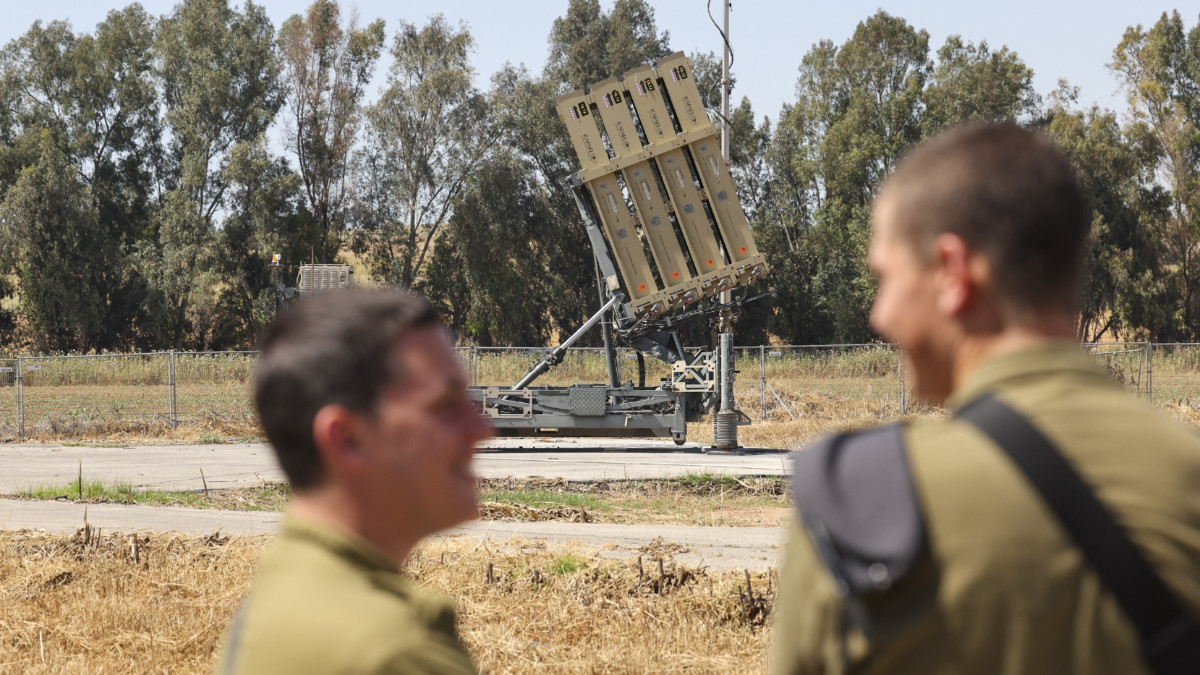
On Tuesday, United States Ambassador to Israel Mike Huckabee made the first on-the-record confirmation of a critical regional military deployment: Israel has transferred Iron Dome air defense batteries, alongside specialized Israeli military personnel to operate the systems, to the United Arab Emirates (UAE) amid the ongoing war between the US, Israel and Iran.
Huckabee, speaking at a public event in Tel Aviv, framed the deployment as a tangible product of the normalized diplomatic ties forged between the two countries through the 2020 Abraham Accords. “Israel just sent them – [the UAE] – Iron Dome batteries and personnel to help them operate them. How come? Because there’s an extraordinary relationship between the UAE and Israel based on the Abraham Accords,” he stated. This official confirmation comes more than a month after U.S.-based outlet Axios first reported the transfer of Iron Dome systems, with the Financial Times following up to reveal Israel also deployed its cutting-edge Iron Beam laser defense system to the UAE to counter Iranian drone and missile threats.
The deployment comes against a backdrop of steeply escalated hostilities that erupted after the U.S. and Israel launched a large-scale bombing campaign against Iran in February. In direct retaliation, Tehran launched a massive wave of drone and missile strikes targeting American and Israeli assets across the Middle East, with the UAE emerging as one of Iran’s primary targets. Emirati authorities have confirmed that Iran fired approximately 550 ballistic and cruise missiles and over 2,200 drones at UAE territory. Though the vast majority of these projectiles were intercepted by defensive systems, the attacks have still caused profound disruption to the Gulf nation’s economy and global reputation. Long seen as a stable luxury tourism destination and regional financial hub, the UAE’s status as a safe haven has taken a noticeable hit from the persistent strikes.
Critical energy infrastructure has also sustained significant material damage. On Tuesday, Abu Dhabi National Oil Company (ADNOC) announced that the Habshan natural gas processing facility, the UAE’s primary gas plant, will not return to full operational capacity until 2027, after being targeted twice by Iranian strikes. The facility is currently operating at just 60% of its normal output, creating ripple effects for regional energy markets.
Regional powers have taken diverging stances on the conflict. While Gulf Arab states publicly opposed the U.S.-led war on Iran before its launch, most have aligned with Washington once hostilities began, given the U.S.’s longstanding role as their primary security partner. Saudi Arabia, for example, has granted the U.S. expanded military access, base access, and overflight permissions to support the war effort, while still backing mediation efforts led by its close ally Pakistan to bring the conflict to a negotiated end.
In sharp contrast, the UAE has adopted a notably more hawkish stance in the conflict. Abu Dhabi has lobbied both publicly and behind closed doors for the U.S. to maintain its offensive strikes against Iran, and has actively attempted to block Pakistani-led mediation efforts that aim to bring Washington and Tehran to the negotiating table.
New reporting from The Wall Street Journal this week added another layer of complexity to the UAE’s role, revealing that Abu Dhabi launched its own unilateral strike on Iran’s Lavan Island in the Persian Gulf in early April, timed around the same moment U.S. President Donald Trump announced a ceasefire following five weeks of intensive American air campaign. The UAE has never publicly acknowledged carrying out this operation. According to the reporting, the strike sparked a large fire that disabled most of the oil facility’s operational capacity for months, representing a major escalation at a moment of supposed de-escalation. Iran publicly labeled the incident an “enemy attack” and responded with another heavy barrage of missile and drone strikes targeting both the UAE and neighboring Kuwait.