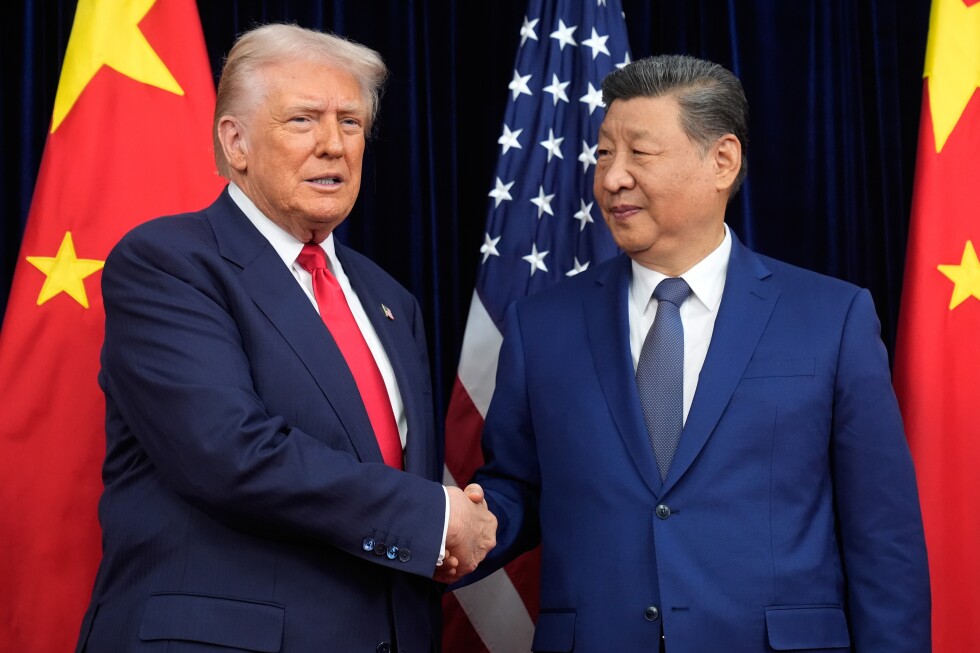
A senior anonymous White House official has confirmed that a roster of high-profile U.S. leaders spanning big tech, aerospace, finance and agriculture will accompany former President Donald Trump on his official trip to Beijing this week, where Trump is set to hold pivotal bilateral talks with Chinese President Xi Jinping. The U.S. delegation departs Tuesday, with trade disputes and artificial intelligence governance emerging as two core agenda items, alongside discussions focused on the ongoing Iran crisis.
Among the most closely watched attendees is Elon Musk, the eccentric billionaire CEO of electric vehicle giant Tesla and aerospace firm SpaceX, who once chaired Trump’s short-lived Department of Government Efficiency. The agency, which drew widespread controversy from its launch, wound down operations last November, following Musk’s exit from the role in spring 2025. Musk’s presence on the trip comes after a very public falling out with Trump last summer: the social media mogul, who also owns platform X, made unsubstantiated claims that the U.S. government hid information linking Trump to disgraced convicted sex offender Jeffrey Epstein, triggering a fiery public war of words. Musk later walked back portions of his remarks, acknowledging he regretted several of his public posts about the president on X.
Today, Musk has shifted his focus back to managing his global business portfolio, which includes substantial manufacturing and sales operations in China that he has visited multiple times. He is currently navigating a slew of legal challenges outside the U.S. as well: French prosecutors are pursuing criminal charges against Musk and X over allegations that the platform failed to moderate child sexual abuse material, hosted harmful deepfakes and disinformation, and allowed the platform’s AI chatbot Grok to amplify content that denies crimes against humanity. He is also engaged in a high-profile civil trial against OpenAI CEO Sam Altman, centered on competing visions for the future of artificial intelligence development.
Another key figure in the delegation is Apple CEO Tim Cook, whose 15-year tenure leading the world’s most valuable company is set to conclude on September 1, when he will hand the CEO role to John Ternus, Apple’s current head of hardware engineering, and transition to the position of executive chairman. During Cook’s leadership, Apple grew exponentially: the company’s market capitalization swelled by more than $3.6 trillion, driven by booming global demand for iPhones and Apple’s expanding ecosystem of consumer technology.
Throughout his time at Apple’s helm, Cook has repeatedly had to navigate the shifting tides of U.S.-China trade relations, particularly during Trump’s previous and current presidential terms when the White House launched sweeping tariff measures targeting Chinese goods. In Trump’s first term, Cook successfully negotiated exemptions for iPhones and other core Apple products from the initial round of tariffs. In the current second term, Trump has pushed for Apple to move all of its iPhone manufacturing out of China and back to the U.S., and imposed new tariffs on the devices. Cook has managed to mitigate the financial impact of these measures by shifting production of U.S.-bound iPhones to India, and securing additional exemptions after committing Apple to a $600 billion U.S. investment over the course of Trump’s second term.
Aerospace industry leader Kelly Ortberg, CEO of Boeing, is also part of the delegation. Ortberg took the top job at Boeing in 2024, stepping in to lead the American manufacturing giant as it grappled with overlapping legal, regulatory, production crises that triggered severe financial losses. Last year, Ortberg publicly downplayed the impact of the escalating U.S.-China trade war on Boeing’s recovery, arguing that tit-for-tat tariffs would not derail the company’s efforts to return to stable growth or meet delivery targets for Chinese airlines, which had paused acceptance of new Boeing jets amid rising trade tensions.
The trade conflict escalated sharply in April 2025, when Beijing raised import tariffs on U.S. goods to 125% in retaliation for the Trump administration’s hike of tariffs on Chinese-made products to 145%. For Boeing, the U.S.’s largest exporter, the new tariffs would more than double the cost of its commercial passenger jets, which already sell for tens of millions of dollars apiece. However, the impact has been softened in recent years by Boeing’s gradual reduction of direct finished aircraft exports to China, making the market less central to its bottom line than it once was. Ahead of the Beijing trip, Boeing confirms it has been holding ongoing negotiations with Chinese officials over a potential large-scale new aircraft order.
The delegation also includes a dozen other top C-suite leaders from across major U.S. industries: BlackRock Chairman and CEO Larry Fink, Blackstone co-founder, Chairman and CEO Stephen Schwarzman, Cargill Chairman and CEO Brian Sikes, Citi Chairman and CEO Jane Fraser, Coherent CEO Jim Anderson, GE Aerospace Chairman and CEO H. Lawrence Culp, Goldman Sachs Chairman and CEO David Solomon, Illumina CEO Jacob Thaysen, Mastercard CEO Michael Miebach, Meta President and Vice Chairman Dina Powell McCormick, Micron Chairman, President and CEO Sanjay Mehrotra, Qualcomm President and CEO Cristiano Amon, and Visa CEO Ryan McInerney.
Reporting from Washington D.C. contributed by Aamer Madhani.