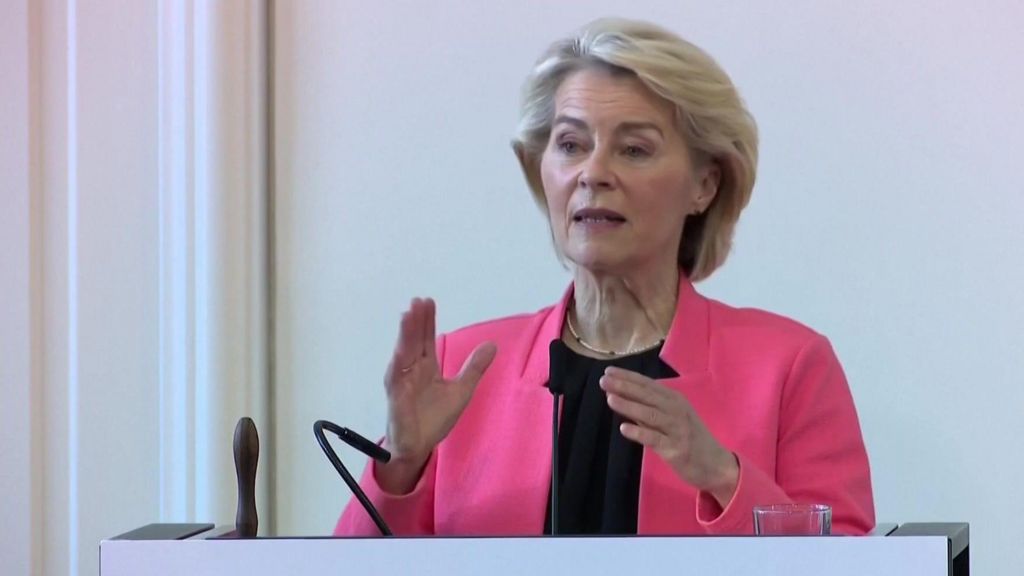
At a recent EU summit hosted in Copenhagen, European Commission President Ursula von der Leyen has put forward landmark new plans to protect minors across the bloc from the harms of unregulated social media access, announcing that draft legislation could be introduced within just a few months.
Central to the proposal is the concept of a ‘social media delay’ for children, a framework designed to restrict underage users’ exposure to platforms while broader regulatory structures are finalized. Von der Leyen confirmed that an independent expert panel is on track to deliver a full set of actionable protection recommendations by July, and she declined to rule out the possibility of formal age-based bans for minors, a policy that has already gained traction across multiple countries worldwide.
‘The discussion about a minimum age for social media can no longer be ignored,’ von der Leyen told attendees at the summit, adding that the core question at hand is not whether young people should be able to access social media, but whether unregulated platforms should be allowed unfettered access to young users. ‘Let us give childhood back to children,’ she said.
The push for EU-wide rules comes as a growing number of member states and global nations have already advanced their own national regulations to address rising concerns about childhood social media addiction, exposure to harmful content, and exploitation. Host nation Denmark has been joined by nine other EU member states, including France, in putting forward proposals for formal minimum age requirements for platform access. Australia became the first country in the world to implement a national ban on social media access for users under 16 last December, setting a global precedent that many European nations are now moving to follow.
Across Europe, national policymakers have already advanced a range of targeted rules: The United Kingdom is currently drafting strict regulations for under-16s that include potential access bans, mandatory age verification and targeted content restrictions, with a major public consultation set to close on 26 May 2026. France is advancing a ban on social media access for children under 15, targeting implementation as early as September 2025. Spain has proposed a full ban for under-16s to combat addiction, non-consensual pornography, and damaging content that targets young users. Earlier this year, Portugal passed legislation requiring explicit parental consent for users aged 13 to 16, with sweeping restrictions for children under 13 and mandatory age-verification technology for all platforms. Germany is currently developing rules that would introduce a ban for children under 14, with additional restrictions for teenagers up to 16, including enforcement of strict age checks, development of ‘safe’ youth-specific platform versions, and mandatory removal of addictive recommendation algorithms. Norway has announced plans to roll out a strict under-16 ban by the end of 2026, requiring tech firms to build and implement robust age verification systems. Outside of Europe, New Zealand, Malaysia and India have also proposed their own age-based restrictions for minor social media users.
The new EU plans mark a significant escalation of the bloc’s years-long conflict with large social media platforms over content and user protection rules. Von der Leyen made clear that new age restrictions would not excuse platforms from broader accountability for harms caused to young users. As the EU’s digital regulatory body, the European Commission has already opened multiple high-profile enforcement investigations against major platforms under the bloc’s landmark Digital Services Act (DSA), which grants the institution broad powers to enforce stricter safety rules. Just last month, the Commission concluded that Meta’s Instagram and Facebook had violated the DSA by failing to block under-13s from accessing the platforms, opening the door for potential heavy fines. In February, regulators threatened similar massive penalties against Chinese-owned TikTok unless the company overhauled its platform’s ‘addictive design’ that targets young users.
The EU’s aggressive crackdown on large social media companies has already sparked a major diplomatic dispute with the United States, where the Trump administration has heavily criticized the bloc’s regulatory actions. When the Commission fined Elon Musk-owned platform X last December, Washington accused EU regulators of targeting and censoring U.S. tech firms. In retaliation, several prominent European political figures, including former EU digital commissioner Thierry Breton, were barred from entering the U.S. U.S. Secretary of State Marco Rubio has publicly claimed that ‘ideologues in Europe’ have pushed American platforms to censor American political viewpoints that European regulators oppose.
Responding to the criticism at the Copenhagen summit, von der Leyen reaffirmed the bloc’s commitment to upholding its regulatory framework: ‘The EU has set rules. It’s the law, and those who break it will be held accountable.’