After months of political deadlock, European Union foreign ministers reached a landmark agreement Monday to impose new targeted sanctions on Israeli settlers responsible for growing violence against Palestinian communities in the occupied West Bank. The breakthrough came only after a recent change in government in Hungary, which had blocked the measure for months under nationalist former prime minister Viktor Orbán, a staunch ally of Israel.
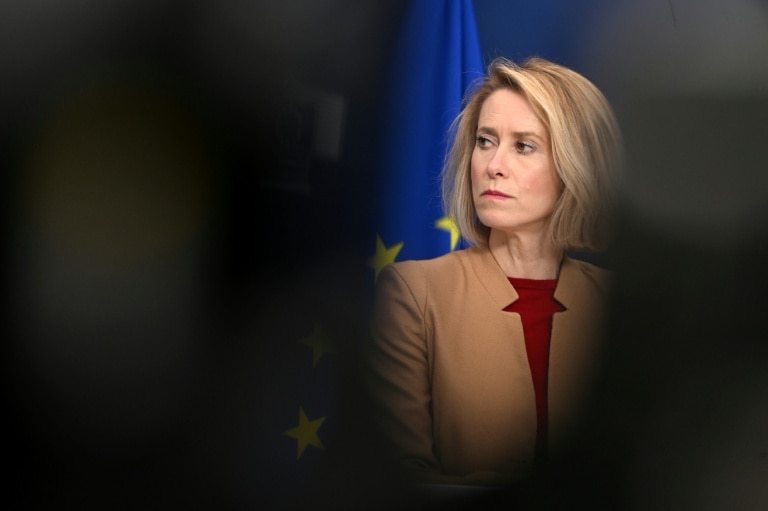
High Representative of the European Union for Foreign Affairs and Security Policy Kaja Kallas, the bloc’s top diplomat, framed the vote as a long-overdue step to confront escalating unrest. “It was high time we move from deadlock to delivery,” Kallas stated following the announcement of the green light for sanctions. “Extremisms and violence carry consequences.”
French Foreign Minister Jean-Noël Barrot added clarity to the scope of the measures, noting the EU is targeting leading Israeli organizations and their leaders found responsible for supporting the violent, extremist expansion of settlements in the West Bank. “These most serious and intolerable acts must cease without delay,” Barrot wrote on social media.
EU officials confirmed that seven individual settlers and settler-linked organizations will be added to the bloc’s sanctions blacklist. In a parallel move, the bloc also agreed to impose new sanctions on representatives of the Palestinian militant group Hamas.
The approval drew immediate sharp condemnation from Israeli leadership, who have lashed out at the measure as unfair and morally flawed. In an official post on X, Israeli Prime Minister Benjamin Netanyahu’s office argued that the EU had exposed “its moral bankruptcy by drawing a false symmetry between Israeli citizens and Hamas terrorists”, adding that Israel and the United States were “doing Europe’s dirty work” by combating extremist jihadist forces across the Middle East.
Israel’s far-right National Security Minister Itamar Ben-Gvir went further, labeling the European Union “antisemitic” and claiming the bloc was “trying to tie the hands of those who defend themselves”. Israeli Foreign Minister Gideon Saar echoed the criticism, writing on X that the sanctions were “arbitrary and political”, imposed on Israeli citizens and entities “because of their political views and without any basis”.
Escalating violence in the Israeli-occupied West Bank has been a growing point of international concern since the outbreak of the Gaza war in October 2023, with near-daily clashes between Israeli forces, settlers and Palestinian residents occurring across the territory. Palestinian officials and United Nations investigators have recorded a sharp surge in deadly attacks carried out by Israeli settlers against Palestinian communities since February 2025.
While the EU has broken its deadlock on settler sanctions, deep divisions remain among member states on pursuing more sweeping punitive measures against Israel, such as restrictions on trade with settlements. Foreign ministers gathered in Brussels discussed growing calls for an EU-wide ban on goods produced in Israeli West Bank settlements, but no final agreement was reached on the proposal.
Italian Foreign Minister Antonio Tajani explained that the European Commission will now draft a formal proposal for the ban, after which member states will assess whether the measure can gather enough support to pass. “This is an issue that has been discussed, but no decision has been taken, pending the proposals that will come,” Tajani said.
Under international law, all Israeli settlements built in the West Bank are considered illegal. Excluding East Jerusalem, more than 500,000 Israeli settlers currently reside in these settlements alongside roughly three million Palestinians living in the occupied territory. A recent United Nations report found that settlement expansion in 2025 reached its highest annual level since the UN began tracking expansion data in 2017.