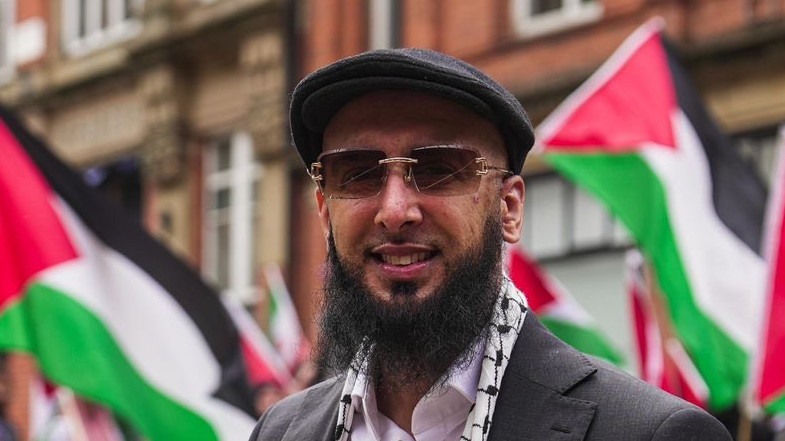
A high-profile terrorism case against a British-Palestinian activist has ended in a hung jury, forcing the court to schedule a full retrial scheduled for late 2027.
Majid Freeman, 38, also known by the alias Majid Novsarka and based in Leicester, stood trial for two weeks at Birmingham Crown Court, answering to charges tied to social media posts he published on X and Instagram between 2023 and 2024. Prosecutors accused Freeman of two key offenses: intentionally encouraging terrorist activity and publicly backing Hamas, the Palestinian militant group classified as a proscribed terrorist organization by the UK government. Freeman has repeatedly denied all allegations throughout legal proceedings.
After more than 13 and a half hours of closed deliberations, the jury notified the judge that they could not reach a required majority verdict on any of the charges brought against the activist. This deadlock automatically triggers the scheduling of a new trial, which is set to open in September 2027 and run for four weeks.
Speaking to reporters outside the courthouse following the jury’s announcement, Freeman said he welcomed the retrial, framing it as a new chance to bring evidence of Israeli military actions in Gaza before a British civilian jury. He criticized the prosecution’s case, noting that the Crown had spent significant public resources to pursue charges rooted in social media content including emojis, Islamic prayers (duas), and public posts. “After almost a week of deliberation, the jury could not agree that I was guilty. They could not agree,” Freeman emphasized.
The prosecution, led by senior barrister Tom Williams KC, argued during the trial that Freeman leveraged his social media platforms to promote and incite violent acts. Prosecutors pointed to specific content on Freeman’s accounts, including a 2024 reposted video from independent outlet Middle East Eye that showed an Israeli soldier shooting an elderly Palestinian woman in Gaza. They also claimed Freeman used visual symbols, including a red triangle, that prosecutors allege are associated with Hamas, and that his posts consistently amplified the group’s messaging. Prosecutors branded Freeman an “effective propagandist” who used short-form videos and casual messaging to humanize Hamas and build long-term public support for the organization in the UK.
In his testimony to the court, Freeman clarified his position, drawing a distinction between backing Hamas as a political organization and supporting the right of armed resistance to occupation. “I do not support Hamas as a group,” Freeman told the jury. “I believe that not just Hamas, but every group has the right to defend themselves against Israeli aggression. That includes using force.”
Freeman’s defense team, led by Hossein Zahir KC, pushed back aggressively against the prosecution’s claims. The defense argued that Freeman does not support Hamas as an organization, and instead advocates broadly for what he terms Palestinian resistance. Zahir urged jurors to contextualize Freeman’s social media posts against the backdrop of the ongoing Israel-Gaza war, which the defense described as a genocide against Palestinian civilians. The defense noted that Freeman’s use of the hashtag #GazaResists reflected his focus on the broader Palestinian cause rather than endorsement of any specific proscribed group. “Social media is fast-moving and often harsh, but his intention was to raise awareness, not to incite violence,” the defense told the court.
This is not the first high-profile legal case Freeman has faced in recent years. Earlier in 2024, an English court acquitted Freeman on charges connected to 2022 intercommunal riots between Hindu and Muslim youth in Leicester. In that case, police had alleged Freeman pushed an officer, used abusive language toward law enforcement, and incited violent confrontation during the unrest.
This case, which centers on the boundaries of free speech for activists criticizing Israeli policy in Gaza, has underscored the growing legal tensions in the UK between counter-terrorism prosecutions and the right to advocate for Palestinian causes amid the ongoing war.